📖 11 min read · 2,075 words
The best road trips in India are not just about the destination, because the road itself becomes the story you tell for years. Whether you crave the thin air of a Himalayan pass or the salt breeze of a coastal highway, this guide ranks the routes worth clearing your calendar for. We have driven, researched, and cross-checked each one so you plan around real conditions, current tunnels, and the permits that actually matter. Prayanamam is an independent travel guide, so we take no bookings and issue no permits; every permit and hotel link below routes you to the official portal.
The Best Road Trips in India at a Glance
- For raw adventure: Manali to Leh, crossing Taglang La at 17,480 feet.
- For coastal calm: Chennai to Pondicherry on the East Coast Road.
- For culture: the Delhi–Agra–Jaipur Golden Triangle loop.
- For a fresh angle: Guwahati to Tawang, now open all year thanks to the new Sela Tunnel.
- Golden rule: match the route to the season, since a wrong-month drive can close roads entirely.
How We Chose the Best Road Trips in India
Plenty of lists rank drives on scenery alone. We weighed four things instead, because a beautiful road that is shut for six months helps nobody. First, we looked at road condition and access, since new tunnels have quietly rewritten several classic routes. Second, we judged the completeness of the experience: food, stops, and culture along the way.
Third, we factored in seasonality and safety, so you avoid landslide windows and frozen passes. Finally, we considered variety, because the best road trips in India should suit bikers, families, and first-timers alike. The table below sums up the headline routes at a glance.
| Route | Distance | Ideal Days | Best Season |
|---|---|---|---|
| Manali–Leh | ~430 km | 2–3 | Jun–Sep |
| Mumbai–Goa (NH66) | ~590 km | 2 | Oct–Mar |
| Golden Triangle loop | ~720 km | 4–6 | Oct–Mar |
| Guwahati–Tawang | ~520 km | 3–4 | Mar–Oct |
| Chennai–Pondicherry (ECR) | ~150 km | 1–2 | Nov–Feb |
Himalayan Routes: The Best Road Trips in India for High Altitude
These are the drives that end up as phone wallpapers and dinner-table legends. They demand fitness, patience, and respect for altitude, yet they reward you like no other roads in the country. Below are three that consistently top every serious traveller’s wishlist.
Manali to Leh Road Trip
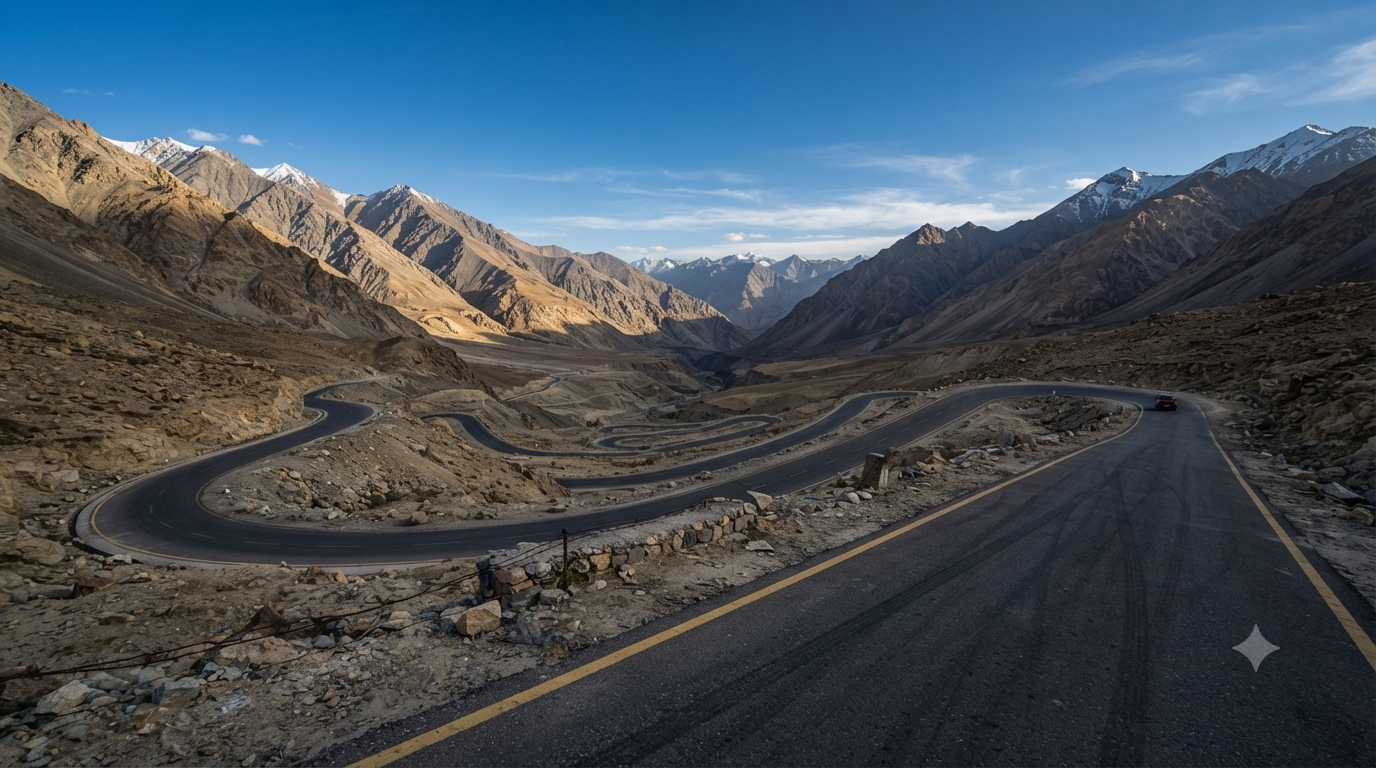
The Manali–Leh Highway on NH3 runs roughly 430 kilometres through some of the highest driveable terrain on earth. Its crown is Taglang La, a pass sitting at 5,328 metres, or about 17,480 feet above sea level. Since the Atal Tunnel opened in October 2020, the drive skips the notorious Rohtang jam and shaves nearly 46 kilometres off the old route. The highway usually opens in June and closes with the first heavy snow around late September, so timing is everything.
Spread the drive across two or three days because altitude sickness is real above 4,000 metres. Halt at Jispa or Sarchu to acclimatise, and carry cash since ATMs vanish after Manali. Simple dhabas serve hot chai and dal all along the route, though fuel stops are scarce, so top up whenever you can.
Srinagar to Leh via Zoji La
If you want gentler acclimatisation, drive into Ladakh from Srinagar instead. This route climbs more gradually, which helps your body adjust before you hit Leh’s thin air. The drama here is Zoji La, a knife-edge pass that can turn slick after rain. Kargil makes a natural overnight halt, and the Buddhist monasteries near Lamayuru are worth every minute of the detour.
Shimla to Spiti Valley Circuit
Spiti is a cold desert of ochre cliffs, whitewashed monasteries, and villages that feel frozen in another century. Because the terrain is remote, cell signal is patchy and self-reliance matters. Drive up from Shimla and loop out through Manali once Kunzum Pass clears, usually between June and September. Kaza, the main town, is your base for fuel, food, and a night’s rest before pushing deeper.
Coastal and Southern Best Road Trips in India
Some of the best road trips in India ask for no altitude at all. India’s coastline and its southern ghats deliver some of the most relaxed touring miles anywhere, and they stay open far longer through the year.
Mumbai to Goa Road Trip on NH66
The Mumbai–Goa run on NH66 is the drive Bollywood keeps romanticising, and for good reason. It threads through the Konkan belt of river crossings, laterite cliffs, and villages that smell of drying fish and coconut. Stop at Malvan for a seafood thali, then chase a quiet South Goa beach as your reward. October to March gives you dry, firm roads, while the monsoon turns the hills electric green but slippery.
Chennai to Pondicherry Road Trip on the East Coast Road
The East Coast Road, or ECR, is the easiest entry point on this whole list. It hugs the Bay of Bengal for about 150 kilometres, so you get sea views without any technical driving. Dakshinachitra’s craft village and the shore temples near Mahabalipuram make natural pit stops. Finish with French-quarter cafes in Pondicherry, ideally between November and February when the heat eases.
Bengaluru to Coorg and Ooty
South India’s Western Ghats hide a tangle of coffee estates and hairpin climbs. The Bengaluru–Coorg drive rewards you with plantation air and misty mornings, while the climb to Ooty stacks up dozens of tight bends. Because these ghat roads narrow quickly, drive them in daylight and let faster traffic pass. October through May stays pleasant, though weekends fill up fast with city escapees.
Heritage and Desert Best Road Trips in India
Some journeys are less about landscape and more about the layers of history you pass through. These two routes trade mountains for forts, palaces, and endless golden sand.
Golden Triangle Road Trip: Delhi, Agra and Jaipur
The Golden Triangle links Delhi, Agra, and Jaipur in a loop of roughly 720 kilometres. The Yamuna Expressway makes the Delhi–Agra leg fast and smooth, so you reach the Taj Mahal in about three hours. Jaipur then delivers pink-sandstone palaces, bustling bazaars, and hilltop forts. First-timers love this route because the roads are good and the sights are world-famous, making it one of the best road trips in India for beginners.
Jaipur to Jaisalmer Across the Thar
Push west from Jaipur and the land slowly empties into the Thar Desert. The 560-kilometre run to Jaisalmer ends at a living fort of honey-coloured stone that glows at sunset. Camel safaris and dune camps wait just outside town, so plan a night in the sand. Winter, from October to March, is the only sensible window, since summer heat here is punishing.
Guwahati to Tawang: One of India’s Best Road Trips
Arunachal Pradesh is India’s least-crowded frontier, and the Guwahati–Tawang drive is its showpiece. The 520-kilometre route winds past Kaziranga’s edge, the orchards of Dirang, and endless fluttering prayer flags. Here is the update most guides miss: the Sela Tunnel, opened in March 2024, now bypasses the 13,700-foot Sela Pass and keeps Tawang reachable year-round.
That single tunnel has turned a seasonal gamble into a far more reliable trip. Even so, this remains a mountain road, so plan four days and avoid rushing the climbs. You will also need a permit before you cross into the state, which brings us to the paperwork.
Permits for India’s Best Road Trips
Several of these routes cross restricted or border zones, so permits are not optional. Skipping this step can derail even the best road trips in India, so sort it early.
Every Indian visitor who is not a local resident needs an Inner Line Permit, or ILP, to enter Arunachal Pradesh. You can apply online through the official Arunachal ILP portal, where the government fee is modest and approval is often same-day. Watch out for copycat sites, because only the official portal issues a valid permit.
Ladakh has its own rules. Leh town and the main highway are open to Indian travellers, yet protected areas like Nubra, Pangong, and Tso Moriri still need an Inner Line Permit arranged locally. Confirm the current process on official state tourism channels before you drive, since these rules change without much notice. For a broader planning overview, the Ministry of Tourism’s Incredible India site is a useful official starting point.
Road Safety and Altitude: Drive Smart, Not Fast
High passes are thrilling, but altitude is not to be taken lightly. Above 3,500 metres, headaches, nausea, and breathlessness can hit anyone, so climb slowly and rest if symptoms appear. Anyone with heart or lung conditions, and pregnant travellers, should consult a doctor before attempting Ladakh or Spiti. Carry basic medicine, extra water, and warm layers even in summer, because mountain weather turns fast.
On the roads themselves, keep speed low on hairpin bends and never drive tired stretches after dark. Fuel up at every chance in remote areas, since the next pump can be a hundred kilometres away. If you ride a motorcycle, service it thoroughly before you leave the city. A calm, well-prepared driver finishes the trip; a rushed one does not.
Insider Tips for the Best Road Trips in India
The best road trips in India reward preparation, and a few lessons only reveal themselves after a breakdown. Download offline maps for every leg, because signal drops the moment you leave the highway. Keep printed copies of permits and ID, since checkposts rarely accept a phone screen when the network fails.
Start each driving day at dawn, so you clear high passes before afternoon winds and clouds roll in. Book mountain stays ahead in peak months, as tiny villages sell out fast. Finally, build a buffer day into any Himalayan plan, because landslides and weather will eventually cost you a few hours. If you want gentler options first, our roundup of scenic destinations in India pairs well with an easy drive.
Before You Hit the Road
The best road trips in India span every mood, from a lazy coastal cruise to a white-knuckle Himalayan crossing. Pick your route by season first, sort permits early, and give altitude the respect it demands. Start with an easy drive like the East Coast Road if you are new to touring, then work up to Ladakh once you trust your planning.
For more route inspiration, browse our guides to hidden gems across India and shorter escapes like the Nandi Hills getaway near Bengaluru. Wherever you point the wheel, the road will teach you something the destination never could.
Frequently Asked Questions
Which are the best road trips in India for beginners?
The East Coast Road from Chennai to Pondicherry and the Golden Triangle loop are the friendliest starting points. Both have good roads, plenty of stops, and no high-altitude risk. They let you build confidence before tackling mountain routes like Ladakh.
What is the best time for a Himalayan road trip?
June to September is the safest window for Manali–Leh, Srinagar–Leh, and Spiti. Passes stay open, and the snow has usually melted off the highway. Avoid winter, when heavy snow closes most high routes entirely.
Do I need a permit for Ladakh or Arunachal Pradesh?
Yes, in several places. Arunachal Pradesh requires an Inner Line Permit for all non-resident Indians, applied for online in advance. In Ladakh, protected areas such as Nubra and Pangong also need a permit arranged locally.
Is the Manali to Leh highway safe to drive?
It is safe when you prepare properly and respect the altitude. Spread the drive over two or three days, acclimatise at Jispa or Sarchu, and start early each morning. The route is only open in summer, roughly June to September.
How has the Sela Tunnel changed the Tawang drive?
The Sela Tunnel, opened in March 2024, bypasses the 13,700-foot Sela Pass. It gives Tawang all-weather road access for the first time. The drive is now far more reliable, though it still calls for careful mountain driving.
Are these road trips suitable on a motorcycle?
Most are excellent on two wheels, especially the Himalayan routes that bikers adore. Service your bike fully before you leave, and carry spare tubes and basic tools. Always ride with warm, waterproof gear for sudden weather.
How many days do I need for a Ladakh road trip?
Plan at least a week for a comfortable Ladakh loop, including acclimatisation days. Rushing the altitude gain is the single biggest cause of illness. A slower schedule also leaves room for landslides and weather delays.