📖 14 min read · 2,786 words
IRCTC coach position helps you locate the right carriage before an Indian Railways train arrives, but your coach code alone cannot tell you where to stand. B3 identifies a coach; it does not mean the third coach behind the engine. Your berth number and the platform number are separate details, so check each one before boarding.
Prayanamam is an independent travel guide, not affiliated with Indian Railways or the Indian Railway Catering and Tourism Corporation (IRCTC). We do not sell tickets, accept bookings or collect payments. Use authorised railway services for reservations and live journey information.
IRCTC Coach Position at a Glance
- Coach identifier: B3, S5 or A1 tells you which reserved coach to enter.
- Berth or seat number: A separate number shows your allotted place inside that coach.
- Coach position: The coach’s place in the full train formation, usually shown relative to the engine or departure direction.
- Platform: Check the station’s current display and announcements; a planned platform can change.
- Best cross-check: Read your current PNR, then match the coach guidance boards at your actual boarding station.
The useful distinction is simple: your ticket identifies the coach, while station guidance identifies where that coach is expected to stop. One does not replace the other.
What Does IRCTC Coach Position Mean?
IRCTC coach position means a reserved coach’s place in the train’s sequence. It helps a passenger choose where to wait along a platform. That sequence is different from the berth or seat assignment inside the coach, and it can differ from the arrangement used on another service or date.
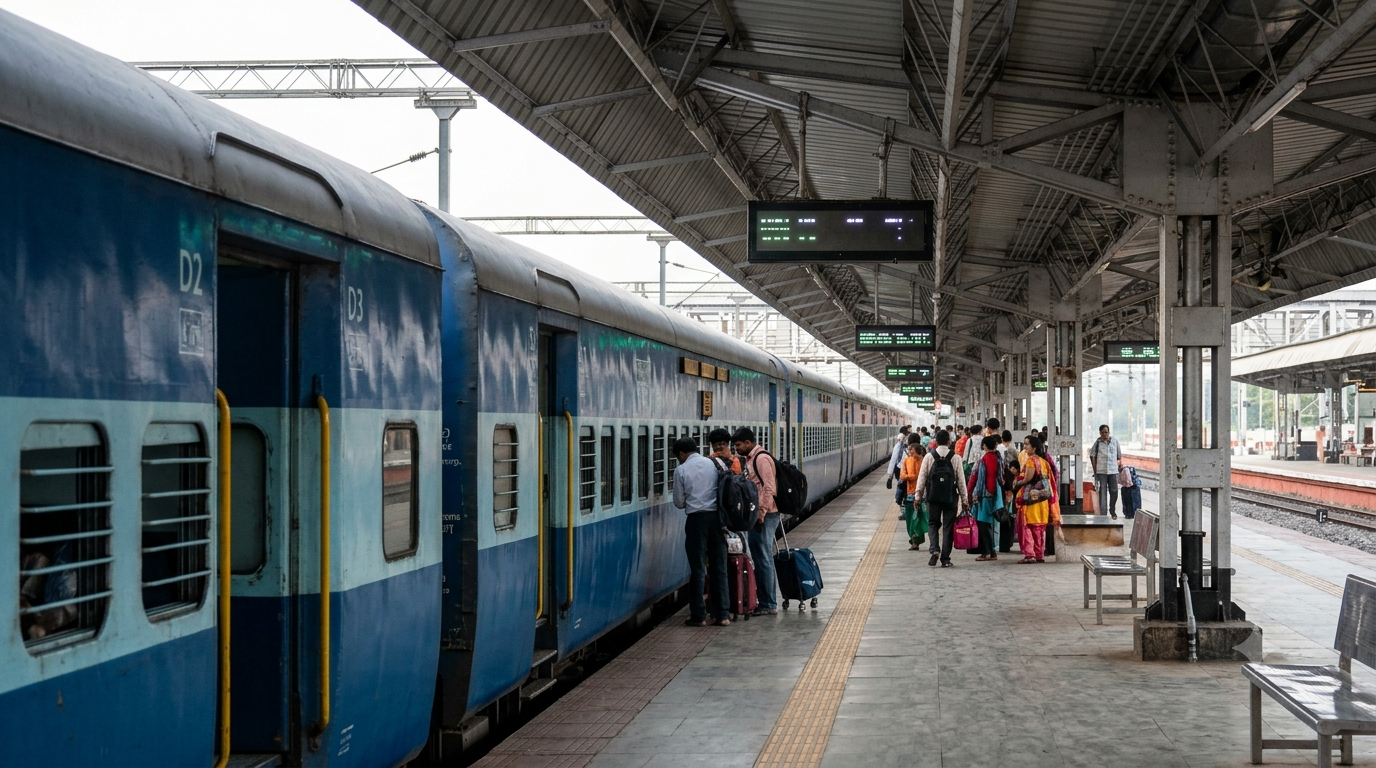
Indian Railways’ passenger information systems include coach guidance displays. Those signs identify coaches such as S10, B1 and A1 at platform locations. However, a label alone does not reveal every coach placed before it, including unreserved or other service vehicles.
People often search for coach position by train number because the train’s composition determines the order. Yet the actual stop point also depends on the station, arrival direction and any operational changes. Therefore, treat a generic diagram as a planning aid, not a guarantee.
How to Read Coach Numbers Like B1, S5 and A2
A coach identifier normally combines a letter code with a number. The letter refers to the coach type, while the number distinguishes that coach within its series. For example, B3 refers to a particular AC three-tier coach. It does not indicate the third carriage from the locomotive.
| Example code | Usual coach type | What to look for |
|---|---|---|
| S5 | Sleeper class | The coach marked S5 |
| B3 | AC three-tier | The coach marked B3 |
| A2 | AC two-tier | The coach marked A2 |
| H1 | First AC | The coach marked H1 |
| M1 | AC three-tier economy | The coach marked M1 |
| C2 | AC chair car | The coach marked C2 |
| D1 | Reserved second sitting | The coach marked D1 |
| E1 | Executive class | The coach marked E1 |
These are common Indian Railways coach identifiers, not a list of coaches on any specific train. Some services use different arrangements or specialised carriages. Read the exact label on your reservation and the side of the train before entering.
Why B3 is not necessarily the third coach
A train can carry general coaches, luggage vehicles, chair cars, a pantry and several reserved classes. B1 might appear after those vehicles, so B3 could be much farther from the engine. Also, a train may use a different formation on another date.
This is why counting just the B coaches gives the wrong IRCTC coach position estimate. You need the full order or the coach location indicators to confirm IRCTC coach position. If the railway changes the formation, match the updated station boards instead of an old screenshot.
How Coach Numbers Differ from Berth Numbers
Your coach number identifies the carriage; your berth number identifies a place within it. A ticket showing B3, berth 41 means you must first find coach B3. Only after entering that coach should you look for berth 41. The number 41 says nothing about where B3 stands on the platform.
On sleeper-style coaches, you may also see berth descriptions such as lower, middle, upper, side lower and side upper. The actual layout depends on the class and coach design. Therefore, use the assigned berth description shown in your reservation instead of calculating one from a memorised numbering pattern.
- LB: Lower berth.
- MB: Middle berth, where that layout has one.
- UB: Upper berth.
- SL: Side lower berth.
- SU: Side upper berth.
A chair-car reservation instead assigns a seat, not a sleeper berth. In First AC, the final coach or cabin details may appear at charting. If the assignment is unclear, read the updated official PNR rather than relying on a fixed seat chart from a third-party website.
How to Check IRCTC Coach Position Before Travel
To check IRCTC coach position, start with your latest reservation details, then confirm the train’s actual composition and the current station guidance. The official Indian Railways PNR enquiry identifies your coach and berth when assigned. It does not, by itself, promise the platform or stopping point for that coach.
- Identify your train: Note the train number, journey date and station where you will board. Similar train names can cause mistakes.
- Read your PNR: Open the official Indian Railways PNR enquiry. Compare each passenger’s current status with the booking record.
- Find the coach: Note the coach code and allotted berth or seat. If either remains pending, check the charting status.
- Check running updates: Use the National Train Enquiry System (NTES) for the train’s current running information.
- Confirm at the station: Check the main train indicator, platform guidance displays and public announcements for your train number.
- Move to the correct coach marker: Once the platform and direction are clear, wait near the indicator for your coach. Verify the coach label again when the train arrives.
Do not put your PNR into an unknown website or share a ticket screenshot publicly. Where a third-party layout disagrees with current railway information, use authorised station guidance. The objective is to board the correct carriage safely, not to guess its location hours in advance.
How to Understand the Coach Order on a Train
Coach order describes the sequence of carriages along the train. To read it, find your coach code in the full list and check which end of the train the sequence starts from. The order matters because two coaches from different classes may sit between adjacent numbered coaches.
Consider this fictional example only. It illustrates the difference between a coach label and its physical order; it is not a real train formation or stopping plan.
| Illustrative order | Vehicle | Meaning |
|---|---|---|
| 1 | General coach | Unreserved carriage |
| 2 | S1 | Sleeper coach |
| 3 | S2 | Another sleeper coach |
| 4 | B1 | First B-series coach |
| 5 | B2 | Second B-series coach |
| 6 | A1 | AC two-tier coach |
In this invented sequence, B1 is fourth among the listed vehicles, not first. Extra service coaches could change that count. More importantly, counting from the engine is useful only when you know the actual direction in which the train will stand at your station.
What if the train reverses direction?
At certain stations, a train may change its running direction. A coach that was near the front before the reversal may appear near the rear afterwards. The physical order of carriages can stay the same while the leading end changes.
Consequently, an engine-end diagram from another station may mislead you. Check the coach guidance for your specific boarding station. You should not choose a platform end solely from the train’s route map or the side used during a previous journey.
Where Can You Check the Railway Platform Number?
A platform number tells you where the train is expected to arrive or depart at a station. It does not show which berth you have, and it is not an inherent part of the ticket’s coach identifier. Railway operations can change the platform, sometimes close to arrival.
Indian Railways provides train information displays, coach indicators and station announcements for passenger guidance. The South Eastern Railway passenger information page describes both platform indicators and coach indication boards. These serve different functions, so check both.
- Before leaving home: Check NTES for running status and any available station information.
- At the main concourse: Match the train number and station to the latest arrival or departure board.
- At the platform: Watch for the coach guidance indicators and listen for changes.
- If information conflicts: Ask authorised station staff rather than relying on a previously shown platform.
Never treat an old platform number from a journey planner as a promise. Even a correct train number and coach sequence cannot tell you which platform staff will allocate. A last-minute announcement can override an earlier estimate, so repeat your IRCTC coach position check at the station.
IRCTC Coach Position After Chart Preparation
IRCTC coach position is easiest to use once your reservation shows an assigned coach. Indian Railways’ PNR enquiry distinguishes booking status from current status and displays charting information. A confirmed ticket can sometimes show its coach and berth earlier, while other assignments appear later.
Chart preparation helps settle reservation details, but it is not a platform allocation notice. The official PNR page warns that status may change before final charting. Therefore, do not assume the first displayed berth or a saved coach diagram is the last possible update.
Prayanamam’s IRCTC chart-preparation guide covers CNF, RAC, waitlist and the first versus final chart. Use that guide for ticket eligibility questions. Here, the focus stays on finding the right carriage after you know which coach the railway has assigned.
Can you use IRCTC Charts/Vacancy for a coach layout?
IRCTC’s Charts/Vacancy facility provides coach-wise and berth-wise availability information for supported trains after relevant charting. The Ministry of Railways described this feature through the Press Information Bureau. The feature helps explain occupancy and layout, not a guaranteed physical stopping point.
Therefore, do not confuse a coach diagram with a platform coach-position display. You may view official reservation information through IRCTC’s website, but platform guidance remains a separate station-day check. Menu labels and service availability can change, so this guide does not assume fixed app buttons.
What If IRCTC Coach Position Is Missing or Wrong?
If IRCTC coach position or the allotted coach is missing, first establish which detail is absent. A pending berth assignment differs from an unavailable coach-order display. A platform indicator may also remain blank until station staff publish information for the arriving train. None of these gaps guarantees an error in your ticket.
- Recheck the current PNR: Verify the train, journey date, boarding station and passenger-wise status.
- Check whether charting is complete: A confirmed reservation may need a later update before all accommodation details appear.
- Compare the source: If a private coach diagram conflicts with railway displays, prioritise the current railway information.
- Use station guidance: Ask the authorised enquiry desk or platform staff if the coach marker is blank or differs from your ticket.
- Board safely: Do not run alongside a moving train, cross tracks, or force entry into a coach simply because a marker looked incorrect.
If the platform changes, move by the foot overbridge or authorised subway. If your assigned carriage cannot be identified, seek help from authorised railway staff before departure. A reserved berth never guarantees a fixed platform or an unchanged coach arrangement.
Boarding at an Intermediate Station
Intermediate stations create one extra risk: the train may stop briefly, and its leading end can differ from the direction assumed by online diagrams. Your ticket’s selected boarding point matters more than the booking origin. Check the actual boarding station before planning where to wait.
If you need a different joining station, that is a separate reservation request. Read Prayanamam’s IRCTC boarding-point-change guide for eligibility and current cutoff details. A coach-position check cannot change the station printed against your booking.
Once you reach the correct station, identify the platform using the latest information and stand near your coach marker. Keep your bags together while moving to a revised platform. If the platform is busy, ask staff for help instead of rushing through the crowd.
Common Mistakes That Put Travellers at the Wrong End
The biggest mistake is reading B3 or S5 as a distance from the engine. Those labels distinguish coaches within their series. Another mistake is calculating berth type from a standard diagram instead of reading the current assignment. Different classes and layouts make that shortcut unreliable.
Passengers also confuse three different sources of information. PNR enquiry reports reservation status, coach guidance identifies carriage locations, and live train information tracks running details. You need all three checks because no single number provides the whole boarding picture.
Finally, travellers sometimes rely on a platform announced much earlier. Platform changes can happen, so repeat the check when you enter the station. A few careful checks are more useful than a perfect-looking but outdated online coach map.
Last-Minute Boarding Checklist
- Confirm the train number, boarding date and selected boarding station.
- Review each passenger’s current PNR, coach code and berth or seat number.
- Check whether the chart and any later updates affect your accommodation.
- Consult official train-running information, then the station’s latest platform display.
- Match the train number on the coach guidance indicator before taking your place.
- Verify the coach label at the carriage door when the train stops.
- Use railway footbridges or subways if the platform changes; never cross the tracks.
The Bottom Line
IRCTC coach position is about the carriage’s place in the train, not the seat you occupy inside it. Decode your coach label first, then check the current berth assignment through official PNR enquiry. At the station, confirm the latest platform and coach guidance rather than trusting a fixed online diagram.
For the smoothest boarding, keep train identity, coach identity and platform location as three separate checks. If they disagree, ask authorised railway staff before boarding. That approach works better than assuming a familiar coach code always stops at the same end.
Frequently Asked Questions
How can I check IRCTC coach position by train number?
Use the train number and travel date to identify the correct service, then check the current coach arrangement through authorised railway information where available. At your station, match your coach label to the coach guidance displays. A train number alone does not fix the platform or carriage stopping point.
Does B3 mean the third coach from the engine?
No. B3 identifies a coach in the AC three-tier B series, not the third carriage behind the locomotive. Other coaches may appear before or between the B series. Read the full coach order or station guidance before deciding where to wait.
Where can I find my berth number on an IRCTC ticket?
Look at the coach and berth or seat information in your current reservation or official PNR enquiry. A confirmed ticket may show these details before charting, or an assignment may appear later. If the display remains unclear near boarding, ask authorised railway staff.
Can the platform number change after it appears online?
Yes. Railway staff can change platform allocation for operational reasons. Check the latest station display and announcements when you arrive, even if an app previously showed another platform. Never rely on an earlier platform number as a guarantee.
Is coach position the same as seat position?
No. Coach position describes where a carriage sits within the train. Seat or berth position identifies your place inside that carriage. First find the coach on the platform, then find the numbered seat or berth after entering it.
Why is my coach number not showing after booking?
Some confirmed reservations receive their coach or berth assignment later in the charting process. Check the current PNR and charting status rather than relying only on the first booking message. A blank assignment does not by itself prove the ticket has been cancelled.
Can I rely on the same coach order every day?
No. The railway may alter the formation or operating direction. A diagram from a previous journey can therefore point to the wrong platform end. Confirm the coach indicators for the train and station on your travel date.
What should I do if the coach display board is blank?
Confirm that you are on the correct platform, then listen for announcements and ask authorised staff for guidance. You can also recheck current train information through NTES. Do not rush onto the tracks or board a moving train to chase a coach.
Does a change of boarding station change my coach position?
A boarding-point change updates where you are permitted to join the train; it does not by itself promise a different coach. However, the physical position of your coach can look different at another station. Verify the accepted boarding point, current PNR and local coach guidance.