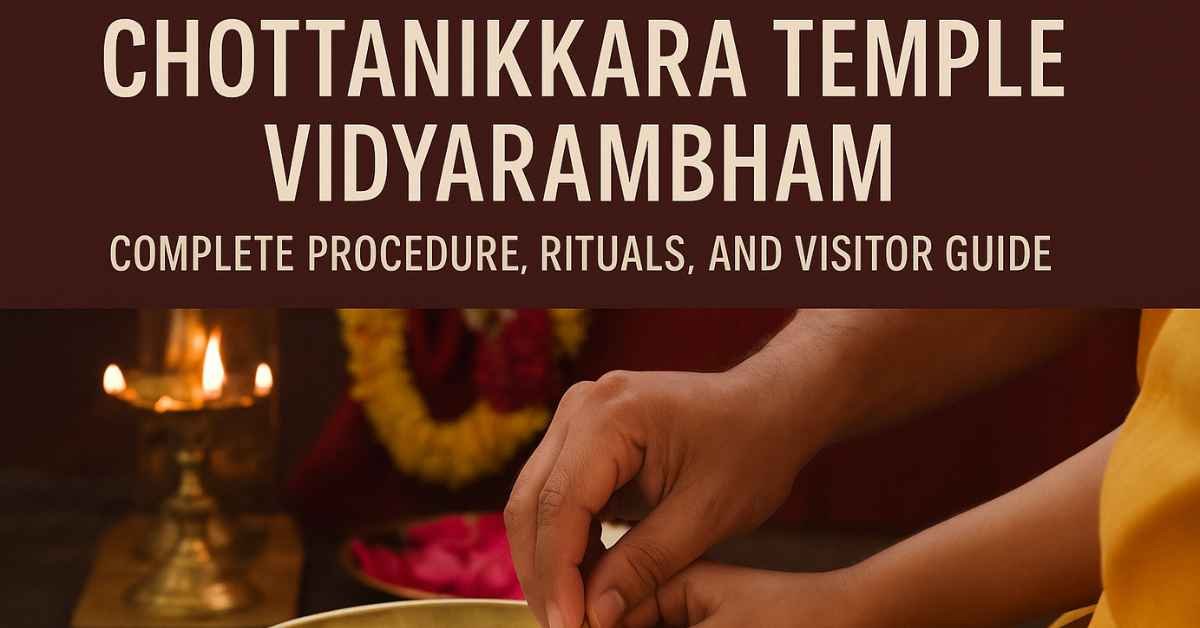
📖 5 min read · 957 words
Discover the complete Chottanikkara Temple Vidyarambhame, including rituals, offerings, temple traditions, and essential visitor guidance for a meaningful initiation ceremony.
Brief Summary
- Importance of Vidyarambham at Chottanikkara Temple
- Meaning and spiritual significance of the ritual
- Step-by-step Vidyarambham procedure
- Ideal time to perform the ceremony
- Offerings, dress code, and preparation
- Dos and don’ts for parents and children
- Costs and token information
- Tips for a smooth temple visit
The Chottanikkara Temple, dedicated to Goddess Bhagavathy, is one of Kerala’s most revered spiritual destinations—particularly famous for the Vidyarambham ceremony. This sacred ritual marks a child’s formal initiation into the world of learning. Families from across India visit the temple to seek divine blessings for their children’s educational journey. The temple’s peaceful energy, traditional customs, and deeply rooted cultural significance make Vidyarambham at Chottanikkara a cherished milestone for every family.
What Is Vidyarambham and Why Is It Done?
Vidyarambham, meaning “beginning of knowledge,” is a Hindu initiation ritual in which a child writes their first letters with divine blessings. The ceremony is believed to awaken learning aptitude, sharpen intellect, and remove obstacles from the child’s academic future.
At Chottanikkara Temple, the ritual is performed before Goddess Saraswati—embodied within Goddess Bhagavathy—making it a powerful and spiritually enriching ceremony.
Key Purposes of Vidyarambham
- Blessings for academic success
- Cultivation of wisdom and clarity
- Spiritual protection for children
- Strengthening cultural roots
Pro Tip: Bring a notebook or slate to preserve your child’s first-written letters as a treasured keepsake.
Significance of Chottanikkara Temple for Vidyarambham
Chottanikkara Bhagavathy is worshipped in three forms—Mahasaraswati in the morning, Mahalakshmi at noon, and Mahakali in the evening. Because Vidyarambham is linked to knowledge, the morning hours—when the Goddess embodies Saraswati—are especially auspicious.
Pilgrims consider the temple a powerful energy center for removing mental obstacles and enhancing the child’s inner brilliance and calm.
Key Takeaway: Families believe that performing Vidyarambham here invokes the blessings of all three divine energies—knowledge, prosperity, and protection.
Vidyarambham Procedure at Chottanikkara Temple
The Vidyarambham procedure is simple, traditional, and guided by experienced temple priests. Here’s a clear step-by-step breakdown:
Step-by-Step Ritual Flow
- Purchase a Vidyarambham Ticket
Visitors can get a token at the temple counter. It includes priest guidance and ritual materials. - Enter the Designated Hall
The ceremony area is usually serene and structured to accommodate families comfortably. - Priest-Led Invocation
The priest begins with a short prayer to invoke Goddess Saraswati’s blessings. - Writing the First Letters
Traditionally, the child writes: “Om Hari Sri Ganapathaye Namah”
Letters are written using a gold ring or stylus dipped in rice or sand.
Blessings to the Child
The priest places flowers or prasad on the child’s head as a sign of divine grace.Offering and Prasad Distribution
Families submit prasadam offerings to the Goddess and receive sacred prasadam after the ritual.
Ideal Timings for Vidyarambham
Vidyarambham at Chottanikkara is performed throughout the year. The early morning period is considered the holiest, especially during the Saraswati form of the Goddess.
Typical Vidyarambham hours include:
- Morning sessions: Highly preferred
- Rituals continue until late morning, depending on temple flow
Tokens are usually available during regular temple operating hours
Evergreen Note: Since temple practices remain constant, visitors are encouraged to confirm any operational changes directly with the temple office before visiting.
Dress Code for Vidyarambham
Chottanikkara Temple maintains a respectful dress tradition.
Recommended Attire
- Children: Simple ethnic wear
- Women: Saree, salwar kameez, or traditional Kerala attire
- Men: Mundu or simple ethnic wear (shirts optional inside certain temple areas)
Pro Tip: Avoid heavy accessories for your child to keep them comfortable during the ritual.
What to Bring for the Ceremony
Although the temple provides essential items, carrying a few personal materials enhances the experience.
Useful Items to Carry
- Notebook / slate / rice plate
- Gold ring (optional for writing)
- Extra clothing for young children
- Water and light snacks
- Small offering or prasadam packet
Offerings and Cost
Vidyarambham offerings are modest and accessible to all devotees. The amount generally includes:
- Priest guidance
- Basic ritual supplies
- Prasad
Seating in the designated Vidyarambham area
Optional offerings (archana, special pujas) can be added according to family preference.
Tip: Carry cash for smoother processing, as temple counters may have limited digital payment support.
Visitor Tips for a Smooth Experience
Arrive Early
Morning hours attract a large number of families. Arriving early ensures shorter queues and a calmer environment for the child.
Keep Children Relaxed
Some children may feel overwhelmed by the crowd, chants, or atmosphere. A familiar toy or parental comfort works wonders.
Plan the Visit on a Weekday
Weekdays often have shorter wait times, offering more personalized priest interaction.
Avoid Last-Minute Rush
Complete ticketing and prayer arrangements first to avoid backtracking across temple grounds.
Common Questions About Vidyarambham
Is there an age limit?
Most families perform Vidyarambham when their child is between 2–5 years old, though the ritual is open to all age groups.
Can non-Hindu families participate?
Vidyarambham at Chottanikkara is open to all devotees seeking blessings for learning and wisdom.
Do both parents need to be present?
While it is ideal, any guardian may accompany the child.
Is photography allowed?
Photography rules may vary within temple premises—checking at the entrance counter is advised.
Performing Vidyarambham at Chottanikkara Temple is a spiritually uplifting experience for families beginning their children’s educational journey. With its timeless traditions, divine energy, and peaceful ambiance, the temple continues to be one of Kerala’s most meaningful destinations for this sacred rite of passage. Preparing well, arriving early, and knowing the key steps ensures a memorable and blessed ceremony for your little one.