Kolhapur Mahalakshmi Temple History Essential Travel
Contents
- 1 Kolhapur Mahalakshmi Temple History Legend Miracles Travel Guide
- 1.1 Quick Facts
- 1.2 The Rich Kolhapur Mahalakshmi Temple History
- 1.3 How To Reach Kolhapur Mahalakshmi Temple
- 1.4 Booking And Ticket Information
- 1.5 Daily Rituals And Miracles
- 1.6 When I Visited: Personal Travel Notes
- 1.7 Insider Tips For Visitors
- 1.8 Nearby Attractions
- 1.9 Best Time To Visit
- 1.10 Frequently Asked Questions (FAQ)
Kolhapur Mahalakshmi Temple History Legend Miracles Travel Guide
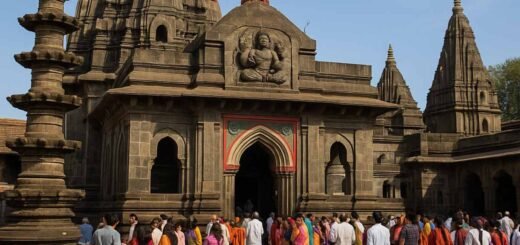
Kolhapur Mahalakshmi Temple History is steeped in ancient legends, architectural brilliance and spiritual energy that draw pilgrims and travellers from across India and the world. This sacred shrine — dedicated to Goddess Mahalakshmi, also known locally as Ambabai — stands in Kolhapur, Maharashtra, and is recognised as one of the foremost Shakti Peethas in the Hindu tradition. Its age-old past, breathtaking rituals and deep cultural resonance make it not just a religious destination but a must-include stop on any spiritual travel itinerary. According to historic texts and shrine records, the temple dates back to the early centuries of the Common Era and continues to be an active centre of devotion today.
For factual information and historical context, you can visit the official temple site at Mahalaxmi Temple Official Website. The temple is also featured on government heritage pages such as Incredible India – Mahalaxmi Temple. For official information, visit Incredible India.
Quick Facts
| Attribute | Details |
|---|---|
| Location | Mahalaxmi Temple, Bhavani Mandap, Mahadwar Rd, Kolhapur, Maharashtra, India |
| Deity | Goddess Mahalakshmi (Ambabai) |
| Temple Board | Paschim Maharashtra Devasthan Samiti |
| Timings | 4:00 AM – 10:00 PM Daily (Darshan times may vary) |
| Entry Fee | Free (General Darshan) |
| Official Booking | E-Darshan Pass via official site |
| Contact | Available on temple’s official website |
The Rich Kolhapur Mahalakshmi Temple History
Origins And Architectural Legacy
Tracing its roots to possibly the 7th century CE, the Kolhapur Mahalakshmi Temple’s history is a tapestry of Hindu belief, dynastic patronage and structural evolution. According to historians, the shrine was initially built by Chalukya kings — though there are accounts that it may even predate that period within Shilahara dynasty influence. Understanding Kolhapur Mahalakshmi Temple History is essential.
Moreover, the temple’s black stone idol of Goddess Mahalakshmi stands about 3 feet tall, crowned and adorned with symbolic iconography, including a shri yantra carved on one of the inner walls. Its architecture reflects both Chalukya and Hemadpanti styles.
Legends And Spiritual Significance
Local myth tells of the demon Kolhasur, who ravaged the cosmos until Goddess Mahalakshmi descended to vanquish him at a place called Karavira. The very land where the battle took place became sanctified, and Mahalaxmi chose to reside here. This legend ties deeply to the city’s name — Kolhapur — meaning the city of Kolhasur in Sanskrit tradition.
The temple is revered as one of the primary Shakti Peethas — sacred sites where the three paths of desire fulfilment and liberation are believed to converge. Pilgrims come seeking both material blessings and spiritual liberation. This relates to Kolhapur Mahalakshmi Temple History.
How To Reach Kolhapur Mahalakshmi Temple
By Air
The nearest airport is Kolhapur Airport (IATA: KQY), approximately 9–13 km from the temple. Regular flights connect to metros like Mumbai, Bengaluru and other cities. From the airport, taxis, app-based cabs or local autos will take you directly to the temple area.
By Train
Kolhapur Railway Station is about 2.5–3 km from the temple and is well linked with major Indian cities such as Pune, Mumbai, Bangalore and New Delhi through express and passenger trains. Local rickshaws and taxis are readily available outside the station.
By Road
Kolhapur is well connected via national highways, with state buses, private coaches and taxis arriving daily from cities like Pune, Mumbai and Goa. On arrival, you can book a local taxi or auto-rickshaw to the temple. Learn more about Kolhapur Mahalakshmi Temple History.
Booking And Ticket Information
While general darshan at the Mahalaxmi Temple is free, many visitors prefer booking an E-Darshan Pass to ease entry and avoid long queues. Here’s how you can secure it:
Steps To Book Darshan Pass Online
- Visit the official temple website: mahalaxmikolhapur.com.
- Find the “E-Darshan Pass” section on the homepage.
- Select your preferred date and available time slot.
- Enter your personal details (name, contact, ID info).
- Submit and download your E-Pass (PDF with QR).
- Carry the downloaded pass on your visit day.
Seva bookings (like Panchamrut Abhishek, Kumkum Archana) can often be done via the same official portal under “Seva Booking”. Prices may vary, especially around festivals. Always check the latest rates on the temple’s site before planning.
Daily Rituals And Miracles
Visiting the temple early in the day reveals a rhythm of ancient rituals:
- Padyapuja & Mukhmarjan at ~5:00 AM cleanses and prepares the deity for darshan.
- Kakad Aarti between ~5:30–6:00 AM is a deeply devotional experience.
- Morning Mahapuja around 8:00 AM with offerings and chants.
- Evening Aartis and Shej Aarti conclude the day’s worship.
A remarkable natural phenomenon, known as Kirnotsav, occurs twice yearly when sunlight strikes the idol perfectly for a few days, a moment that leaves many visitors speechless.
When I Visited: Personal Travel Notes
When I visited the Temple early one winter morning, the air was crisp and the chants resonated like heartbeats. What surprised me most was the peace amidst the bustling crowds. I personally recommend scheduling your visit during the early morning darshan hours (before 8:00 AM) to catch the Tuk-Tuk bells, rhythmic lamps and that golden light filtering through the courtyard — a memory that stays with you. Weekdays tend to be less crowded than weekends or festival days.
Insider Tips For Visitors
- Wear traditional or modest clothing; it’s a place of worship with cultural expectations.
- Arrive early to avoid long queues — especially during festive months like Navratri and Jan/Feb.
- Photography inside the inner sanctum is not allowed, but photos around the courtyard are fine.
- Carry water and light snacks; shops nearby offer refreshments.
- Combine temple visit with nearby historical spots like Bhavani Mandap for deeper context.
Nearby Attractions
- Bhavani Mandap Palace – ~0.1 km: Historic palace showcasing Kolhapur’s royal past.
- Rankala Lake – ~4 km: Peaceful lakeside for sunset walks. Local guides available. (Distance approximate)
- Jyotiba Temple – ~18 km: Another revered temple on a hilltop.
- Kopeshwar Temple, Khidrapur – ~60 km: Ancient Shiva temple with fine carvings.
Best Time To Visit
The ideal months to visit Kolhapur and the Mahalakshmi Temple are October through March when the weather is pleasant for exploration and darshan. This period also includes major festivals like Navratri and Kirnotsav, when rituals and celebrations reach their peak. Winter mornings here feel divine and serene — perfect for reflection and photos.
Frequently Asked Questions (FAQ)
Is There An Entry Fee?
No, general darshan is free; however, special poojas and sevas may require booking and donation.
Can I Book Darshan In Advance?
Yes, through the temple’s official website E-Darshan system.
Are There Photography Restrictions?
Photography inside the sanctum is generally prohibited; you can take pictures in the outer areas.
How Long Should A Visit Take?
An average visit including darshan and courtyard exploration can take 1–3 hours depending on queue and rituals.
Is Food Available Nearby?
Yes, many local eateries and prasad stalls are close to the temple complex.