📖 15 min read · 2,822 words
A Gokarna trip plan works best when you separate temple visits, road-accessible beaches and optional adventure activities. You can enjoy Mahabaleshwar Temple, Kudle Beach and Om Beach without swimming or hiring a boat. This guide also explains when to skip the cliff trail, how to check sea warnings and why beach camping needs permission checks.
Gokarna lies in Uttara Kannada district on Karnataka’s Arabian Sea coast. It remains a major Shiva pilgrimage centre as well as a relaxed coastal destination. A balanced Gokarna trip plan fits both sides together without overlooking temple etiquette or coastal safety.
Independent guide: Prayanamam is not affiliated with the temple, Karnataka Tourism or local operators. We do not accept bookings or payments. Check official sources and authorised providers directly.
Gokarna Trip Plan: Quick Facts
- Good first visit: Two days for the temple, town, Kudle and Om; add a third day for an inland excursion.
- Location: Gokarna, Uttara Kannada district, Karnataka.
- Five commonly featured beaches: Gokarna Main, Kudle, Om, Half Moon and Paradise.
- Simple beach access: Visit Kudle and Om by road, with a short walk down to the sand where required.
- Temple timing: Karnataka Tourism lists 6:00 am–12:30 pm and 5:00 pm–8:00 pm. Confirm on arrival.
- Best general travel window: October to March for outdoor comfort, subject to that day’s weather and sea warnings.
- Important: No beach, boat or trek is safe merely because the season looks favourable.
How Many Days Should Your Gokarna Trip Plan Include?
A two-day Gokarna trip plan suits first-time visitors because the temple town and road-accessible beaches fit comfortably together. Three days make room for Mirjan Fort or Yana without rushing. Add extra days only if you want a slower pace or a separately checked activity.
- One day: Mahabaleshwar Temple, Maha Ganapati Temple, Car Street and one beach viewpoint.
- Two days: Add relaxed walks and time at Kudle and Om Beach.
- Three days: Keep the first two days simple, then visit Mirjan Fort or Yana.
- Longer stay: Leave spare time for changing weather, temple crowds and rest.
Mahabaleshwar Temple Timings and Dress Code
Mahabaleshwar Temple, dedicated to Lord Shiva as the Atmalinga, anchors Gokarna’s pilgrimage tradition. Devotees often visit the nearby Maha Ganapati Temple first. Karnataka Tourism lists morning darshan from 6:00 am to 12:30 pm and evening darshan from 5:00 pm to 8:00 pm. Festival arrangements may differ.
What should you wear for darshan?
Choose conservative traditional clothing. Karnataka Tourism’s destination page describes a dhoti or pancha and bare chest for men, with a saree or salwar suit for women. Its separate temple page describes a dhoti or lungi as preferred and says men may remove shirts before entering the sanctum. Since the wording differs, follow the instructions displayed at the temple entrance.
Darshan, meals and ritual bathing
Karnataka Tourism describes ordinary temple entry as free, while special offerings may have separate arrangements. Confirm any service and its current fee with the temple office. The availability and hours of annadanam, or free meals, can change, so do not plan around unconfirmed meal times.
Kotiteertha is an important ritual tank, and pilgrims also associate the main beach with purification. Neither is a required recreational swim. If water entry presents a health or safety concern, ask a priest about appropriate observances instead.
For more background, see Prayanamam’s Mahabaleshwar Temple timings guide. Use the Karnataka Tourism temple page to cross-check general information.
Choosing Beaches for Your Gokarna Trip Plan
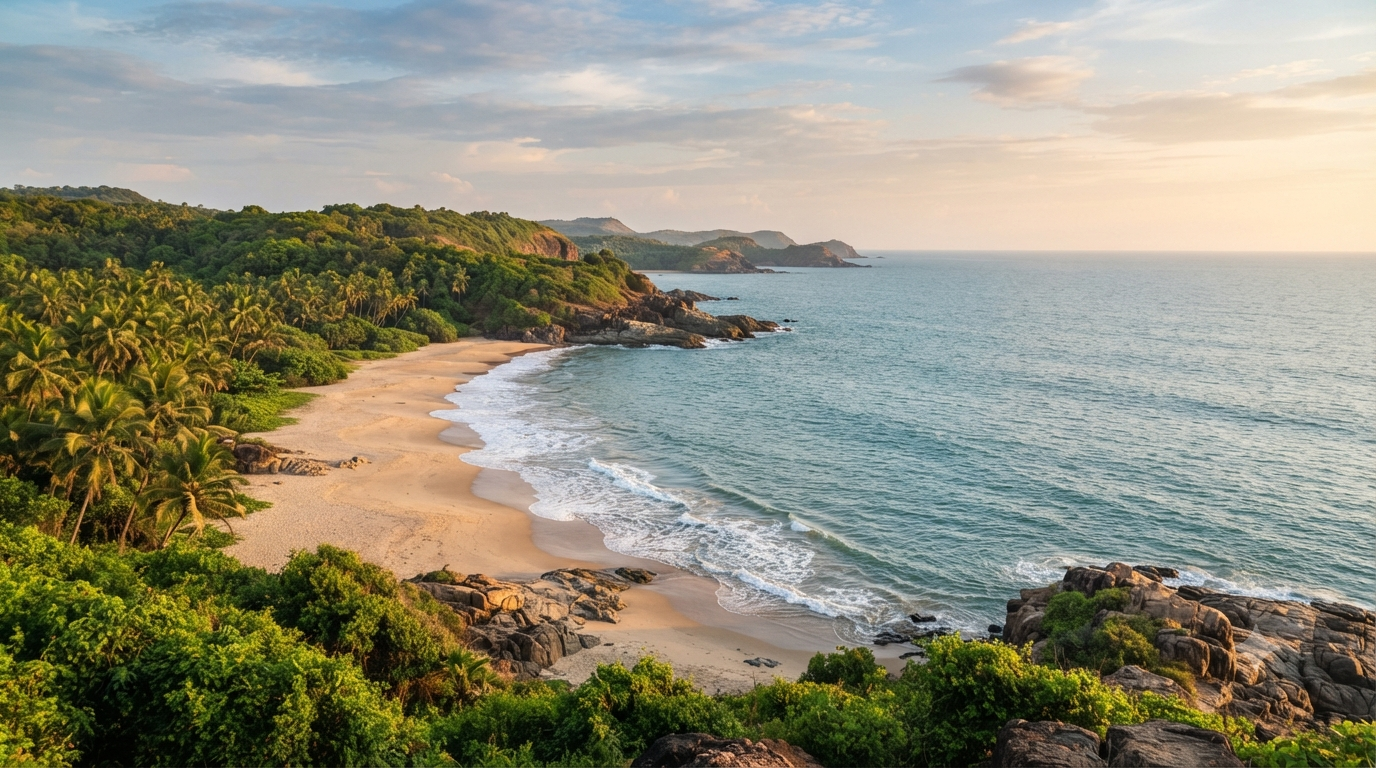
For a flexible Gokarna trip plan, choose beaches by their access and facilities. Kudle and Om are sensible choices for a first visit because you can approach them from the road. Half Moon and Paradise are more isolated, so reaching them may require exposed paths or a boat.
| Beach | Usual access | Best land-based plan |
|---|---|---|
| Gokarna Main | Walk from town | Town stroll and sunset views |
| Kudle | Road approach, then walk | Beach walk, cafes and scenery |
| Om | Road and parking approach | Lookouts, cafes and shoreline views |
| Half Moon | Cliff path or boat | Optional; skip if access is uncertain |
| Paradise | Trail or boat | Optional; do not depend on return boats |
Even a sheltered-looking bay can develop dangerous currents, shore breaks or sudden waves. A beach’s shape does not tell you whether swimming is safe. Treat all five as places to enjoy from land unless local authorities explicitly permit water entry and conditions support it.
Can You Swim Safely at Gokarna Beaches?
No Gokarna beach can be labelled safe for every visitor or every day. Water conditions change with waves, currents, tides and weather. Do not enter the sea when warning flags, closures or lifeguard instructions prohibit it. If no supervised swimming area is clearly identified, stay on land.
Do not choose a swimming spot by watching where local residents enter the water. They may know the coast better, but their actions cannot establish safe conditions for you. Likewise, the inner curve of Om Beach is not a recommended swimming zone for weaker swimmers.
Check Conditions Before Any Gokarna Trip Plan Activity
Review your Gokarna trip plan on the day of each coastal outing, not just when you book. A pleasant morning forecast is no guarantee of calm surf or a usable cliff path. The India Meteorological Department and the Indian National Centre for Ocean Information Services publish different kinds of warnings, so check both.
- Read the IMD warning for Coastal Karnataka and the IMD marine forecast.
- Check INCOIS high-wave and swell advisories and its ocean-state forecasts.
- At the beach, follow posted notices, police directions, lifeguards and local access restrictions.
- Ask about the actual return route, daylight remaining and current trail condition before leaving a road-accessible beach.
- Cancel sea activities if warnings, poor visibility, rough surf, heavy rain or uncertainty make the plan unsuitable.
A regional bulletin cannot certify a particular swimming spot or small boat journey. Even a forecast with no broad warning does not override a beach closure. Save these official links before travelling, since mobile reception may weaken in isolated coves.
Beach Trek: Short Walks Versus the Full Coastal Trail
A trekking-focused Gokarna trip plan may connect Kudle, Om, Half Moon and Paradise by rocky headland paths. The full walk requires stamina, reliable footing and enough daylight to return. Conditions vary after rain and along exposed sections, so do not assume that a route described as easy online will suit your group.
A lower-commitment option
Visit Kudle and Om separately by road, then walk only the comfortable, open sections near each beach. This gives you sea views and time outdoors without committing to remote coves. Arrange the road trip back before the last light fades.
Before attempting Half Moon or Paradise
Check with the appropriate local authorities or on-site staff that the path is open. Wear grippy footwear, carry drinking water and share your route with someone. Turn around well before you become tired, and never continue onto an unknown section near sunset.
Do not plan to walk out and catch a boat back automatically. Boats may not operate because of swell, weather, access controls or insufficient demand. If you cannot return safely by land, do not start the remote section.
Boat Trips: Optional, Not a Guaranteed Return
A Gokarna trip plan does not need boat sightseeing, though some services operate near Om Beach when conditions allow. A spoken promise of a pickup is not the same as a dependable transport schedule. Do not build your day around a boat that might not return.
If you still consider a trip, first verify whether the operator is authorised and whether life jackets fit every passenger. Confirm boarding conditions, the full route, weather limits, price and cancellation arrangements. Skip the activity if any detail is unclear or if a passenger cannot board and disembark safely.
For older visitors, pregnant travellers, young children and anyone with mobility, balance or medical concerns, a road-based beach day is generally the more controllable option. A doctor can advise on personal medical limits; an operator cannot guarantee a safe trip for a vulnerable passenger.
Is Camping Allowed at Paradise Beach?
A camping-focused Gokarna trip plan needs more than a tourism description: promotion is not a permit. We could not verify a current, site-specific government permission allowing every visitor to pitch a tent or stay overnight. Never assume that the presence of tents or an advertised package makes camping lawful.
Before making any payment, ask the local administration and, where relevant, the forest or coastal authority whether overnight camping is currently allowed at that exact site. Also confirm whether an operator has the required permission and basic sanitation arrangements. If permission is unclear, book a registered stay in town or near a road-accessible beach instead.
Where to Stay and How to Budget
Stay near Car Street if your priority is early temple darshan. Kudle or the road-accessible Om Beach area works better for a slower beach-focused visit. Check the actual approach to your room because a sea view may still involve steps or steep paths.
Karnataka’s Department of Tourism published updated homestay guidance and a circular dated 27 and 29 April 2026. Check the official homestay guidance and ask the property about registration before paying. Registration does not remove the need to check access, hygiene and cancellation terms.
Costs for a Gokarna trip plan
A budget Gokarna trip plan should account for changing room rates, auto fares and activity prices. Temple entry and Mirjan Fort entry appear as free on Karnataka Tourism pages, but confirm any special service or local change. Ask for a written total before committing to a paid activity.
| Expense | Budget approach | What to confirm |
|---|---|---|
| Stay | Compare refundable town and beach-area rooms | All taxes, access and cancellation |
| Local travel | Allow separate fares for each beach | Agreed total and pickup point |
| Food | Plan meals near town or main beaches | Opening hours and payment options |
| Water sports or boats | Optional; do not pre-budget as essential | Current price, authorisation and conditions |
| Camping | Do not pay until permission is established | Site-specific approval and facilities |
Karnataka Tourism publishes some illustrative activity prices, but these are not binding live quotations. Therefore, this guide does not promise a jet-ski rate, scuba price or camping tariff.
How to Reach Gokarna
Gokarna Road station serves the town on the Konkan Railway, but not every train stops there. Ankola and Kumta are other rail options, depending on your service and transfer plan. Check the train’s actual halt and arrival time through Indian Railway Catering and Tourism Corporation before buying a ticket.
Road travellers typically approach via the coastal highway network. State and private buses connect the broader region, while Goa and Mangaluru offer airport options. Compare the complete airport-to-Gokarna transfer rather than treating the closest airport as automatically the fastest.
For local travel, arrange an auto or car to Om Beach rather than forcing a cliff walk between beaches. Ask the driver where the vehicle can stop and how far you must walk. Those last few hundred metres matter when someone has limited mobility.
Best Season for a Gokarna Trip Plan
An October-to-March Gokarna trip plan usually offers more comfortable sightseeing and walking weather. However, it does not guarantee safe swimming, an open trek or a running boat service. Review marine and local warnings for each day of your stay.
Summer afternoons can be hot, so put temple visits and walking early in the day. The southwest monsoon often brings rough seas and slippery coastal paths. During wet weather, prefer town attractions and road-based stops; check inland road access before visiting forests or waterfalls.
A Practical Three-Day Gokarna Trip Plan
- Day 1 — Temple and town: Visit Maha Ganapati and Mahabaleshwar temples during the published darshan window. Walk through Car Street, then enjoy Main Beach from the dry sand. Keep time for a meal and a relaxed evening.
- Day 2 — Kudle and Om by road: Take a daytime auto or car to the main access points. Enjoy viewpoints, short beach walks and a cafe stop. Return by road. Swimming, cliff trekking and boats are not part of the essential itinerary.
- Day 3 — One inland outing: Choose Mirjan Fort for a shorter heritage-focused excursion or Yana for a longer forest-and-rock landscape visit. Do not cram both with a distant coastal detour. Recheck weather and site access before departure.
For a two-day stay, drop the third day and keep some flexibility. If your group prefers temples over beaches, use that time for more of Gokarna’s sacred town rather than an activity you feel pressured to attempt.
Day Trips Near Gokarna
Mirjan Fort lies southeast of Gokarna and suits visitors who enjoy history and laterite architecture. Karnataka Tourism describes it as a sixteenth-century fort associated with Queen Chennabhairadevi. Check current entry access before leaving.
Yana lies inland in the Western Ghats. Its striking black rock formations require more travel and walking than a quick beach outing, so allow a substantial part of the day. Avoid the forest approach if rain, trail closures or your group’s fitness make it unsuitable.
Murudeshwar is another coastal pilgrimage destination, though combining it with multiple other sites can make a tiring day. For wider route ideas, Prayanamam’s Karnataka travel guide covers alternative circuits. Its Gokarna travel guide adds general local context.
What If Your Gokarna Trip Plan Falls Through?
Every Gokarna trip plan needs a fallback because beach access, weather and paid activities are not guaranteed. A flexible Gokarna trip plan should work even when a tour is cancelled or a path closes. Put the easy-to-reach sights first, then treat harder activities as additions.
- Rough sea or swimming warning: Stay out of the water and enjoy the beach from land.
- Boat cancelled or no return service: Do not enter a remote cove. Visit Kudle or Om by road instead.
- Trail blocked or too hot: Stop the hike, return by the known land route and choose a town attraction.
- Camping permission uncertain: Use a registered inland or road-accessible stay.
- Rain affects Yana: Check access to Mirjan Fort or spend a slower day in Gokarna town.
- Temple queue or ritual schedule changes: Ask the temple office about the next suitable darshan window.
Common Gokarna Planning Mistakes
The first mistake is treating Om Beach’s curved shoreline as proof that weak swimmers can enter safely. The second is copying a trail itinerary that ends with an assumed return boat. Neither shortcut survives a change in sea conditions.
Another mistake is taking camping advertisements as official permission. A tourism website can describe a traditional activity without setting out the present legal rules. Similarly, a quoted activity price is not a confirmed on-the-day offer.
Before Finalising Your Gokarna Trip Plan
Build your Gokarna trip plan around the temple, the town and beaches reachable by road. Check official weather and ocean advisories immediately before coastal activities, then follow conditions and instructions on site. If camping permission, a boat return or a trail’s safety is uncertain, choose the land-based option. That still makes for a rewarding Gokarna visit.
Gokarna Trip Plan: Frequently Asked Questions
Is Gokarna suitable for a two-day trip?
Yes. Two days allow time for Mahabaleshwar Temple, Car Street, Kudle and Om Beach without rushing. Add a third day if you want Yana or Mirjan Fort. A two-day visit does not need a cliff trek or boat trip.
Is Om Beach safe for non-swimmers or weaker swimmers?
Do not assume it is. Om Beach’s sheltered-looking sections can still have rough water and currents. Enjoy the view from land. Only consider entering the sea where current local rules and competent safety supervision explicitly allow it.
Can I swim where local people swim?
No: watching local swimmers is not a reliable safety check. They may have different skills and knowledge of the shoreline. Follow lifeguards, warning flags and official closures instead. If there is no clear supervised swimming area, remain out of the water.
Can I return from Paradise Beach by boat?
A return boat is not guaranteed. Trips may stop because of weather, rough surf or operating restrictions. Never walk to a remote beach expecting an unconfirmed pickup. If you lack a safe land return plan, choose a road-accessible beach.
Should older or pregnant travellers take a boat instead of the trek?
Not automatically. Boarding, waves and disembarking can present their own risks. Road access to Kudle and Om is usually a more manageable starting point, although even there some walking may remain. Ask a clinician about personal medical concerns.
Can I camp overnight at Paradise Beach?
Do not assume overnight camping is permitted. Karnataka Tourism mentions camping, but that description does not verify a current permit for your exact location or operator. Confirm permission with the relevant local authority before paying. Otherwise, choose a registered stay.
How much do Gokarna water sports and camping cost?
No single price applies to every date or provider. Confirm today’s total, safety arrangements, cancellation rules and any lawful operating permission directly. Karnataka Tourism’s published activity figures are illustrative rather than guaranteed quotations. Camping should not be booked until its permissions are clear.