📖 12 min read · 2,331 words
Anantha Padmanabha Vratham Pooja falls on Friday, 25 September 2026, on Bhadrapada Shukla Chaturdashi. Tirumala Tirupati Devasthanams (TTD) also lists Anantha Padmanabha Vratham on 25 September, while Drik Panchang places Chaturdashi from 11:18 PM on 24 September to 11:06 PM on 25 September for Andhra Pradesh. This guide gives the Telugu PDF, the corrected 14-year rule, the pooja items, and a practical home vidhi.
Prayanamam is an independent devotional and travel guide. We are not affiliated with TTD, any temple, trust, or panchangam publisher, and we do not accept pooja bookings, donations, or payments. For official temple events, use the TTD source linked below.
Anantha Padmanabha Vratham Pooja: 2026 Date and Timing
The 2026 observance is Friday, 25 September. TTD’s September festival notice confirms Anantha Padmanabha Vratham and Chakrasnanam at Tirumala on that date. Drik Panchang lists Chaturdashi from 11:18 PM on 24 September until 11:06 PM on 25 September for Andhra Pradesh.
| Detail | 2026 information | What it means |
|---|---|---|
| Vratham date | Friday, 25 September 2026 | Observe the vratam on Friday |
| Tithi | Bhadrapada Shukla Chaturdashi | The lunar day for Ananta worship |
| Chaturdashi begins | 11:18 PM, 24 September | The tithi starts the previous night |
| Chaturdashi ends | 11:06 PM, 25 September | Complete the annual observance before the tithi ends |
| Main deity | Lord Vishnu as Ananta Padmanabha | Yamuna Devi and Shesha also appear in the traditional vidhi |
| Sacred thread | Anantha Sutram or toram | Traditionally prepared with fourteen knots or strands |
For an Andhra Pradesh reference, Drik Panchang’s Anant Chaturdashi page gives the same date and tithi end. Sunrise changes by city, so use your local panchangam for an exact starting time. Do not copy a Delhi sunrise or muhurat into a Telugu household schedule.
Quick Guide for Telugu Families
For most households, Anantha Padmanabha Vratham Pooja follows a familiar sequence: prepare the altar, make the sankalpam, worship Ananta Padmanabha, hear the katha, and tie the consecrated toram.
- Telugu name: అనంత పద్మనాభ వ్రతం.
- When: Bhadrapada Shukla Chaturdashi; in 2026 it is 25 September.
- Core worship: Ganapati prayer, kalasha worship, Yamuna puja, Ananta Padmanabha puja, vratakatha, naivedyam, and toram tying.
- Thread: the Anantha Sutram or toram is associated with the number fourteen.
- Traditional duration: once each year for fourteen years, followed by udyapanam according to family practice.
- PDF: the linked Telugu manual is a 30-page third-party devotional text, not an official TTD publication.
The most important correction is simple: the observance is traditionally repeated for fourteen years, not fourteen consecutive days. The Telugu ritual PDF itself ends its katha with Kaundinya observing the vrata for fourteen years.
What Is Anantha Padmanabha Vratham?
Anantha Padmanabha Vratham is a Vaishnava observance dedicated to Lord Vishnu in his Ananta form, reclining on Adishesha. Families perform it on Bhadrapada Shukla Chaturdashi, so it is also called Ananta Chaturdashi Vrata. The ritual centres on worship, the vratakatha, and the consecrated Anantha Sutram.
The word Ananta means endless or infinite. Padmanabha is a name of Vishnu, while Shesha or Ananta is the serpent associated with his reclining form. TTD observes the day at Tirumala with special ritual activity, including Chakrasnanam for Sri Sudarshana Chakrathalwar.
People sometimes confuse this Vishnu vrata with Ganesh Visarjan because both fall on Ananta Chaturdashi. They are separate observances. A household may mark one or both according to its tradition.
Anantha Padmanabha Vratham Pooja Items List
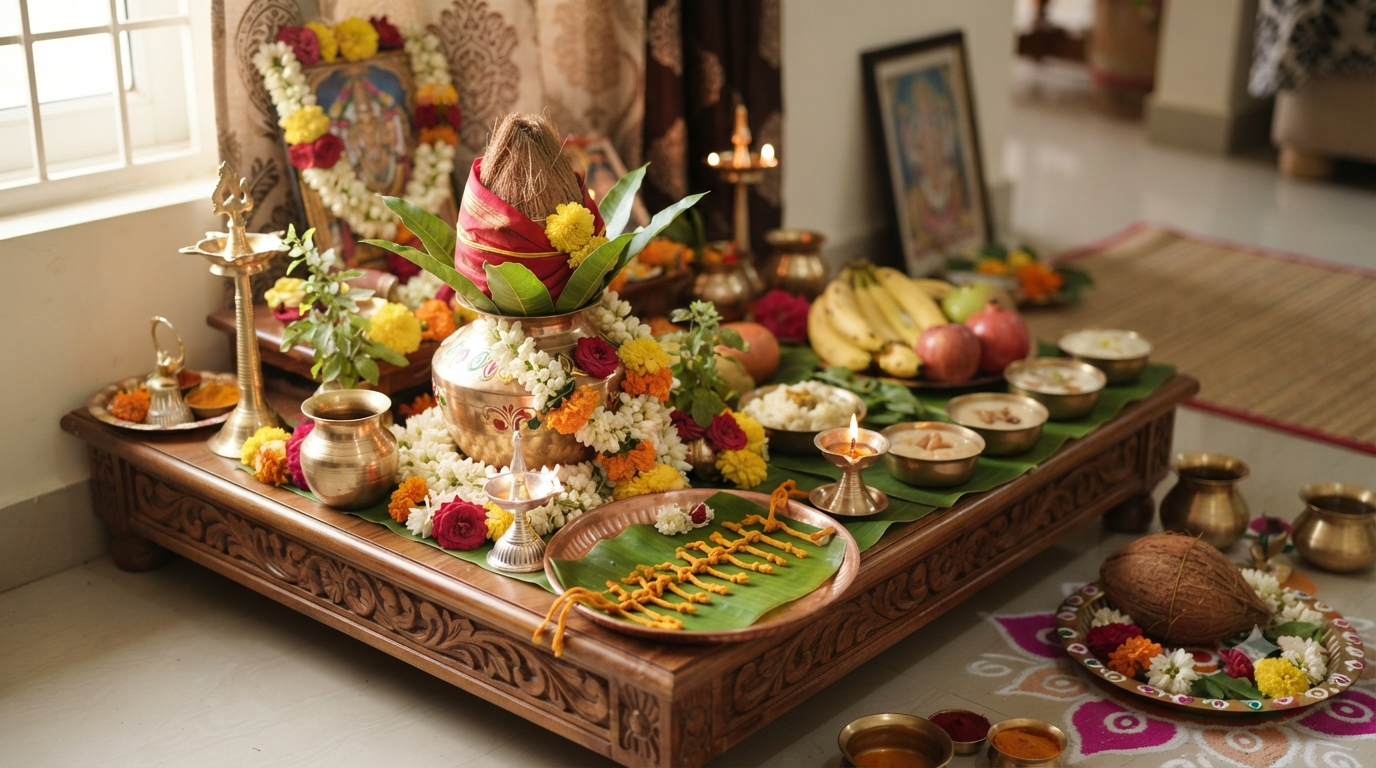
Anantha Padmanabha Vratham Pooja can be performed with a simple home altar, although detailed family traditions may use more items. The Telugu manual includes kalasha worship, Yamuna worship, a darbha representation of Ananta, Shodashopachara offerings, the sacred thread, naivedyam, and vratakatha. Prepare what your family normally uses rather than buying an elaborate kit.
- Lord Vishnu or Ananta Padmanabha image for worship
- Kalasham or clean vessel, water, mango leaves, and coconut
- Turmeric, kumkum, sandal paste, akshata, and flowers
- Tulasi leaves where available
- Deepam, cotton wicks, oil or ghee, and incense
- Darbha grass for the traditional Ananta or Shesha representation
- Anantha Sutram or toram prepared according to family custom
- Fruits and cooked naivedyam suitable for the household tradition
- Betel leaves and nuts if your customary pooja uses them
- The Telugu vratam text for sankalpam, mantras, and vratakatha
The full Telugu text describes fourteen-fold symbolism in several places. However, household practice is not identical everywhere, so do not treat every quantity as a universal rule. If your family purohit gives a specific sampradaya, follow that tradition.
Anantha Padmanabha Vratham Pooja Step by Step
The traditional sequence is more detailed than a short internet checklist. The existing Telugu PDF begins with cleansing and sankalpam, then moves through Ganapati and kalasha worship before the main Ananta Padmanabha puja. Use the outline below as a map, while the PDF provides the mantras and longer ritual text.
- Prepare yourself and the pooja space. Bathe, wear clean clothes, and arrange a clean altar. Keep all items ready before the sankalpam so the worship is not interrupted.
- Light the lamp and begin with Ganapati prayer. The Telugu manual starts the formal sequence with Sri Mahaganapati worship because Ganesha is invoked before the main vrata rites.
- Perform sankalpam. State the intention to observe Anantha Padmanabha Vratham, using the correct year, masa, paksha, tithi, weekday, and family details. If you are unsure of the panchanga terms, ask your family priest instead of guessing.
- Worship the kalasham. The manual invokes sacred rivers into the kalasha water. It then uses that water for purification of the deity, pooja items, and worshipper.
- Perform Yamuna puja. This is a distinct part of the traditional Telugu procedure. The old page mentioned Yamuna only briefly, but the source text gives her a clear place in the sequence.
Main Worship, Toram and Completion
The second half of Anantha Padmanabha Vratham Pooja centres on Vishnu worship, the toram, the katha, and naivedyam. Keep the thread on the altar until its worship is complete, because the traditional sequence consecrates it before tying.
- Invoke Ananta Padmanabha. Place the deity image or the traditional darbha representation and offer the Shodashopachara, the sixteen forms of respectful worship. These include water offerings, fragrance, flowers, incense, lamp, and naivedyam.
- Place and worship the toram. The ritual text includes a separate torasthapana step. The sacred thread is first placed before the deity and worshipped, so it is not merely tied as an ornament.
- Read or listen to the vratakatha. The Telugu manual narrates the story of Sushila and Kaundinya. The katha explains the vrata’s discipline and the fourteen-year observance.
- Tie the Anantha Sutram. Common practice places it on the right arm for men and the left for women, though family customs can differ. Follow your inherited practice if it varies.
- Offer naivedyam and complete the pooja. Finish with arati, namaskaram, and prasadam distribution. Keep the closing rites consistent with the manual or your family custom.
Why the Anantha Sutram Has Fourteen Knots
The number fourteen is central to the vratam. The Telugu manual describes a red toram with fourteen strands and includes a torasthapana verse referring to fourteen knots. Many traditions explain these knots through the fourteen worlds, while the fourteen-year observance gives the number another ritual layer.
Do not worry if a shop sells a slightly different style of thread. What matters in the traditional procedure is that the toram is prepared according to your custom, placed before the deity, worshipped, and then tied. A family priest can resolve differences between regional methods.
Telugu PDF: What the Current File Actually Contains
The old Prayanamam page linked to a Telugu PDF, and that link is still live. This Anantha Padmanabha Vratham Pooja reference is useful when you need the full Telugu mantras rather than a short English outline. It opens a 30-page document covering the vratham rules, sankalpam, kalasharadhana, Ganapati puja, Yamuna puja, Ananta Padmanabha Shodashopachara, toram worship, mantras, and the vratakatha. You can open the Anantha Padmanabha Swamy Vratham Vidhanam Telugu PDF here.
This PDF is hosted by a third-party devotional website. It is not an official TTD publication, so use it as a ritual reference rather than an official temple instruction. For the date and Tirumala event, rely on current panchang data and TTD’s September 2026 festival notice.
Fasting Rules and Health Safety
Fasting practice varies by family, age, health, and sampradaya. Some devotees keep a full fast, while others take fruit, milk, or a simple vegetarian meal after the pooja. The older article called strict fasting essential, but that wording was too absolute for a tradition with household variation.
If you are pregnant, elderly, diabetic, unwell, or taking medicine with food, do not force a prolonged fast. Follow medical advice first, then adapt the devotional observance with your family priest if needed. Devotion does not require risking dehydration, low blood sugar, or missed medication.
Readers comparing Vishnu fasts may also find Prayanamam’s Vaikunta Ekadasi fasting procedure useful. The rules are not identical, so use it only for broader fasting context.
The 14-Year Rule: Correcting a Common Error
Anantha Padmanabha Vratham Pooja is traditionally an annual observance continued for fourteen years. The previous version of this page incorrectly said some devotees observe the fast for fourteen consecutive days. The Telugu vratam text instead says Kaundinya observed the vrata for fourteen years, and it instructs the devotee to repeat the annual observance.
After the chosen period, families may perform udyapanam, the formal completion of the vrata, according to their tradition. The exact udyapanam procedure can vary, so it is better to use the family book or ask a trusted purohit. Do not invent a closing ritual from a short web summary.
What If You Miss the Vratham Day?
If you miss Ananta Chaturdashi, do not invent a substitute tithi and call it the annual vrata. You can still pray to Vishnu, read the katha, or chant Vishnu names on another day, but the formal yearly observance belongs to Bhadrapada Shukla Chaturdashi. For a missed year in a long-running family vow, ask your purohit how your sampradaya handles it.
The outcome is not a guaranteed material result, and the ritual should not be presented as one. Traditional texts connect the vrata with prosperity, stability, and relief from hardship as matters of faith. Treat those as devotional beliefs, not promises of money, health, or other measurable outcomes.
What Beginners Often Get Wrong
- Using last year’s date: lunar festival dates shift, so check the current year’s panchangam.
- Confusing the day with Ganesh Visarjan: both share Ananta Chaturdashi, but the Vishnu vrata has its own ritual.
- Tying the thread before worship: the traditional sequence worships the toram first and ties it later.
- Calling the practice a 14-day fast: the source text describes an annual vrata repeated for fourteen years.
- Copying one city’s sunrise: local sunrise differs, even when the tithi end remains the same IST moment.
- Treating one web checklist as universal: sampradaya and family practice can change the exact sequence and offerings.
For wider Padmanabha context, Prayanamam also has a Sree Padmanabhaswamy Temple guide. Temple darshan rules are separate from this home vrata, so check the temple’s official channels before visiting.
Before You Begin the Anantha Padmanabha Vratham Pooja
For 2026, keep Friday, 25 September as the observance date and confirm your local sunrise before starting. Use the Telugu PDF for the complete mantras, but remember that it is a third-party ritual text rather than an official temple document. Most importantly, follow the fourteen-year annual tradition rather than the old page’s incorrect fourteen-day line.
Anantha Padmanabha Vratham Pooja is best approached as a family devotional practice, not a race to complete every item. Prepare the toram and pooja materials early, keep the sequence clear, and ask your purohit when your family method differs from the general outline.
Frequently Asked Questions
When is Anantha Padmanabha Vratham in 2026?
It falls on Friday, 25 September 2026. TTD lists Anantha Padmanabha Vratham at Tirumala on that date, and Drik Panchang shows Bhadrapada Shukla Chaturdashi running through most of Friday.
What time should I perform Anantha Padmanabha Vratham Pooja?
Perform the pooja after local sunrise while Chaturdashi is still running. In Andhra Pradesh, Drik Panchang gives the tithi end as 11:06 PM on 25 September 2026. Because sunrise varies by city, use your local panchangam for the starting time.
Where can I get the Anantha Padmanabha Vratham Telugu PDF?
The existing page’s PDF link is still working and opens a 30-page Telugu vratham manual hosted on Poojalu.com. It includes mantras, sankalpam, Yamuna puja, Ananta worship, toram steps, and vratakatha. It is a third-party devotional text, not an official TTD PDF.
Is Anantha Padmanabha Vratham observed for 14 days or 14 years?
The traditional rule in the linked Telugu text is fourteen years, with the vrata observed once each year on Ananta Chaturdashi. The old version’s reference to fourteen consecutive days was incorrect and has been removed.
How many knots should the Anantha Sutram have?
Fourteen is the traditional number. The Telugu ritual text describes the toram through fourteen-strand and fourteen-knot symbolism, and many households use a thread with fourteen knots. Family practice may differ in how the thread is prepared.
Which hand is used for the Anantha Sutram?
A common practice is the right arm for men and the left arm for women. However, regional and family customs can differ, so follow your sampradaya if it gives another rule. The thread is normally worshipped before it is tied.
Is a strict fast compulsory for everyone?
No single fasting pattern is safe or appropriate for everyone. Families follow different rules, while people with diabetes, pregnancy, illness, or medicine schedules may need food and fluids. Follow medical advice first, then adapt the religious observance with family guidance.
Is Anantha Padmanabha Vratham the same as Ganesh Visarjan?
No. They occur on the same Ananta Chaturdashi tithi, but Anantha Padmanabha Vratham worships Vishnu in his Ananta form. Ganesh Visarjan marks the immersion of Ganesha after Ganeshotsav, so the rituals and purposes are different.
Can I perform the vratham at home without a priest?
Many families perform it at home using their traditional book or Telugu vidhanam. If the sankalpam, mantras, or family rules are unfamiliar, a purohit can guide the first observance. There is no need to treat this as an online booking service.