📖 11 min read · 2,083 words
The finest monsoon destinations South India has to offer come alive the moment the first showers sweep across the Western Ghats. If you are planning a rainy-season trip and want misty hills, roaring waterfalls, and empty trails instead of crowds, you are in the right place. This guide names the best places to go, but it also does something most lists skip. It tells you which monsoon soaks which region, so you land in the rain rather than miss it by three months.
South India does not get one rainy season. It gets two, and they hit opposite coasts at opposite times. Get that timing right and the whole trip changes.
Monsoon Destinations South India: Quick Facts
- Two monsoons: the southwest monsoon runs June to September; the northeast monsoon runs October to December.
- Western Ghats belt (Kerala, coastal and malnad Karnataka) is wettest from June to September.
- Tamil Nadu’s plains and east coast get most of their rain from October to December.
- Agumbe in Karnataka is called the “Cherrapunji of the South” and records over 7,500 mm of rain a year.
- Best all-round window: late August to September, when hills stay green but the heaviest rain eases.
- Carry: rain gear, grip footwear, dry bags, and leech repellent for forest trails.
When is the monsoon in South India?
South India has two distinct rainy seasons. The southwest monsoon arrives over Kerala around the start of June and lasts until September, drenching the west coast and the Western Ghats. The northeast monsoon then follows from October to December, bringing rain mainly to Tamil Nadu and the southeastern coast. So the “right” time depends entirely on where you are headed.
This split matters more than most travel guides admit. Because the Western Ghats catch the Arabian Sea winds head-on, places like Munnar, Coorg, and Agumbe pour with rain from June onward. Tamil Nadu’s eastern plains, however, stay comparatively dry until October. If you visit Chennai or Pondicherry in July expecting a downpour, you may find only humid heat instead.
Southwest or northeast: which side of the Ghats?
Think of the Ghats as a wall. When the southwest monsoon blows in from the Arabian Sea, the western slopes take the full force, so Kerala and coastal Karnataka flood with green. The eastern side sits in a partial rain shadow during those months.
Later, when the winds reverse for the northeast monsoon, the Coromandel coast and Tamil Nadu finally get their share. So pick your destination first, then match it to the monsoon that actually reaches it. Most of the monsoon destinations South India travellers dream about sit on that wetter western side.
Monsoon Destinations South India at a Glance
Here is a quick comparison of top picks, the state they sit in, and the monsoon that brings them to life. Agumbe alone gets over 7,500 mm of rain a year, which explains its rainforest reputation. For official destination details, the government’s Incredible India portal is a solid starting point when you map monsoon destinations South India end to end.
| Destination | State | Rainy season | Known for |
|---|---|---|---|
| Munnar | Kerala | June–Sept | Tea estates, misty valleys |
| Wayanad | Kerala | June–Sept | Waterfalls, forests, caves |
| Coorg (Kodagu) | Karnataka | June–Sept | Coffee, Abbey Falls |
| Agumbe | Karnataka | June–Sept | Rainforest, king cobras |
| Valparai | Tamil Nadu | June–Sept | Tea hills, wildlife |
| Kodaikanal | Tamil Nadu | Oct–Dec (heaviest) | Lake, pine forests |
| Araku Valley | Andhra Pradesh | June–Sept | Coffee, scenic rail |
Kerala’s Monsoon Destinations in South India
Munnar: tea gardens in the mist
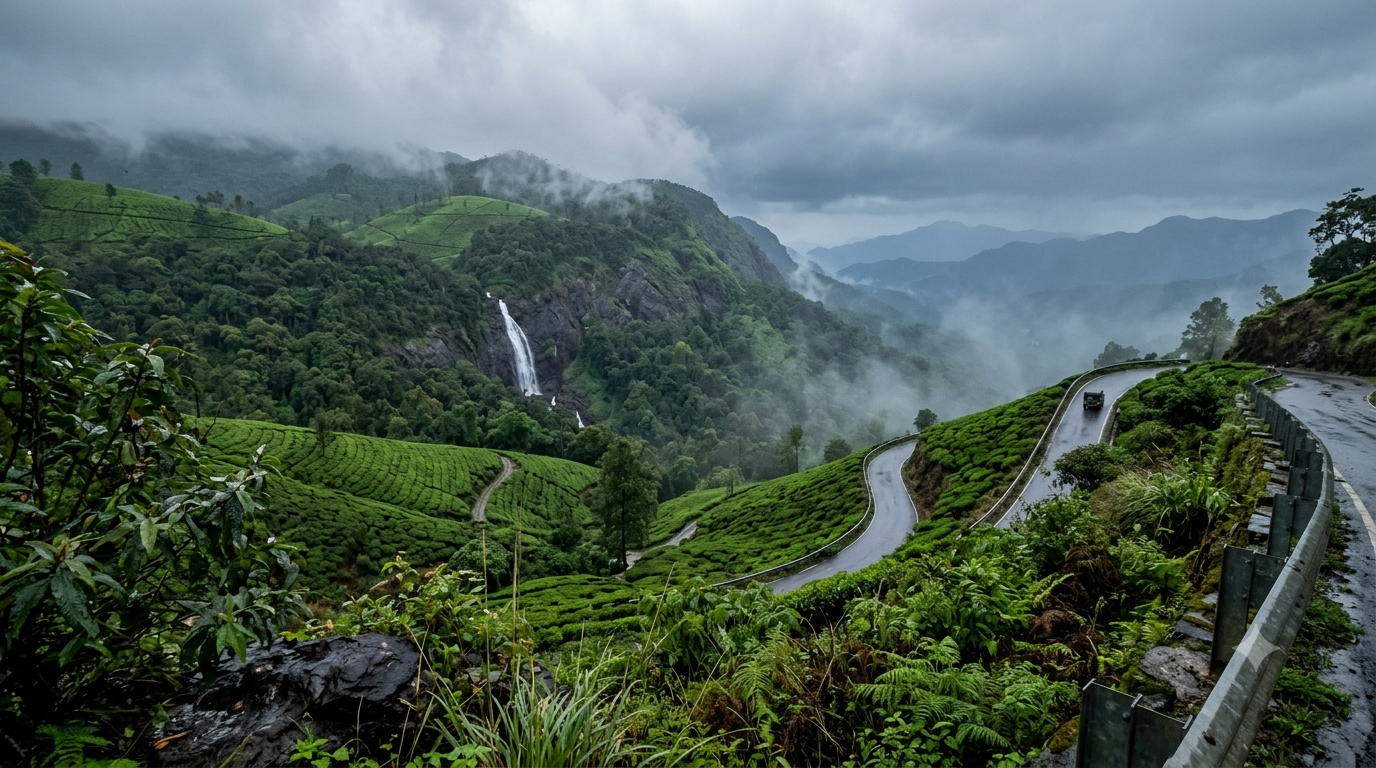
Munnar sits high in Kerala’s Western Ghats, and the rain turns its rolling tea estates a deep, almost unreal green. Clouds drift right through the plantations, so a walk here feels like moving inside a soft grey blanket. Visit Mattupetty Dam, Echo Point, and the Attukad waterfalls, which run full and loud through July and August. Roads can get slippery, so drive slowly on the hairpin bends.
Wayanad: waterfalls and ancient caves
Wayanad is a forest district, and it wears the monsoon well. Soochipara and Meenmutty falls thunder down, while the Edakkal Caves and Chembra Peak reward anyone willing to hike in the drizzle. Because the whole region is dense forest, wildlife becomes active after the first rains.
Do check on trail closures, since some paths shut when the flow gets dangerous. For more offbeat ideas in this belt, our guide to hidden Kerala’s offbeat waterfalls and trails pairs well with a Wayanad trip.
Karnataka: Coffee-Country Monsoon Destinations in South India
Coorg (Kodagu): the Scotland of India
Coorg is Karnataka’s crown jewel once the rain sets in. Coffee estates fill with mist, and Abbey Falls becomes a white curtain of water. Raja’s Seat and Mandalpatti offer sweeping valley views whenever the clouds part for a moment. Homestays here are excellent, so Coorg suits first-time monsoon travellers who want comfort with their greenery.
Chikmagalur and Sakleshpur: quieter coffee hills
Chikmagalur is Coorg’s less-crowded cousin, and serious trekkers love it. Mullayanagiri, the highest peak in Karnataka, delivers dramatic views between the rain bands. Nearby Sakleshpur turns the Sakleshpur–Mangaluru ghat road into one of the most scenic drives in the south, with waterfalls appearing at almost every bend.
Agumbe and Jog Falls: pure rain country
Agumbe earns its “Cherrapunji of the South” nickname every single monsoon. This Shivamogga-district village receives over 7,500 mm of rain a year, so its rainforest drips with life. It is also home to the Agumbe Rainforest Research Station, known for king cobra conservation.
An hour or so away, Jog Falls on the Sharavathi River plunges roughly 253 metres (830 feet) in four cascades named Raja, Rani, Roarer, and Rocket. Jog ranks among India’s tallest waterfalls, and it is at its raging best in July and August. It is genuinely one of the standout monsoon destinations South India can claim.
Monsoon Destinations in South India: Tamil Nadu’s Two Timings
Valparai: tea, elephants, and 40 hairpin bends
Valparai hides in the Anamalai hills of Tamil Nadu, between roughly 1,000 and 1,250 metres. The drive up from Pollachi twists through 40 hairpin bends, and each turn in the rain reveals a fresh waterfall. Tea estates border the Anamalai Tiger Reserve, so elephants and the rare lion-tailed macaque often cross the roads. Note that some forest safaris restrict access during heavy rain, so confirm before you go.
Kodaikanal and Ooty: the Nilgiri classics
Kodaikanal wraps itself in mist during the rains, and its lake, pine forests, and Bear Shola Falls look their moody best. Because Kodaikanal leans toward the eastern side of the hills, its heaviest spells often come with the northeast monsoon from October to December. Ooty, over in the Nilgiris, stays lush too; the toy train ride and tea estates make it a family favourite among monsoon destinations South India travellers return to year after year.
Kerala’s Niagara and an Eastern Ghats surprise
Athirappilly: the Niagara of India
Athirappilly is Kerala’s largest waterfall, and it fully deserves its “Niagara of India” title in the monsoon. Fed by the Chalakudy River in Thrissur district, it spreads to nearly 100 metres wide at peak flow, dropping about 24 metres in a thunderous curtain. The falls sit inside a thick forest reserve, so night travel is restricted and checkpoints close by evening. Plan a daytime visit, and expect heavy spray that soaks everything nearby.
Araku Valley: coffee hills in the Eastern Ghats
Araku Valley, in Andhra Pradesh, proves the Ghats reach east too. The monsoon turns this coffee-growing valley into a wall of green, and the train journey from Visakhapatnam threads through 58 tunnels on one of India’s most scenic rail routes. It is a slow-travel gem, and the crowds stay thin.
Best Monsoon Destinations South India for Every Traveller
Different trips suit different people, so match the place to your group. Families do best in Coorg, Ooty, and Munnar, where roads and homestays are easy to manage. Couples tend to love Munnar’s mist and Chikmagalur’s quiet estates. Adventure travellers should aim for Agumbe, Wayanad, and Valparai, where trails and wildlife take centre stage.
Wildlife watchers get a special treat, because the rains wake up the whole ecosystem. Frogs, snakes, and birds become far more active, so guided nature walks in Agumbe or Wayanad reward patience. If you only want dramatic water, though, Jog Falls and Athirappilly are unbeatable in full spate. You can pair any of these with our roundup of the most scenic destinations in India for a longer itinerary.
Safe Travel Tips for Monsoon Destinations South India
The rains are beautiful, yet they demand respect. Ghat roads can close after heavy spells, and landslides do happen on steep sections, so always check local conditions and India Meteorological Department updates before you set out. Never wade near a waterfall base when the flow is extreme, because currents turn deadly fast.
Leeches are common on forest trails, though salt or repellent handles them easily. Several national parks and safaris, including parts of the Anamalai and Periyar zones, restrict access during peak rain. If you are travelling with elderly relatives or anyone with mobility concerns, pick gentle destinations like Munnar or Ooty over slippery treks. Carry any regular medication, since remote ghat areas have limited pharmacies.
What Most Monsoon Guides Won’t Tell You
Here is the practical stuff learned the hard way. First, late August to September is often the sweet spot; the hills stay green, waterfalls run full, but the relentless daily downpour of July eases off. Second, carry cash, because card machines and mobile signals fail in deep ghat areas. Third, book homestays that include meals, since roadside options thin out in the rain.
One more thing worth knowing: many hill-station viewpoints get completely fogged in by afternoon. So plan sightseeing for early mornings, when the clouds occasionally lift and the valleys reveal themselves. A short day trip like our Nandi Hills travel guide shows how much difference an early start makes near Bengaluru.
Before You Pack Your Rain Jacket
The magic of monsoon travel in the south comes down to timing and preparation. Aim for the Western Ghats between June and September, and save Tamil Nadu’s eastern plains for the October–December window.
Pack light but waterproof, respect the ghat roads, and give yourself buffer days for weather delays. Do that, and the rain becomes the best part of the trip rather than the problem. These monsoon destinations South India rewards are worth every wet sock.
Frequently Asked Questions
Which are the best monsoon destinations South India for families?
Munnar, Coorg, and Ooty are the easiest family choices during the monsoon. They have good roads, comfortable homestays, and gentle sightseeing that does not require hard treks. Stick to viewpoints and short walks rather than slippery forest trails with young children.
Are monsoon destinations in South India safe to visit?
Yes, it is generally safe if you plan sensibly. Avoid landslide-prone ghat sections during heavy spells, skip waterfall bases at peak flow, and check weather advisories daily. Roads may close temporarily, so keep your itinerary flexible.
When is the best time to see waterfalls in South India?
July to September is prime time for waterfalls along the Western Ghats. Jog Falls, Abbey Falls, and Athirappilly all run at full power then. For the greenest scenery with slightly less rain, aim for late August into September.
Why does Tamil Nadu get rain later than Kerala?
Tamil Nadu’s eastern plains depend mainly on the northeast monsoon, which arrives from October to December. The southwest monsoon of June–September mostly drenches the western slopes of the Ghats instead. That is why places like Chennai stay dry while Kerala floods with green.
What should I pack for a monsoon trip to the Western Ghats?
Pack a good rain jacket, quick-dry clothes, grip footwear, and dry bags for electronics. Add leech repellent or salt for forest trails, plus a basic first-aid kit and cash. Offline maps help, because mobile signals drop in deep ghat areas.
Which are the rainiest monsoon destinations in South India?
Agumbe in Karnataka is widely called the “Cherrapunji of the South.” It records over 7,500 mm of rain a year, among the highest in the country outside the northeast. Its rainforest and biodiversity make it a bucket-list monsoon spot.
Are national parks open during the monsoon in South India?
Many parks stay open, but several restrict safaris or trails during heavy rain. Parts of the Anamalai, Periyar, and Nagarhole zones limit access for safety and wildlife reasons. Always confirm current status with the forest department before planning a visit.