📖 11 min read · 2,081 words
Vimana Venkateswara Swamy is the miniature form of Lord Venkateswara carved on Tirumala’s golden Ananda Nilaya Vimanam above the sanctum. Tirumala Tirupati Devasthanams (TTD) describes this form as sacred. Therefore, many pilgrims look upward for this darshan after seeing the Moola Virat inside.
Independent guide: Prayanamam is not affiliated with, endorsed by, or the official website of Tirumala Tirupati Devasthanams. We do not accept darshan bookings, seva payments, donations, or pilgrim documents. Use only the official TTD portal for tickets and official services.
Vimana Venkateswara Swamy at a glance
| Detail | Verified information |
|---|---|
| What it is. | A miniature carved form of Lord Venkateswara on Ananda Nilaya Vimanam. |
| Where pilgrims see it. | From the Vimana Pradakshana path after the main darshan route. |
| How to identify it. | TTD literature describes a signboard, steps and a red arrow pointing upward. |
| Separate ticket. | TTD lists no standalone Vimana darshan ticket or separate booking. |
| Temple structure. | Ananda Nilaya Vimanam, the gold-covered tower above the sanctum. |
| Images on the vimana. | TTD says the golden structure carries 64 deity images. |
The key distinction is simple: this is not another temple or a separate paid seva. It is a sacred image on the main temple’s vimana, viewed as part of the inner pilgrimage experience. Access therefore follows the darshan flow and any crowd-control instructions in force that day.
What is Vimana Venkateswara Swamy?
Vimana Venkateswara Swamy is a carved miniature representation of Lord Venkateswara on the Ananda Nilaya Vimanam. The TTD temple-history page calls the form powerful and sacred. TTD religious literature also describes it as a miniature likeness of the Lord inside the sanctum.
The word vimana here means the sacred tower directly over the garbhagriha, or sanctum. A vimana differs from a gateway gopuram at a temple entrance. However, TTD publications sometimes use “golden gopuram” while describing Ananda Nilaya Vimanam.
For a wider orientation before visiting, see Prayanamam’s Tirumala Tirupati complete guide. It helps place the inner-temple tradition within the larger journey, including travel, darshan and pilgrim facilities.
Where is Vimana Venkateswara Swamy located?
TTD literature places Vimana Venkateswara Swamy on Ananda Nilaya Vimanam. Pilgrims see it from the Vimana Pradakshana path. One TTD publication describes the figure on the second storey in the north-west direction, facing north.
A separate TTD book gives a practical way to spot it. After the main darshan, pilgrims reach the Vimana Pradakshana path. There, TTD literature describes a board, steps and a red arrow pointing upward. The publication describes the Lord in a framed niche with Garuda, dancing Bala Krishna and Hanuman nearby.
Do not stop suddenly in a moving queue or block the path while searching upward. If you miss the marker, ask a TTD staff member where it is when you reach a safe point. Crowd routing can change, so on-ground instructions always take priority.
How to have Vimana Venkateswara Swamy darshan
There is no separate public booking route for Vimana Venkateswara Swamy darshan. Pilgrims normally look toward the image after the main Lord Venkateswara darshan. However, the route used that day controls access.
- Complete your regular Sri Venkateswara darshan through the valid TTD route assigned to you.
- Follow the temple flow toward the Vimana Pradakshana area after leaving the sanctum zone.
- Watch for the Vimana Venkateswara sign or directional marker described in TTD literature.
- Look upward from the permitted spot without blocking other pilgrims.
- Offer your prayer briefly, then continue with the moving line and staff instructions.
If you are still planning the main visit, use the Tirumala darshan route guide first. For a free-darshan trip, the Sarva Darshan guide explains the queue system and waiting-time realities.
Why is this form considered sacred?
TTD’s official temple-history page says temple tradition treats the image as highly sacred. It compares that sanctity with the principal deity. This is a devotional belief recorded by the temple authority, not a scientific claim or a guaranteed spiritual outcome.
A TTD religious publication says devotees traditionally see this darshan as spiritually equivalent. It frames that view as temple belief. The same book notes that modern pilgrimage flow places this viewing after the Moola Virat darshan.
That distinction matters. Devotees should not treat the vimana image as a shortcut that replaces the official darshan system. Rather, it is an additional sacred focus within the same temple tradition.
Ananda Nilaya Vimanam: what the name means
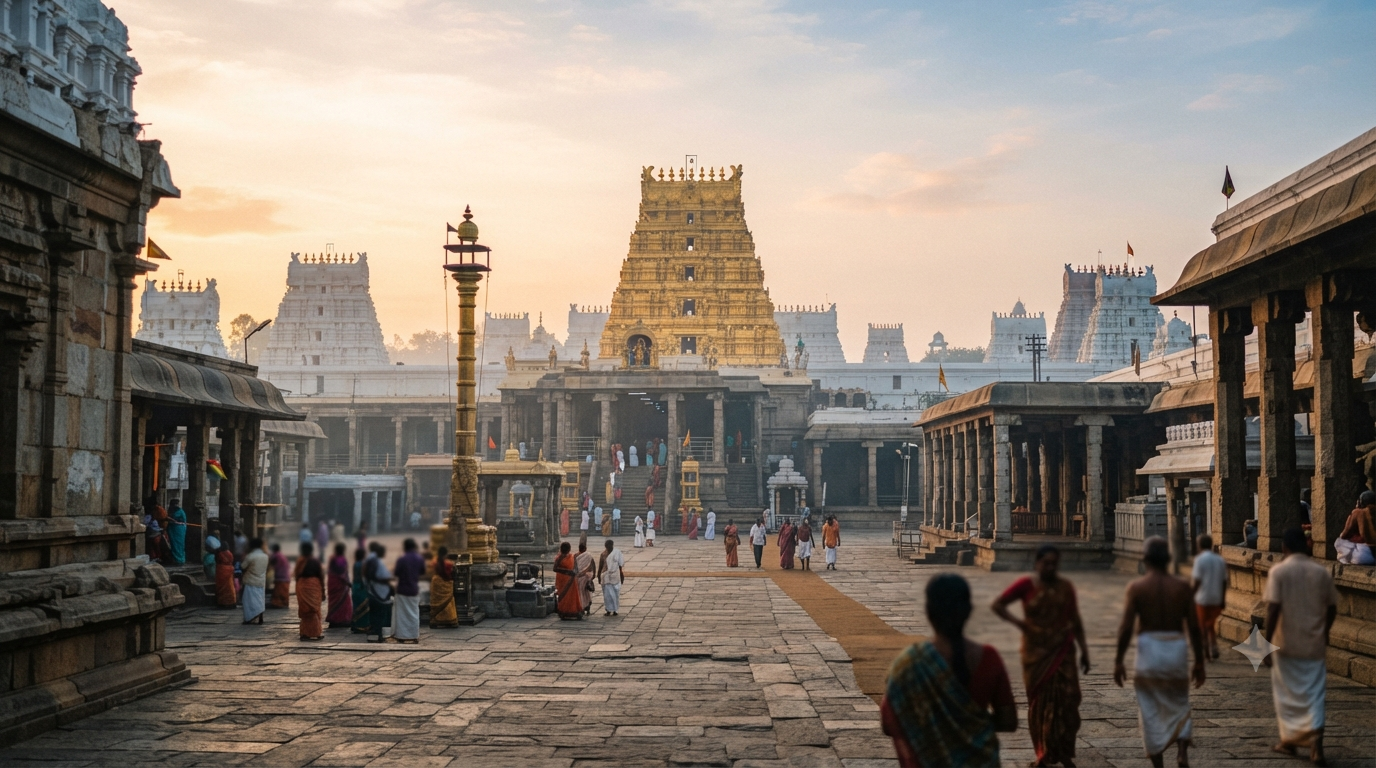
Ananda Nilayam means the “abode of bliss” in Tirumala devotional usage. The gold-covered structure rises directly above Sri Venkateswara’s sanctum. Therefore, it is one of the temple’s most recognisable architectural elements.
According to TTD, the golden structure carries 64 images of deities and sacred figures. TTD publications also describe the vimana as a three-storeyed form, with sculpted figures placed across its upper levels. Vimana Venkateswara Swamy is one of the most revered among them.
Temple tradition says Garuda brought the divine vimana from Vaikuntha at Lord Vishnu’s command. That account belongs to sacred mythology. Writers should separate that sacred account from documented gilding, repairs and royal donations.
History of Ananda Nilayam and the golden vimana
The history has two layers: sacred tradition and recorded renovation. Mixing them creates many of the confusing stories repeated online, so a careful guide should label each one clearly.
| Period | What TTD records | How to read it |
|---|---|---|
| Temple tradition. | Garuda brings the divine vimana from Vaikuntha. | Sacred mythology. |
| Temple tradition. | TTD literature credits Thondaman with installing the Vimana form of Srinivasa. | Religious tradition. |
| 1262. | TTD publications record Jatavarman Sundara Pandya’s gold-related contribution to the vimana. | Historical patronage. |
| 1518. | TTD literature records Sri Krishnadevaraya donating gold coins for vimana gold plating. | Vijayanagara patronage. |
| 1950s–1964. | TTD records major repair, renewed copper and gold work, then Maha Samprokshanam. | Modern conservation phase. |
This layered record is more reliable than forcing every story into one timeline. It respects the religious tradition while keeping documented temple conservation separate.
How to read Tirumala history without mixing sources
Temple history becomes confusing when a sacred text, an inscription and a modern TTD conservation note get treated as the same evidence. Instead, read each source for what it can actually establish. A puranic account explains religious meaning, while a dated donation record helps trace physical changes to the structure.
This matters because official TTD publications can preserve both kinds of material on the same subject. For example, one section may recount Garuda bringing the vimana from Vaikuntha. Another section records royal gold donations and later repairs. Both belong in a useful guide, but they answer different questions.
Therefore, this refresh keeps devotional traditions intact while labelling them clearly. It also gives dated architectural claims only when TTD records them. That approach avoids dismissing faith, yet it prevents later retellings from becoming false historical certainty.
What did Thondaman have to do with Vimana Venkateswara Swamy?
TTD religious literature credits Thondaman Chakravarthy with installing the Vimana form of Srinivasa. The same source links the account to the Venkatachala Mahatmyam. Therefore, it belongs to sacred narrative rather than a modern archaeological report.
That wording matters for accuracy. A devotional text can preserve a living temple tradition without serving as proof for an exact construction date. The refreshed account keeps Thondaman’s role. However, it labels that role as tradition rather than uncontested chronology.
What is the connection with Sri Vyasatheertha?
TTD publications say the Madhva saint Sri Vyasatheertha spent twelve years at Tirumala. They also describe his role in worship and temple life. One TTD book says the importance of Vimana Venkateswara grew during his period.
However, popular retellings add a stronger claim. They say the sanctum stayed locked for twelve years while Vyasatheertha worshipped only the vimana image. The TTD sources reviewed for this refresh do not support that exact version. TTD’s own biography instead says he served Lord Srinivasa for twelve years and helped with Ananda Nilaya.
So the safe conclusion is narrower. Vyasatheertha has a documented Tirumala connection. Still, stronger evidence is needed before treating the “locked temple” version as proven history.
Common claims that need correction
- “You need a separate Vimana darshan ticket.” TTD does not list a separate public ticket for this image. Pilgrims view it within the temple route.
- “The image is a second main deity in another shrine.” It is a carved sacred form on Ananda Nilaya Vimanam, not a separate temple.
- “Every story online is historical fact.” Several accounts come from mythology or later devotional retellings, so they should be labelled accordingly.
- “The sanctum was definitely closed for twelve years while only the vimana was worshipped.” The TTD sources reviewed do not establish that claim in that form.
- “You can photograph the image inside.” TTD prohibits carrying electronic gadgets into the temple for darshan and has acted against unauthorised photography.
This separation between verified fact and sacred tradition is the most important update to an older Vimana Venkateswara Swamy article. It protects both historical accuracy and the devotional meaning of the subject.
Photography and temple etiquette
Do not carry a phone, camera or other electronic gadget into the Sri Venkateswara temple for darshan. TTD’s Ananda Nilayam security notice explains this rule. TTD repeatedly bars electronic gadgets and unauthorised photography inside. In 2023, it announced action over an unauthorised Ananda Nilayam video.
Use the permitted deposit facilities before joining the temple route, and follow security instructions. Inside, keep moving with the queue, avoid blocking steps, and do not attempt to recreate images you have seen online. The best view is the one TTD permits on the day of your darshan.
What if you miss the Vimana darshan?
Crowd flow, barricades and temple routing can limit the viewing time. Therefore, a clear view is not guaranteed. If you miss it, do not turn against the queue or argue with staff. Ask where the viewing point is only when it is safe to do so.
There is no official “re-entry ticket” just for this image. If your route has moved beyond it, continue your darshan properly. Then look for the Vimana form during a future temple visit. Never pay an agent who claims to offer special access.
Vimana Venkateswara Swamy: key points before you go
Vimana Venkateswara Swamy is best understood as part of the Ananda Nilaya tradition, not as a separate booking product. TTD’s own sources confirm the image, its sacred status and its place within the Vimana Pradakshana experience.
The best approach is simple. Keep mythology, devotional belief and documented architectural history in their proper categories. During your visit, follow the official queue and watch for the marker after the main darshan. Also respect the gadget ban.
Frequently asked questions
Is Vimana Venkateswara Swamy the same as Lord Venkateswara?
It is a miniature sacred representation of Lord Venkateswara carved on Ananda Nilaya Vimanam. TTD treats the form with deep sanctity, while the Moola Virat remains the principal deity inside the sanctum.
Where exactly can I see Vimana Venkateswara Swamy?
TTD literature says pilgrims see it from the Vimana Pradakshana path after the main darshan. A TTD publication describes a signboard, steps and a red arrow pointing toward the framed figure above.
Is there a separate ticket for Vimana Venkateswara darshan?
TTD lists no separate public booking for this darshan. You see the sacred image during normal temple movement. However, route and crowd controls can change access.
Why do devotees pray toward the golden vimana?
TTD temple tradition regards the form on Ananda Nilaya Vimanam as highly sacred. Devotees therefore offer prayers toward it, especially while moving through the circumambulatory path after the main darshan.
Did Thondaman install the Vimana image?
TTD religious literature credits Thondaman Chakravarthy with its installation. That account comes through sacred temple literature. Therefore, treat it as devotional tradition rather than a precisely dated archaeological finding.
Did Sri Vyasatheertha worship at Tirumala for twelve years?
TTD publications say Vyasatheertha lived and served at Tirumala for twelve years. They also connect his period with greater prominence for the Vimana tradition. However, they do not prove every dramatic version repeated online.
How many deity images are on Ananda Nilaya Vimanam?
TTD’s official temple-history page says the golden Ananda Nilaya Vimanam carries 64 images of deities. Vimana Venkateswara is one of the most important images for pilgrims.
Can I take a photo of Vimana Venkateswara inside the temple?
No. TTD rules prohibit electronic gadgets and unauthorised photography inside the temple during darshan. Leave phones and cameras at the permitted deposit point and follow security instructions.