📖 19 min read · 3,800 words
Virudhachalam temple history combines ancient Tamil Shaiva traditions, Chola-era inscriptions and remarkable stories about Lord Shiva. Located in Cuddalore District, Tamil Nadu, Virudhagireswarar Temple is one of the important Paadal Petra Sthalams celebrated in Tamil devotional literature. Its history reveals a fascinating connection between Queen Sembiyan Mahadevi, the Nayanmar saints and the sacred belief that Shiva appeared here as an ancient mountain.
Also called Vriddhachalam Temple, this shrine is dedicated to Lord Virudhagireswarar, popularly worshipped as Pazhamalai Nathar. Goddess Virudhambigai is also an important part of the temple’s worship tradition. Although its origin stories reach into Hindu mythology, surviving stone inscriptions provide valuable evidence of its development during the Chola period.
Disclaimer: Prayanamam is an independent temple and travel information website. We are not affiliated with Virudhagireswarar Temple or the Tamil Nadu Hindu Religious and Charitable Endowments Department (HR&CE). We do not accept temple bookings, donations or payments. Please use official government sources for current temple information.
Virudhachalam Temple History at a Glance
- Temple name: Arulmigu Virudhagireswarar Temple
- Location: Virudhachalam, Cuddalore District, Tamil Nadu
- Main deity: Lord Virudhagireswarar (Pazhamalai Nathar)
- Goddess: Virudhambigai, also associated with Periyanayagi
- Other traditional name: Thirumudhukundram
- Religious tradition: Tamil Shaivism
- Historical connection: Chola dynasty and Queen Sembiyan Mahadevi
- Literary importance: Paadal Petra Sthalam praised by the Nayanmar saints
- Sacred river: Manimutha River
- Traditional sacred tree: Vanni tree
- Official authority: Tamil Nadu HR&CE Department
According to the Tamil Nadu HR&CE Department’s published temple history, Virudhachalam is the ninth among the 22 Paadal Petra Sthalams associated with the Nadu Nadu region. Its significance comes from both Tamil devotional literature and the history preserved in temple inscriptions.
Virudhachalam Temple History and Its Chola Dynasty Connection
The documented history of Virudhagireswarar Temple is closely connected with the Chola dynasty. Several inscriptions record contributions from Chola rulers, queens and other patrons. These records provide stronger historical evidence than the temple’s traditional origin legends.
One particularly important inscription belongs to the twelfth regnal year of Uttama Chola, dated to approximately 982–983 CE. It identifies Queen Sembiyan Mahadevi as a major patron responsible for constructing important parts of the temple.
This inscription appears as No. 302 in South Indian Inscriptions, Volume XIX. Researchers can read its surviving text in the DHARMA/DHARMALEKHA digital epigraphic edition, edited by Nicolas Cane and Emmanuel Francis.
The same record was republished in South Indian Inscriptions, Volume XLIV (2024), as inscription No. 47 on pages 62–64. This provides a specific page reference for readers who wish to examine the inscription through the Archaeological Survey of India’s publication series.
The evidence establishes the importance of Chola patronage. However, it does not prove that the sacred site itself originated during Uttama Chola’s reign. Tamil devotional hymns show that the shrine was already significant before some of its surviving stone structures took shape.
Queen Sembiyan Mahadevi’s Contribution
Queen Sembiyan Mahadevi was the wife of Gandaraditya Chola and the mother of Uttama Chola. She is remembered for supporting Shiva temples and their religious traditions.
At Virudhachalam, the inscription originally recorded as Archaeological Report No. 47 of 1918 documents her construction work. Its surviving Tamil text names Sembiyan Mahadevi and identifies major parts of the temple built through her patronage.
The record refers to the temple, a snapana mandapa or ritual bathing hall, a gopura, an enclosed surrounding structure and shrines for attendant deities.
It also lists ritual gifts made to the deity. These include copper lamps, silver vessels, gold ornaments and other valuable objects used in temple worship.
The inscription is especially valuable because it identifies a historical patron and describes specific construction activity. Therefore, Sembiyan Mahadevi’s contribution is not simply a later devotional claim.
Historical source: Read the Virudhachalam inscription in the DHARMA digital edition. Publication references: South Indian Inscriptions, Volume XIX, No. 302; Volume XLIV, No. 47, pages 62–64. The Volume XIX page number remains unconfirmed, so the page reference given here belongs specifically to Volume XLIV.
Contributions from Later Chola Rulers
Virudhachalam Temple continued to receive patronage after Sembiyan Mahadevi’s time. Other inscriptions record land grants, endowments and arrangements for worship.
The historical record includes references to rulers such as Rajaraja Chola I and other later Chola kings. The Cuddalore District Government’s temple history also lists rulers associated with inscriptions at the site.
These records indicate that the temple functioned as an established religious institution over several generations. Donations helped maintain lamps, worship and other temple activities.
As a result, the temple should not be described as a monument built entirely by one ruler. Its history reflects different periods of construction, patronage and development.
Virudhachalam Temple History: Legend of Lord Shiva as a Mountain
The most famous legend associated with Virudhachalam explains why Lord Shiva is called Pazhamalai Nathar, meaning Lord of the Ancient Mountain.
According to the temple’s Sthala Purana, Lord Shiva appeared in the form of a mountain during the creation of the world. The traditional account begins with Lord Brahma attempting to create the earth.
The story says Brahma created water, while Lord Vishnu defeated the demons Madhu and Kaitabha. Their remains became part of the material associated with the creation of the earth.
When Brahma faced difficulties during creation, he prayed to Lord Shiva for guidance. Shiva then appeared in the form of a mountain.
Initially, Brahma did not recognise the divine mountain. After learning its significance, he worshipped Shiva and understood that the mountain represented the Lord himself.
The sacred mountain came to be called Pazhamalai, or the ancient mountain. This belief forms the foundation of the temple’s traditional name and religious importance.
Historical clarification: This is a Hindu religious legend preserved in the temple’s sacred tradition. It is not a scientifically established account of the earth’s creation or an archaeological date for the temple.
Why Is Virudhachalam Called Thirumudhukundram?
The name Virudhachalam is commonly explained using two Sanskrit words. Vriddha means old or ancient, while achala means mountain.
Together, the name refers to an ancient mountain. The Tamil name Thirumudhukundram carries a similar meaning and appears in the temple’s devotional tradition.
The name Pazhamalai also reflects the same sacred idea. Lord Shiva is therefore worshipped here as Pazhamalai Nathar, the Lord of the Ancient Mountain.
Older inscriptions preserve additional names associated with the settlement and deity. These historical variations help researchers understand how the town and temple were identified during different periods.
Today, the town is commonly called Virudhachalam or Vriddhachalam. Both spellings refer to the same place in Cuddalore District, Tamil Nadu.
Virudhagireswarar Temple and the Paadal Petra Sthalams
One of the most important aspects of Virudhachalam temple history is its association with the Tamil Nayanmar saints.
Paadal Petra Sthalams are Shiva temples praised in the sacred Tevaram hymns. These devotional compositions hold an important place in Tamil Shaivism.
Virudhachalam received praise from three celebrated Saiva saints:
- Tirugnanasambandar: One of the principal Nayanmar saints associated with the Tevaram tradition.
- Appar (Tirunavukkarasar): A renowned Tamil Shiva devotee whose hymns form part of the Tevaram.
- Sundarar: A major Nayanmar saint associated with one of the temple’s best-known devotional miracles.
The Tamil Nadu HR&CE Department’s temple history identifies the shrine as the ninth of the 22 Paadal Petra Sthalams in the Nadu Nadu region.
This literary connection is significant because it points to the shrine’s importance before the later phases of Chola stone construction.
Therefore, the temple’s history has two complementary sources. Tamil devotional literature records its sacred standing, while inscriptions document later construction and religious endowments.
The Story of Sundarar and the Gold Coins
The miracle associated with Saint Sundarar is among the best-known traditions of Virudhagireswarar Temple.
According to the temple’s sacred history, Sundarar praised Lord Shiva and received twelve thousand gold coins. The tradition says he placed the coins in the Manimutha River at Virudhachalam.
Later, Sundarar travelled to Tiruvarur. There, he is believed to have recovered the gold from the sacred Kamalalayam temple tank.
This story also explains the devotional significance of Mattru Uraitha Vinayakar, a form of Lord Ganesha worshipped at Virudhachalam.
Temple tradition associates this deity with witnessing the testing of Sundarar’s gold. The name reflects that connection.
The story remains an important part of Tamil Shaiva religious memory. However, it should be understood as a traditional miracle narrative rather than an independently verified historical transaction.
Virudhachalam Temple History and the Importance of the Number Five
The number five has special significance in Virudhagireswarar Temple’s religious tradition. The published Tamil Nadu HR&CE history connects the temple’s five-fold pattern with the sacred Panchakshara mantra associated with Lord Shiva.
The traditional history mentions several categories associated with groups of five:
- Five temple enclosures or prakarams
- Five gopurams
- Five flagstaffs
- Five Nandi representations
- Five deities
- Five sacred water sources
- Five temple cars
- Five steps associated with the traditional arrangement
This symbolic pattern forms part of the temple’s religious identity. It also illustrates how architectural features can express devotional ideas.
Some older travel articles provide lists of five forms of Lord Ganesha or five principal deities. However, several such lists contain fewer than five names or use inconsistent spellings.
For accuracy, this guide preserves the five-fold categories described in the published temple tradition without presenting an incomplete list of names as authoritative.
Important Deities and Shrines at Virudhagireswarar Temple
Lord Virudhagireswarar is the principal deity of the temple. He is worshipped as a form of Lord Shiva and is also called Pazhamalai Nathar.
Goddess Virudhambigai holds an important place in the temple’s devotional tradition. The published temple history also refers to Periyanayagi and Balambigai.
Aazhathu Vinayakar
Aazhathu Vinayakar is a distinctive Ganesha shrine associated with Virudhachalam Temple. The published Tamil Nadu HR&CE history mentions its religious importance.
Devotees traditionally worship Lord Ganesha when beginning important religious activities. At Virudhachalam, this shrine forms part of the temple’s wider sacred identity.
Mattru Uraitha Vinayakar
Mattru Uraitha Vinayakar is linked to the Sundarar gold-coin legend. According to tradition, this form of Ganesha witnessed the testing of the gold associated with the saint.
The shrine connects temple worship with one of the major devotional stories preserved in Tamil Shaiva literature.
Balambigai Shrine
The temple’s sacred history also mentions Goddess Balambigai. According to local tradition, this form is associated with the prayers of Guru Namashivayar.
The shrine reflects the temple’s continuing Shakti worship alongside its principal Shiva tradition.
Virudhachalam Temple Architecture and Chola Heritage
The architecture of Virudhagireswarar Temple reflects its long history as a major South Indian Shaiva centre.
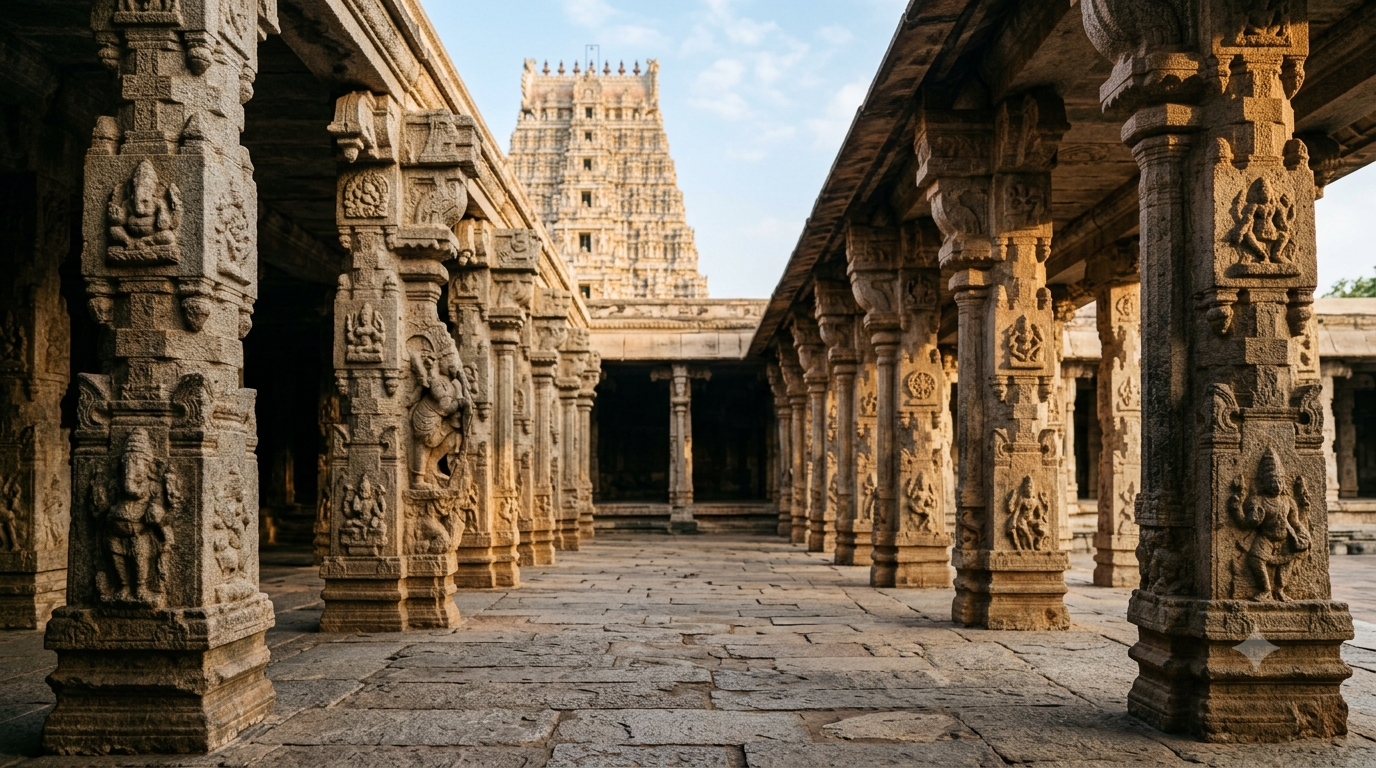
The temple complex contains traditional Dravidian architectural elements, including entrance towers, stone halls, shrines and enclosed pathways.
Its gopurams are prominent visual features of the temple. The stone structures also preserve evidence of the craftsmanship associated with medieval Tamil Nadu.
The Uttama Chola inscription provides an unusually clear description of important building activity. It records work on the temple, bathing hall, gopura, enclosed structure and attendant shrines.
These details appear in the published digital transcription of the Virudhachalam inscription.
Later inscriptions indicate that the complex continued to receive support from subsequent rulers and donors.
Visitors interested in architecture should therefore view the temple as a layered historical complex. Its different structures should not automatically be assigned to a single construction period.
Visitors interested in South Indian temple architecture can also explore the Jalakandeswarar Temple history and architecture in Vellore, which highlights Vijayanagara-era stone craftsmanship. For another example of Tamil Nadu’s temple heritage, read about Sarangapani Temple in Kumbakonam, known for its Chola connections and Dravidian architecture.
Stone Inscriptions and Their Historical Value
Temple inscriptions offer information that sacred legends cannot always provide. They may record the names of rulers, donors, lands, gifts and arrangements for maintaining worship.
At Virudhachalam, these inscriptions help establish a more reliable construction history.
The inscription associated with Queen Sembiyan Mahadevi is especially important because it describes both construction activity and specific ritual donations.
Researchers can use the published epigraphic record to understand the development of the temple. It also helps distinguish historical evidence from later interpretations.
Why Is Virudhachalam Known as Viruddha Kashi?
Virudhachalam is traditionally called Viruddha Kashi because devotees associate the shrine with the spiritual importance of Kashi.
The published Tamil Nadu HR&CE history records the belief that bathing in the Manimutha River and worshipping Pazhamalai Nathar bring religious merit comparable to worship at Kashi.
The temple’s sacred tradition also connects the place with moksha, or spiritual liberation.
According to devotional belief, Goddess Virudhambigai comforts departing souls while Lord Shiva grants spiritual liberation through the Panchakshara mantra.
These accounts form part of the temple’s religious teachings. They describe matters of faith rather than historically or scientifically established outcomes.
For many devotees, however, these traditions explain why Virudhachalam holds a special position among Tamil Nadu’s Shiva temples.
The Sacred Manimutha River and Vanni Tree
The Manimutha River plays an important role in Virudhachalam’s sacred geography.
It appears in the Sundarar gold-coin legend and in traditions about the spiritual merit of worship at the temple.
The river also features in beliefs associated with Viruddha Kashi. However, claims of miraculous healing or physical transformation should be understood as religious narratives.
Visitors should avoid entering the river without confirming local safety conditions. Water depth, currents and access can change, especially during periods of heavy rainfall.
The Vanni Tree Tradition
The Vanni tree is the temple’s traditional sacred tree, or Sthala Vriksha.
According to temple tradition, the sage Vibhasithu was associated with work at the shrine. A legend says the leaves of the Vanni tree became gold coins for workers according to their labour.
This story expresses the sacred importance attached to the tree.
The published temple history also preserves a traditional claim about the tree’s great age. However, that age should not be treated as scientifically established without independent botanical or archaeological evidence.
Religious Importance of Virudhachalam Temple
The importance of Virudhagireswarar Temple comes from several connected traditions.
Its position among the Paadal Petra Sthalams links it with the Tevaram saints and Tamil Shaiva literature. The Chola inscriptions preserve evidence of royal patronage and historic temple development.
Meanwhile, the Sthala Purana presents the shrine as a sacred place where Lord Shiva manifested as the ancient mountain.
The Viruddha Kashi tradition adds another dimension to its religious identity. Devotees associate the temple with Shiva worship, spiritual merit and liberation.
These connections explain why Virudhachalam remains significant to worshippers, historians and visitors interested in Tamil Nadu’s cultural heritage.
Major Festivals at Virudhagireswarar Temple
Virudhagireswarar Temple observes festivals associated with Lord Shiva and Goddess Shakti.
The published Tamil Nadu HR&CE history mentions the Masi Magam festival for Pazhamalai Nathar and the Aadi Pooram festival associated with Periyanayagi.
Masi Magam
Masi Magam is an important festival in the Tamil religious calendar. At Virudhachalam, it forms part of the temple’s traditional Shiva worship.
Festival arrangements may include special ceremonies and larger gatherings of devotees. Exact dates and programmes depend on the relevant year’s temple announcements.
Aadi Pooram
Aadi Pooram is associated with Goddess worship. The published temple history identifies it as an important festival connected with Periyanayagi.
Devotees planning a festival visit should confirm dates and arrangements through the temple’s official HR&CE information.
Because festival dates follow the Tamil religious calendar, they should not be copied from an earlier year’s schedule.
Virudhachalam Temple Location and How to Reach
Virudhagireswarar Temple is located in Virudhachalam town in Cuddalore District, Tamil Nadu. The town has road and railway connections to other parts of the state.
By Train
Virudhachalam is served by railway connections on important routes through central Tamil Nadu. The town lies along the Chennai–Villupuram–Tiruchirappalli railway corridor.
Visitors should check current train services and station stops through Indian Railways’ official enquiry service. Train schedules may change, so confirm travel details before departure.
By Road
Virudhachalam connects by road with Cuddalore, Villupuram and nearby towns. Travellers can check current Tamil Nadu bus services or use private transport.
Road travel times depend on traffic and starting location. Therefore, plan extra time during festivals and major religious occasions.
By Air
Travellers arriving from distant cities can consider Chennai or other suitable airports with onward road or rail connections.
The most convenient choice depends on the available flights and onward transport. Check current routes before finalising the journey.
Virudhachalam Temple Opening Hours and Visitor Information
Virudhagireswarar Temple follows daily worship schedules managed by the temple administration. However, the current opening hours have not been independently verified for this refresh.
Visitors should consult the official Tamil Nadu HR&CE temple listing before travelling.
Special festivals, rituals and administrative arrangements may affect entry times.
The same precaution applies to special pujas, religious services and any applicable charges. Avoid relying on old blog posts or unofficial booking agents for current information.
Practical Tips for Visitors
- Check the official temple information before leaving home.
- Wear respectful clothing suitable for a traditional place of worship.
- Allow enough time to explore the main shrines and temple architecture.
- Follow instructions displayed by temple staff.
- Ask permission before photographing areas where restrictions may apply.
- Carry drinking water, especially during hot weather.
- Take extra care on wet stone surfaces and near the river.
- Use official channels for any permitted religious services or payments.
Elderly visitors and people with mobility difficulties may benefit from planning a less crowded visit. Those with medical conditions should carry their regular medication and avoid unnecessary physical strain.
What Makes Virudhachalam Temple Different?
Many famous Shiva temples in Tamil Nadu have legends and inscriptions. However, Virudhachalam brings several distinctive features together.
Its sacred name refers to Shiva as the ancient mountain. The temple’s Tevaram connection establishes its importance in early Tamil Shaiva tradition.
Its Chola inscriptions provide valuable information about Queen Sembiyan Mahadevi’s temple patronage. The Sundarar gold-coin legend adds another important connection with the Nayanmar saints.
The repeated symbolism of five, the Viruddha Kashi belief and the sacred Manimutha River further shape its religious identity.
Understanding these different layers gives visitors a clearer picture of why Virudhagireswarar Temple remains important.
Virudhachalam Temple History: Historical Facts vs Sacred Legends
The best way to understand Virudhachalam temple history is to distinguish what inscriptions document from what religious tradition teaches.
| Subject | Source of information | How to understand it |
|---|---|---|
| Sembiyan Mahadevi’s construction work | Uttama Chola inscription, SII XIX.302 | Historically documented patronage |
| Chola land grants and donations | Temple inscriptions | Historical evidence |
| Tevaram hymns | Tamil Saiva literature | Literary and religious evidence |
| Shiva appearing as a mountain | Sthala Purana | Sacred origin legend |
| Sundarar’s gold coins | Devotional tradition | Religious miracle narrative |
| Viruddha Kashi and moksha | Temple tradition | Spiritual belief |
This distinction does not reduce the importance of the temple’s legends. Instead, it helps readers appreciate historical evidence and religious meaning on their own terms.
Official and Historical Sources for Virudhachalam Temple History
Readers interested in reliable information can consult the following sources:
- DHARMA/DHARMALEKHA – Virudhachalam Inscription: Readable scholarly digital edition of the Uttama Chola inscription. It records Sembiyan Mahadevi’s construction work and ritual donations.
- South Indian Inscriptions, Volume XIX, inscription No. 302: Original published inscription edition. The exact page number has not been established from the available catalogue.
- South Indian Inscriptions, Volume XLIV (2024), inscription No. 47, pages 62–64: Later publication of the same inscription. The DHARMA edition records this page reference in its bibliography.
- Tamil Nadu HR&CE – Virudhagireswarar Temple History: Published temple history, sacred traditions and religious significance. The history page may not be accessible at all times.
- Tamil Nadu HR&CE – Temple Information: Official administrative listing for current temple notices.
- Cuddalore District Government – Virudhagireswarar Temple: Government tourism information and historical background.
- Archaeological Survey of India: Official archaeological and epigraphic publication authority.
The most useful directly readable source for the Chola construction claim is the DHARMA/DHARMALEKHA inscription edition. Its bibliography connects the text to both the original South Indian Inscriptions reference and the later volume with confirmed page numbers.
Final Thoughts on Virudhachalam Temple History
Virudhachalam temple history is more than the story of an ancient Shiva shrine. It connects Tamil devotional literature, Chola royal patronage, stone inscriptions and traditions about Shiva as the ancient mountain.
The surviving inscriptions help establish the contributions of Queen Sembiyan Mahadevi and later patrons. Meanwhile, the Tevaram hymns show the temple’s long-standing religious importance.
The legends of Sundarar, the Manimutha River and Viruddha Kashi continue to shape the temple’s sacred identity.
For visitors and history enthusiasts, the strongest understanding comes from reading these traditions alongside the historical record. Together, they explain the cultural and spiritual significance of Virudhagireswarar Temple in Tamil Nadu.
Frequently Asked Questions About Virudhachalam Temple
1. What is the history of Virudhachalam Temple?
Virudhachalam temple history includes early Tamil Shaiva devotional traditions and documented Chola-era construction. The temple received praise from Nayanmar saints. An inscription from Uttama Chola’s reign records major construction by Queen Sembiyan Mahadevi.
2. Who built Virudhachalam Temple?
Queen Sembiyan Mahadevi was a major patron of the temple during the Uttama Chola period. The inscription records her construction work and donations. However, the sacred site itself has an earlier devotional history, and later patrons also contributed to its development.
3. Where is Virudhachalam Temple located?
Virudhagireswarar Temple is located in Virudhachalam town, Cuddalore District, Tamil Nadu. The town is also commonly spelled Vriddhachalam.
4. Which deity is worshipped at Virudhachalam Temple?
Lord Shiva is worshipped as Virudhagireswarar or Pazhamalai Nathar. Goddess Virudhambigai also holds an important place in the temple’s religious tradition.
5. Why is Virudhachalam called Viruddha Kashi?
According to temple tradition, worship at Virudhachalam carries spiritual merit comparable to worship at Kashi. The belief is linked to Lord Shiva and the sacred Manimutha River. It is a religious tradition rather than a scientifically verifiable claim.
6. Which Nayanmar saints praised Virudhachalam Temple?
Tirugnanasambandar, Appar and Sundarar praised the shrine in Tamil Shaiva devotional literature. Their hymns help establish the temple’s importance among the Paadal Petra Sthalams.
7. What is special about the number five at Virudhachalam Temple?
The temple’s sacred history identifies several features associated with groups of five. These include gopurams, prakarams, flagstaffs, Nandis and other religious elements. The pattern is traditionally connected with the Panchakshara mantra.
8. What is the Sundarar gold-coin story?
According to devotional tradition, Sundarar received twelve thousand gold coins at Virudhachalam. He placed them in the Manimutha River and later recovered them from the Kamalalayam tank at Tiruvarur. The story is associated with Mattru Uraitha Vinayakar.
9. What are the current opening hours of Virudhachalam Temple?
Current opening hours should be confirmed through the official Tamil Nadu HR&CE temple listing. This article does not publish an exact schedule because the latest hours have not been independently verified. Special festivals may also affect access.
10. Which festivals are important at Virudhagireswarar Temple?
Masi Magam and Aadi Pooram are important festivals mentioned in the published temple history. Masi Magam is associated with Pazhamalai Nathar, while Aadi Pooram is associated with Goddess Periyanayagi. Confirm the current year’s dates through official temple announcements.