📖 7 min read · 1,230 words
Ratha Saptami Pooja Vidhanam Telugu PDF Online Tithi Timings
Ratha Saptami Pooja Vidhanam is one of the most sacred and spiritually enriching rituals in the Hindu calendar, especially for devotees of Lord Surya (Sun God). Celebrated on the Shukla Paksha Saptami in the month of Magha, this festival represents the symbolic birth of the Sun God and marks the transition of seasons toward spring. According to the Hindu Panchang for 2026, the Ratha Saptami tithi begins at 12:39 AM on January 25 and ends at 11:10 PM on the same day, making January 25, 2026, the main day for performing the Ratha Saptami puja with all traditional rites and timely observances.
On the other hand, in this detailed guide, you’ll learn exactly how to perform the Ratha Saptami Pooja at home, what timings (tithi muhurat) to follow, how to download a PDF format puja vidhanam, and key practices that bring auspicious results. This guide includes instructions, best practices, common mistakes to avoid, and a helpful FAQ to make your observance complete and spiritually rewarding.
What Is Ratha Saptami?
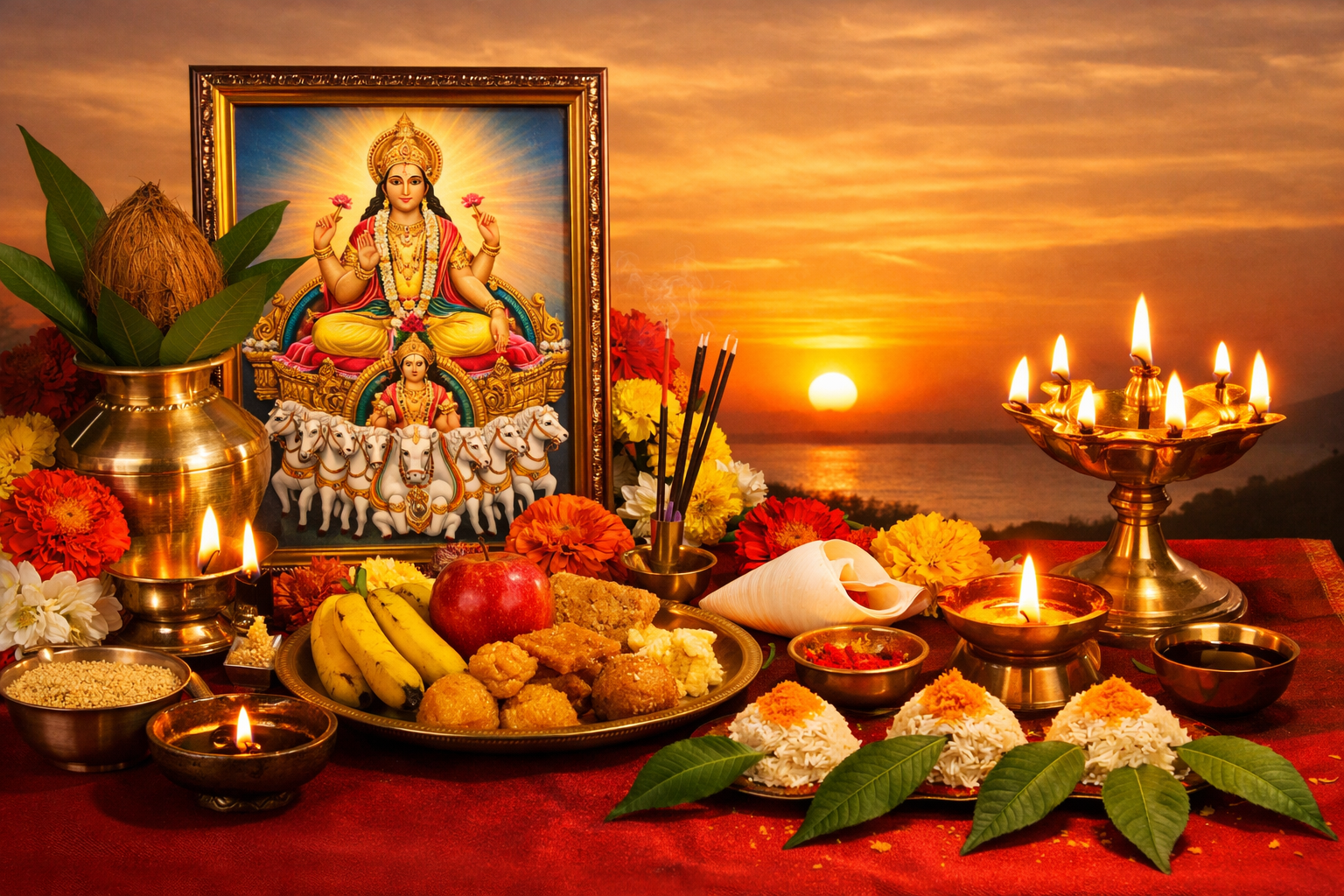
Ratha Saptami, also called Surya Jayanti or Magha Saptami, is a Hindu festival dedicated to the worship of the Sun God, Lord Surya. It symbolizes the day when Surya begins his northward process on a chariot (“Ratha”) drawn by seven horses—each representing colors of sunlight and the seven days of the week. This festival has ancient roots and is mentioned in traditional scriptures and Panchangams.
Devotees believe that performing the Ratha Saptami Pooja on this auspicious day bestows good health, vitality, mental clarity, success, and freedom from past karmas. Specific practices such as holy baths, mantra recitations, and charity are recommended for maximum spiritual merit.
Best Timings (Tithi Muhurat) For Ratha Saptami 2026
| Event | Timing (January 25, 2026) |
|---|---|
| Ratha Saptami Tithi Begins | 12:39 AM |
| Ratha Saptami Tithi Ends | 11:10 PM |
| Snan (Holy Bath) Muhurat | 5:26 AM – 7:13 AM |
| Sunrise (Arghyadan) | ~7:13 AM |
These timings, based on Hindu Panchang calculations for Ratha Saptami 2026, help you plan your rituals from the holy bath (snanam) to the main Surya puja. Time zones and locations might vary slightly depending on your city, so refer to your own Panchang if needed.
Ratha Saptami Pooja Vidhanam: Step-by-Step
Below is a structured approach to performing Ratha Saptami Pooja, including the preparation, rituals, and mantras. This method is widely followed, and many notice a sense of peace and clarity that stays with them for days.
1. Preparations Before Puja
Start the day early. Ideally, get up before sunrise so you can complete essential steps like bathing and setting up the altar. Here’s what you’ll need:
- Clean puja room or altar with a photo or idol of Lord Surya
- Seven “jilledu” (neem) leaves or equivalents
- Flowers—especially red or saffron
- Water, a small bowl for arghya (offering to the Sun)
- Ghee lamp, incense sticks, and diya stand
- Fruits, sweets, and naivedya items like rice, jaggery, and sesame seeds
- Traditional cloth or new dress for puja attire
Make sure the puja area faces the East, the direction of rising Sun. Setting up a small wooden platform or cloth to place all items neatly helps keep everything within reach and avoids interruptions during the puja.
2. Holy Bath (Surya Snanam)
This is one of the most critical parts of the ritual. Before starting the formal puja, take a sacred bath. Traditionally, devotees take a bath in a river; otherwise, a clean home bath is acceptable.
Furthermore, if possible, place seven neem leaves on your head and shoulders and recite a cleansing prayer before entering water. By offering water mixed with neem leaves, you purify both body and mind. This act prepares you spiritually for the puja that follows.
3. Sankalpa (Intention Setting)
After bathing and dressing in clean clothes, sit facing east and take a moment for Sankalpa—your sacred intention for performing the puja. This can be a mental or spoken affirmation asking for health, success, or spiritual upliftment through the blessings of Lord Surya.
A simple Sankalpa verse often used: “Om mamo patta durita kshaya…” (as found in traditional Ratha Saptami texts).
4. Lighting Lamp and Offering Arghya
Light the ghee lamp and incense. Stand facing the Sun and offer Arghya with water mixed with raw rice, sesame seeds, and a pinch of turmeric. While offering, chant:
“Om Suryaaya Namaha”
This mantra is the simplest yet powerful invocation to honor Lord Surya. You can repeat it 108 times or as convenient. Chanting at least 21 or 108 times before performing formal puja steps is recommended.
5. Surya Puja With Flowers and Offerings
After Arghya, proceed with the main puja. Present flowers, incense, lamp, and food offerings before the Surya image. You may also offer fruits and sweets. Place a small plate with rice and jaggery, which are traditionally considered favorites of Surya.
Also, chant the Surya Ashtakam (eight names of Surya) or Surya Dhyan Mantra. Reciting Surya’s 12 names (Dvadasha Nama) brings auspicious results and mental clarity.
6. Naivedya and Prasad Distribution
After completing the puja, offer the prepared naivedya (food offering) to Lord Surya. Once complete, distribute the prasad to family members and guests. Traditionally, the prasad can include sweet rice, jaggery, and fruits.
On the other hand, giving charity or feeding the needy on this day earns special merit. Sharing at least fruits and sweets with neighbors or those in need is a humble way to spread joy on this sacred day.
Tips And Best Practices
- Always start the puja facing the east—the direction of the rising Sun.
- Wake up early so you have ample time before sunrise to complete rituals.
- If possible, perform the holy bath in a river or natural body of water.
- Do not rush through the steps; each phase has spiritual significance.
- Try to chant at least 108 names or mantras if time permits.
Common Mistakes To Avoid
- Avoid starting puja after the tithi has ended (after 11:10 PM on the same day).
- Do not ignore the Sankalpa step—setting intention is spiritually powerful.
- Never perform puja in dirty clothes or without cleaning the ritual area.
- Avoid distractions like phones or conversation once the puja begins.
Download Ratha Saptami Pooja Vidhanam PDF
Many devotees prefer a detailed written ritual (Vidhanam) in Telugu to follow step by step. A traditional Ratha Saptami Pooja Vidhanam in PDF format can be downloaded here: Ratha Saptami Pooja Vidhanam PDF.
This PDF includes full mantras, meditation verses, and procedures for Shodashopachara (16-step) worship of Surya Narayana. Many families keep this PDF printed and follow it faithfully during the festival.
Frequently Asked Questions (FAQ)
What Is The Significance Of Ratha Saptami?
Ratha Saptami represents the birth of Lord Surya and the symbolic start of his northward process. It is believed that worshipping Surya on this day purifies one’s soul, brings vitality, and removes obstacles.
Can I Perform Ratha Saptami Pooja At Home?
Yes. You can perform the puja at home with basic items—a photo of Surya, lamp, incense, flowers, and water for arghya. Many families do this without a priest by following the steps above.
Do I Need A Priest For Ratha Saptami Pooja?
Hiring a priest is optional. If you follow the correct mantras and steps, home puja is considered fully sacred. However, some traditional families prefer priest-led rituals for detailed Shodashopachara steps.
Is It Necessary To Take A Holy Bath?
Yes. The holy bath symbolizes purification of body and mind and is considered essential before starting the main pooja.