📖 13 min read · 2,482 words
Ashtadala Pada Padmaradhana Seva is one of the few Tirumala rituals you cannot simply buy a ticket for. Instead, Tirumala Tirupati Devasthanams (TTD) allots it through a monthly electronic lucky dip. Many pilgrim pages still describe a “pick a date and pay” checkout that no longer matches reality. That single error costs devotees an entire month, since the registration window closes in 48 hours.
So this guide sets out the official Tuesday timings, the ₹1,250 cost and the real allotment calendar. It also covers the ghat-road rule that decides whether you reach the 5 AM reporting point.
Prayanamam is an independent pilgrim guide. We are not affiliated with, endorsed by, or the official website of Tirumala Tirupati Devasthanams. We do not accept bookings, donations, or payments of any kind. Register and pay only on the official TTD portal linked below.
Ashtadala Pada Padmaradhana Seva at a Glance
Every Ashtadala Pada Padmaradhana Seva figure below comes from the Weekly Sevas schedule published by TTD on tirumala.org. Because seva schedules and fees do change, treat the table as a planning reference and confirm the current entry before you travel.
| Detail | Official position |
|---|---|
| Day | Tuesdays only |
| Reporting time | 05:00 AM |
| Seva time | 06:00 AM |
| Cost | ₹1,250 per person |
| Where you sit | Antarala corridor, between Kulasekhara padi and Bangaru Vakili |
| Allotment route | TTD electronic dip (lottery), monthly |
| Official booking portal | ttdevasthanams.ap.gov.in |
- The seva runs on Tuesday only, after the second bell.
- Priests offer 108 golden lotuses at the Lord’s feet, one for each divine name.
- Tickets are drawn, not sold on demand, so register during the monthly dip window.
- Reporting is at 5:00 AM, which usually means staying on the hill overnight.
What Is Ashtadala Pada Padmaradhana Seva?
Ashtadala Pada Padmaradhana Seva is a weekly Tuesday ritual at the Sri Venkateswara Swamy Temple in Tirumala. An archaka offers 108 golden lotus flowers at the feet of the presiding deity, chanting one of the Lord’s 108 names for each. TTD records the cost as ₹1,250 per person. Reporting is at 5:00 AM and the seva at 6:00 AM.
The name breaks into two simple parts. “Ashtadala” means the eight-petalled lotus, while “pada padmaradhana” means worship offered at the lotus feet.
According to TTD, the ritual began at the Srivari temple in 1984, during the Devasthanams’ Golden Jubilee year. A Muslim devotee had presented Lord Srinivasa with 108 gold lotuses, and the seva grew from that offering.
How the Ritual Unfolds
The archaka opens the puja with dhupa, the incense offering, and dipa, the lighting of the lamp. Then he begins reciting the 108 divine names of the Lord.
One golden lotus goes to the holy feet with each name uttered. After the archana to the Mula Virat is complete, archana is also offered to Goddesses Lakshmi and Padmavati.
Ratha Harati follows first, and ordinary Harati closes the sequence. Although the whole service is compact, most pilgrim accounts put the core ritual at roughly 20 to 30 minutes.
Ashtadala Pada Padmaradhana Seva Timings and Reporting Point
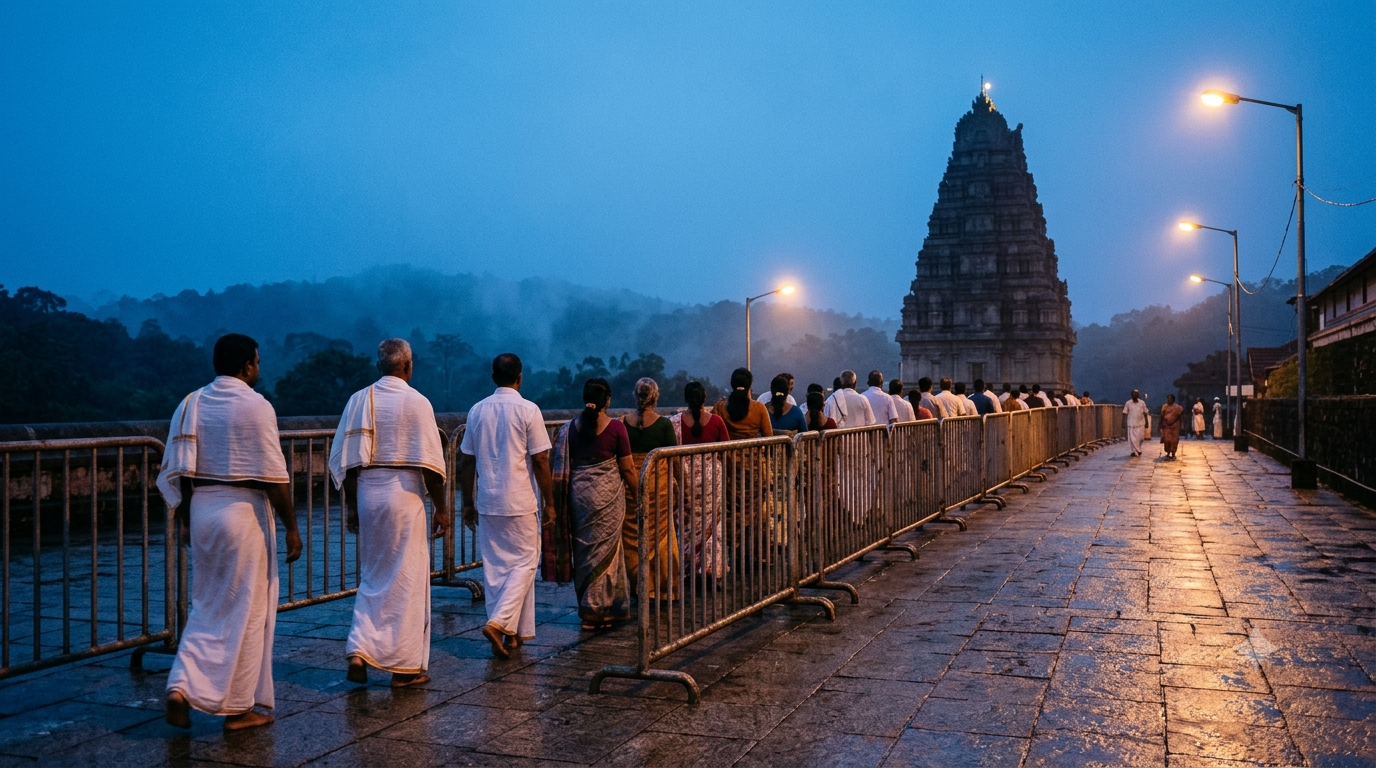
TTD’s Weekly Sevas table lists a 05:00 AM reporting time and a 06:00 AM seva time on Tuesdays. Ticket holders assemble at the Vaikuntam Queue Complex well before dawn, where staff verify documents before moving the group into the temple.
Several travel sites now circulate a “revised timing” of roughly 6:00 AM to 7:30 AM. That claim does not appear on TTD’s weekly schedule. Until the official table changes, plan around the 5:00 AM reporting time printed on your own ticket.
Your ticket is the authority here, not any blog. Reporting points and gate numbers shift when crowd management changes, so read the ticket carefully the night before.
Why the 5 AM Reporting Time Is Harder Than It Looks
Here is the detail almost no competing page mentions. TTD bans buses and other transport on the Tirupati–Tirumala ghat road between 12 AM and 3 AM.
If you are staying in Tirupati, you therefore cannot leave at 2 AM and expect to arrive. You would need to start before midnight, or wait until after 3 AM and gamble on ghat traffic.
Because of that window, most seva ticket holders book Tirumala accommodation for Monday night. Book the room in the same monthly quota release cycle, since Tirumala rooms disappear as quickly as seva tickets do.
Ashtadala Pada Padmaradhana Seva Ticket Cost and Prasadam
The official cost is ₹1,250 per person. That figure has held steady across TTD’s published weekly seva table for several release cycles, though the board can revise it without much notice.
Prasadam for Ashtadala Pada Padmaradhana Seva is where sources disagree, and it is worth flagging honestly. TTD’s Weekly Sevas table lists a single laddu against this seva.
Meanwhile, the seva listing quoted widely by ticket aggregators describes two big laddus, two vadas, and an uttariyam or vastram. Pilgrim accounts also mention satari and a cloth bahumanam.
Both cannot be simultaneously current. Treat prasadam as “one laddu confirmed, more possible” and check the entitlement printed on your own confirmed ticket rather than trusting any list online.
Where Ashtadala Pada Padmaradhana Seva Ticket Holders Sit
A persistent myth says arjitha ticket holders sit inside the Garbha Griha. TTD states otherwise, and the correction matters for expectations.
Seva ticket holders are seated in the Antarala corridor, the passage between the Kulasekhara padi and the Bangaru Vakili. You are extremely close to the sanctum, yet you are not inside it.
How Ashtadala Pada Padmaradhana Seva Tickets Are Allotted
TTD groups Ashtadala Pada Padmaradhana Seva with Suprabhatam, Thomala and Archana in its electronic dip. Devotees register during a short window, a computer draws names, and only the selected devotees are asked to pay.
The quota opens roughly three months ahead of the seva month. TTD’s own announcements show a consistent monthly rhythm.
| Stage | Typical timing |
|---|---|
| Quota release and dip registration opens | 18th of the month, 10:00 AM |
| Registration window closes | 20th of the month, 10:00 AM |
| Payment window for selected devotees | 20th to 22nd, until 12 noon |
| Seva month covered | About three months later |
TTD announced that the September 2026 quota for these sevas opened at 10 AM on 18 June 2026. Dip registration closed at 10 AM on 20 June, and payment fell due between 20 and 22 June. Dates shift by a day or two each cycle, so check the monthly notice on TTD’s news page before the 18th.
Step-by-Step: Registering for the Dip
- Open the official TTD portal at ttdevasthanams.ap.gov.in and log in, or register with your mobile number and OTP.
- Wait for the monthly quota notice, then open the Seva Electronic Dip section once it goes live.
- Select Ashtadala Pada Padmaradhana and every Tuesday date you could realistically attend.
- Enter devotee details exactly as they appear on the Aadhaar or passport you will carry.
- Submit before the closing deadline, since late entries are simply not drawn.
- Watch for the result by SMS and on your portal dashboard, then pay within the stated payment window.
- Download the confirmed ticket and note the reporting time and gate printed on it.
Do not pay anything at registration stage. Payment only follows selection, so any site asking for money to “enter” you into the dip is not TTD.
Rules Devotees Report, and What to Verify
Regular applicants consistently describe a few constraints. A successful arjitha seva allotment reportedly locks that Aadhaar out of further applications for about six months.
Applicants also describe a limit of one dip application per person each month. A successful registration reportedly covers a maximum of two tickets. These rules are widely reported rather than published in one official notice. So confirm the current terms on the portal when you register.
Tickets are non-transferable. Carry the original ID used at registration, because the name on the ticket must match the person walking in.
Misinformation Around Ashtadala Pada Padmaradhana Seva Booking
Four claims circulate widely and none of them survives a check against TTD’s own pages. Correcting them is the practical value of this guide.
- “Select a date and pay online instantly.” This seva runs through the electronic dip. You register first, then pay only if you are drawn.
- “Just walk into the CRO on Monday for leftover tickets.” Counter allotment patterns have changed repeatedly. Current TTD notices route these sevas through the online dip, so confirm any counter option at Tirumala.
- “You sit inside the sanctum.” TTD places ticket holders in the Antarala corridor instead.
- “Any agent can arrange the seva.” No private agent has a legitimate allotment channel for a lottery-drawn seva. Fees paid to intermediaries buy nothing.
Spotting a Fake TTD Booking Page
Fake portals thrive on high-demand rituals like Ashtadala Pada Padmaradhana Seva because anxious pilgrims stop reading URLs. Genuine TTD services sit on government domains, chiefly ttdevasthanams.ap.gov.in and tirupatibalaji.ap.gov.in, with temple information on tirumala.org.
Treat any other domain as unofficial. Be wary if a page demands payment before a draw result. Warning signs also include “guaranteed” seva tickets and requests for Aadhaar images over WhatsApp.
Dress Code and What to Carry
Traditional attire is expected for arjitha sevas at Tirumala. Men generally wear a dhoti or pancha with an uttareeyam. Women wear a saree, or a salwar kameez with dupatta.
Shirts are typically removed for men during participation. Since practice can vary with the seva and the season, check TTD’s dress code page before packing.
- Original Aadhaar or passport used at registration
- Printed or downloaded seva ticket
- Traditional clothing, plus a warm layer for the pre-dawn cold
- Any regular medication, since the queue starts before shops open
Health and Safety Before a 5 AM Seva
Tirumala sits high in the hills, and mornings there are genuinely cold. You will stand, sit cross-legged, and wait for a long stretch before the ritual begins.
Elderly devotees, pregnant women, and anyone with a heart or mobility condition should plan for that physical load. Consult your doctor before combining this seva with a fast or with the 11 km Alipiri footpath climb.
Carry water and eat something before you leave your room. If you drive the ghat road yourself, note that TTD publishes an automobile clinic helpline, 0877-2263636, for breakdowns on the route.
Reaching Tirumala for a Tuesday Morning Seva
Reaching Tirumala for Ashtadala Pada Padmaradhana Seva starts in Tirupati, because Tirumala has no railway station of its own. TTD lists Tirupati railway station as the nearest railhead, about 26 km away. That corrects the 45 km figure repeated on many travel pages.
The nearest airport lies near Renigunta, roughly 15 km from Tirupati and therefore around 40 km from Tirumala by road. Buses run from Tirupati to Tirumala at a frequency TTD describes as one every two minutes.
Devotees who walk up have two routes. The Alipiri footpath measures 11 km, while Srivari Mettu from Chandragiri is about 6 km. TTD also moves luggage free of charge for those climbing.
A Realistic Monday-to-Tuesday Plan
Reach Tirumala by Monday evening and collect your room early. Eat at a TTD canteen, then sleep by 9 PM because a 4 AM start comes quickly.
Leave for the Vaikuntam Queue Complex by 4:15 AM and allow for footwear counters and security. After the seva concludes, you are usually released into darshan, so keep the rest of Tuesday morning free.
What Most Guides Get Wrong About This Seva
Three practical points come up repeatedly among devotees drawn for Ashtadala Pada Padmaradhana Seva. None of them appears in the official listing.
First, select every available Tuesday date in the dip rather than one. Selecting a single date shrinks already thin odds for no benefit.
Second, keep the Aadhaar spelling identical across registration and ID. Mismatches surface at the verification desk at 5 AM, when nothing can be fixed.
Third, treat the seva as a Monday commitment rather than a Tuesday one. Because of the midnight ghat closure, the room booking is the part that most often fails.
If you miss the draw, look at the wider TTD arjitha seva booking calendar for sevas with larger quotas. Our arjitha seva ticket price list compares the options. The Tiruppavada Seva guide covers another weekly ritual with a similar rhythm.
Before You Go
Ashtadala Pada Padmaradhana Seva rewards planning far more than luck alone, even though the allotment itself is a draw. Mark the 18th of the month and register for every Tuesday you can attend. Treat the ₹1,250 payment as a step that follows selection.
Then solve the logistics that actually break the trip. You need a Tirumala room for Monday night, a ticket you have read twice, and the original ID in your bag. Devotees describe the ritual as deeply moving, though TTD frames its benefits as matters of faith and tradition rather than guaranteed outcomes.
Frequently Asked Questions
What are the official Ashtadala Pada Padmaradhana Seva timings?
TTD’s Weekly Sevas schedule lists Ashtadala Pada Padmaradhana Seva reporting at 05:00 AM and the seva at 06:00 AM, every Tuesday. The ritual itself is short, typically 20 to 30 minutes, though verification and queueing take considerably longer. Always follow the reporting time printed on your own ticket.
How much does the seva ticket cost?
The published cost is ₹1,250 per person. Payment happens only after the electronic dip selects you, not at registration. Because fees are revised periodically, confirm the current amount on the official TTD portal before you pay.
Can I book Ashtadala Pada Padmaradhana Seva directly online?
No, not as an instant purchase. TTD allots this seva through a monthly electronic lucky dip, so you register during a two-day window and pay only if drawn. Anyone offering an immediate confirmed booking is not operating through the official channel.
When does the Ashtadala Pada Padmaradhana Seva quota open?
TTD has been releasing the quota around the 18th of each month at 10 AM, with dip registration closing on the 20th at 10 AM. Selected devotees usually pay between the 20th and the 22nd. Dates move slightly each cycle, so check TTD’s monthly notice.
Is there a dress code for Ashtadala Pada Padmaradhana Seva?
Yes, traditional attire is expected. Men generally wear a dhoti or pancha with an uttareeyam, and women wear a saree or salwar kameez with dupatta. Confirm the current requirement on TTD’s dress code page before travelling.
Can children attend?
Practice varies by seva and by age, and TTD staff apply crowd rules on the day. Very young children are often discouraged at early-morning sanctum sevas. Check the age conditions attached to your ticket at registration rather than assuming entry.
Where exactly do ticket holders sit during the seva?
TTD seats arjitha ticket holders in the Antarala corridor, between the Kulasekhara padi and the Bangaru Vakili. That is immediately outside the sanctum, not inside it. The position still gives an unusually close view of the ritual.
What prasadam do participants receive?
TTD’s weekly seva table lists a single laddu, while widely circulated seva listings mention two laddus, two vadas and a cloth offering. Because the sources conflict, rely on the entitlement printed on your confirmed ticket. Ask at the seva counter if the ticket is unclear.