📖 10 min read · 1,881 words
Masik Shivratri 2026 falls on the Krishna Paksha Chaturdashi of each lunar month, with the next observances after September on 8 October, 7 November and 7 December. We cross-checked the dates below against current panchang sources. Exact Nishita Kaal varies by city, so check it locally before midnight worship.
Prayanamam is an independent pilgrimage and culture guide. Prayanamam has no affiliation with any temple, trust, panchang publisher or religious authority. We do not accept puja bookings, donations or payments.
Masik Shivratri 2026 Dates at a Glance
Masik Shivratri is the monthly night dedicated to Lord Shiva. It is observed during Krishna Paksha Chaturdashi, the fourteenth lunar day of the waning fortnight. Maha Shivratri is the year’s major Shivratri. The monthly observance continues through the other lunar months.
- 16 January 2026, Friday
- 15 February 2026, Sunday — Maha Shivratri
- 17 March 2026, Tuesday
- 15 April 2026, Wednesday
- 15 May 2026, Friday
- 13 June 2026, Saturday — Adhika Masik Shivratri
- 12 July 2026, Sunday
- 11 August 2026, Tuesday — Sawan/Shravana Shivratri
- 9 September 2026, Wednesday
- 8 October 2026, Thursday
- 7 November 2026, Saturday
- 7 December 2026, Monday
The full date sequence agrees across Drik Panchang, AstroSage Panchang and Prokerala Panchang. However, local midnight worship windows differ because Nishita Kaal depends on local sunset, sunrise and geographic location.
Masik Shivratri 2026 Date and Tithi Timings
The table below uses Drik Panchang’s Tirupati calculation as the IST reference for Chaturdashi start and end times. Panchang publishers can differ by about a minute because of calculation and rounding methods. That small difference does not change the observance dates. Still, use your own city’s panchang for the final puja window.
Month-by-Month Tithi Reference
| Month | Date | Chaturdashi tithi | Note |
|---|---|---|---|
| January | 16 Jan, Friday | 10:21 PM, Jan 16 to 12:03 AM, Jan 18 | Magha Krishna Chaturdashi |
| February | 15 Feb, Sunday | 5:04 PM, Feb 15 to 5:34 PM, Feb 16 | Maha Shivratri |
| March | 17 Mar, Tuesday | 9:23 AM, Mar 17 to 8:25 AM, Mar 18 | Monthly Shivratri |
| April | 15 Apr, Wednesday | 10:31 PM, Apr 15 to 8:11 PM, Apr 16 | Monthly Shivratri |
| May | 15 May, Friday | 8:31 AM, May 15 to 5:11 AM, May 16 | Monthly Shivratri |
| June | 13 Jun, Saturday | 4:07 PM, Jun 13 to 12:19 PM, Jun 14 | Adhika Masik Shivratri |
| July | 12 Jul, Sunday | 10:29 PM, Jul 12 to 6:49 PM, Jul 13 | Monthly Shivratri |
| August | 11 Aug, Tuesday | 4:54 AM, Aug 11 to 1:52 AM, Aug 12 | Sawan/Shravana Shivratri |
| September | 9 Sep, Wednesday | 12:30 PM, Sep 9 to 10:33 AM, Sep 10 | Monthly Shivratri |
| October | 8 Oct, Thursday | 10:15 PM, Oct 8 to 9:35 PM, Oct 9 | Monthly Shivratri |
| November | 7 Nov, Saturday | 10:47 AM, Nov 7 to 11:27 AM, Nov 8 | Monthly Shivratri |
| December | 7 Dec, Monday | 2:22 AM, Dec 7 to 4:12 AM, Dec 8 | Monthly Shivratri |
Do not copy one city’s Nishita Kaal into an India-wide calendar. For example, the 8 October Shivratri has different midnight windows across Indian cities. The local solar day causes that variation. The tithi is lunar, while the Nishita interval is tied to local night length.
Why an Extra Observance Appears in June
The 2026 calendar includes an extra monthly observance on 13 June. Drik Panchang identifies it as Adhika Masik Shivratri during the extra lunar month. This is why a simple “twelve months means twelve Shivratris” rule can fail in a leap-month year.
The Hindu lunar calendar inserts an adhika masa to stay aligned with the solar year. Therefore, later festival dates can shift much more than the usual month-to-month drift. Reusing last year’s list or moving every date by a fixed number of days is not reliable.
This point matters for anyone comparing old family calendars. The 2023 Masa Sivaratri calendar is useful only as a historical record, not as a template for 2026.
Masik Shivratri 2026 Puja Time: Why Your City Matters
The preferred night worship period is commonly associated with Nishita Kaal, the midnight segment calculated from the local night. Because sunset and sunrise differ by location, there is no single correct Nishita Kaal for every devotee in India. A panchang set to your city is the safest source.
For example, Drik Panchang gives 11:36 PM to 12:24 AM for the 8 October 2026 observance in Tirupati. The same page type shows a different window for other cities. Therefore, use the date table above for planning, but confirm your own city’s midnight window on the day of worship.
Temple schedules can also differ from panchang timings. If you plan to worship at a temple, check that temple’s own opening hours and special-event notices. For an Andhra Pradesh Shiva pilgrimage, Prayanamam’s Srisailam daily seva guide can help with planning. However, official temple notices should decide the final schedule.
Simple Home Puja and Vrat Steps
There is no single compulsory household ritual followed identically across India. Family custom, sampradaya and temple tradition can differ. A simple home observance usually centres on cleanliness, Shiva worship and prayer. Fasting can follow one’s capacity and family practice.
- Begin with a bath and sankalpa. Start the day in clean clothes and make a simple intention for the vrat or prayer.
- Choose a suitable fast. Some devotees take only water, while others use fruit, milk or a simple sattvic meal according to family practice.
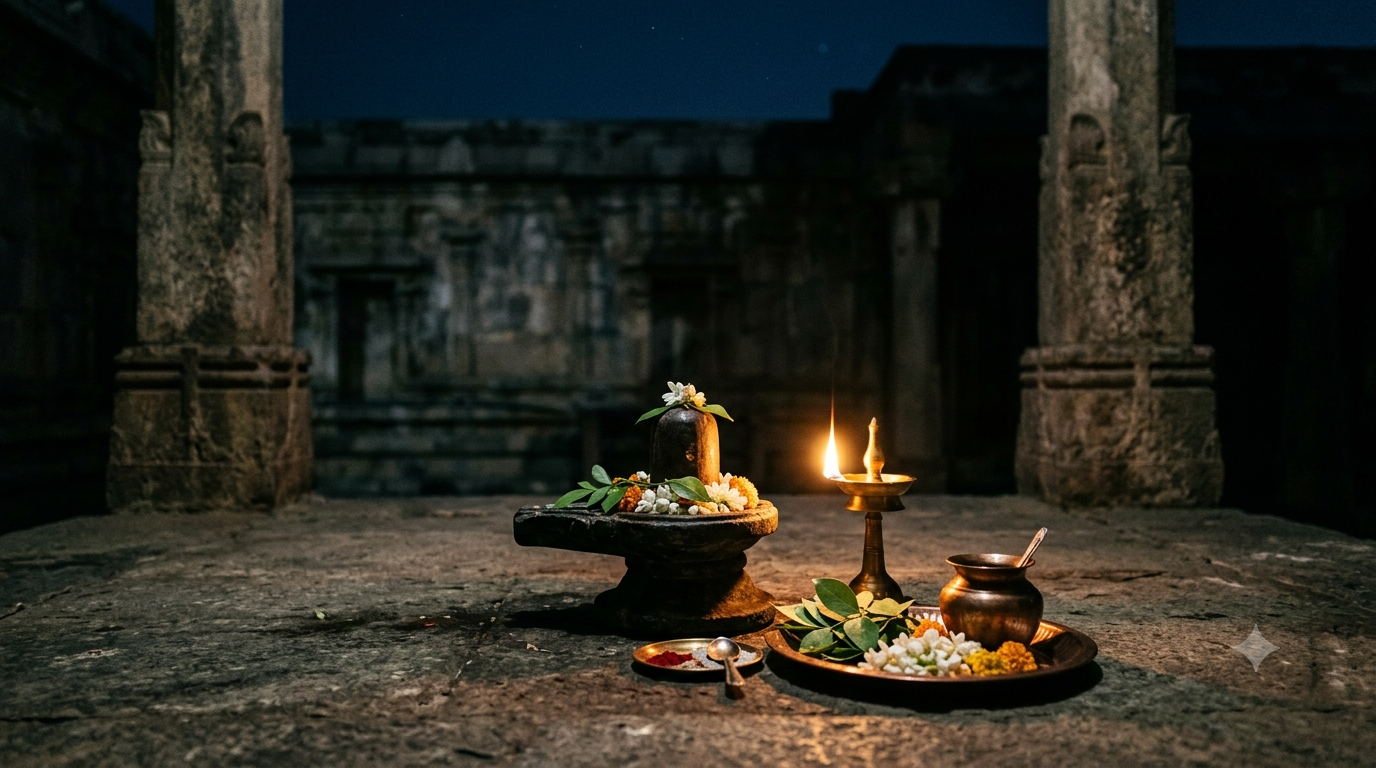
- Prepare a simple Shiva puja. Use clean water, a lamp, flowers and bilva leaves where available. Milk or other abhishekam items are optional, so use them without waste.
- Chant and pray. “Om Namah Shivaya” is widely used in Shiva worship. Devotees may also recite Shiva stotras familiar to their family tradition.
- Worship at night. Those following Nishita Kaal should use a city-specific panchang. Others may pray during a suitable evening or night period according to their custom.
- Complete the vrat the next day. Break the fast according to your local panchang, family practice and health needs.
A full night vigil is a traditional practice for some devotees, but it is not safe or practical for everyone. If you have diabetes, low blood pressure or another health condition, ask a qualified clinician before fasting. The same caution applies during pregnancy or regular medication use.
What the Monthly Vrat Signifies
In Shaiva traditions, the monthly Shivratri is a recurring occasion for devotion, restraint and inward reflection. Devotees often use the night for japa, meditation, temple worship or quiet prayer. These are matters of religious practice and belief, not guaranteed material or medical outcomes.
Many popular articles promise marriage, wealth, obstacle removal or specific life results from the vrat. Such claims should be understood as devotional beliefs found in different traditions, not as outcomes anyone can guarantee. A more grounded way to approach the observance is as a regular discipline of prayer, self-control and remembrance of Lord Shiva.
The monthly rhythm also distinguishes Masik Shivratri from the annual festival. For Masik Shivratri 2026, that rhythm includes the extra June observance. Following it through the year creates repeated occasions for the same spiritual practice. Each monthly date need not become a separate major festival.
Masik Shivratri vs Maha Shivratri
Masik Shivratri occurs every lunar month on Krishna Paksha Chaturdashi, while Maha Shivratri is the major annual Shivratri. In 2026, Maha Shivratri falls on Sunday, 15 February and is also part of the monthly Shivratri sequence.
| Point | Masik Shivratri | Maha Shivratri |
|---|---|---|
| Frequency | Monthly | Once each year |
| Lunar basis | Krishna Paksha Chaturdashi | Krishna Paksha Chaturdashi in the annual Maha Shivratri month |
| Scale | Usually personal or local observance | Major temple and community festival |
| 2026 date | Multiple dates through the year | 15 February 2026 |
North Indian and South Indian lunar calendars can use different month names for the same Maha Shivratri date. That naming difference does not mean the festival itself falls on two different dates.
Common Calendar Mistakes to Avoid
The biggest mistake is copying last year’s calendar and shifting each date by a fixed number of days. Lunar dates do not move in a perfectly regular pattern, and an adhika month can create a larger jump. The 13 June extra observance in 2026 is a good example.
- One midnight time for all of India: incorrect, because Nishita Kaal is location-based.
- Exactly twelve observances every year: not always, because an adhika lunar month can add one.
- Calendar date equals tithi start: not necessarily, because a tithi can begin or end at any clock time.
- Maha Shivratri is separate from the monthly cycle: it is the major annual Shivratri, but it also falls on the relevant Krishna Paksha Chaturdashi.
- Guaranteed spiritual results: devotional traditions may describe benefits, but outcomes remain matters of faith.
If two panchang sites differ by one minute, that is usually a calculation or rounding issue rather than a different festival date. If they disagree on the date itself, check a third established panchang and use the one configured for your location and tradition.
Planning the Remaining 2026 Dates
After September, three Masik Shivratri 2026 dates remain. They are Thursday 8 October, Saturday 7 November and Monday 7 December. If you plan a temple visit, treat the panchang date and the temple schedule as two separate checks.
First, confirm the Chaturdashi and local Nishita timing. Next, check the temple’s official opening hours, crowd advisories and special puja arrangements. This prevents a common planning mistake. The panchang-perfect time may differ from the public darshan or abhishekam window.
For devotees planning a Jyotirlinga trip, Prayanamam also has a current Trimbakeshwar Temple planning guide. As with any temple article, verify volatile timings and booking rules on the temple’s official channel before travelling.
Before You Observe the Vrat
Masik Shivratri 2026 is best planned with two checks: the correct Krishna Paksha Chaturdashi date and a local panchang for Nishita Kaal. The 2026 sequence includes an extra Adhika Masik Shivratri on 13 June. Therefore, do not reuse older monthly lists.
Keep the observance simple if needed. Prayer, japa and devotion do not require an unsafe fast or an exhausting vigil. When health, age or medication makes fasting difficult, follow medical advice and adapt the religious practice to your capacity.
Frequently Asked Questions
When Is the Next Monthly Shivratri in 2026?
After the September observance, the next Masik Shivratri falls on Thursday, 8 October 2026. The following dates are 7 November and 7 December. Check your city’s panchang for the exact Nishita Kaal.
How Many Monthly Shivratri Dates Are There in 2026?
There are 12 Shivratri date entries in the 2026 Gregorian calendar. The 15 February entry is Maha Shivratri, while 13 June is labelled Adhika Masik Shivratri. Because lunar months do not align one-to-one with Gregorian months, an adhika month does not automatically create 13 entries between 1 January and 31 December.
Why Is Krishna Paksha Chaturdashi Important?
Masik Shivratri is observed on Krishna Paksha Chaturdashi, the waning fortnight’s fourteenth lunar day. The Gregorian date changes each month because a tithi does not align exactly with a civil calendar day.
What Is the Correct Midnight Puja Time?
Nishita Kaal is commonly used for midnight Shiva worship, but its exact clock time varies by city. Use a panchang configured to your location rather than copying a time from another city.
Can I Keep the Vrat Without Fasting?
Yes, many devotees adapt the observance according to health, age and family tradition. You can still pray, chant and perform a simple puja if a strict fast is unsuitable.
What Should I Offer to Lord Shiva at Home?
Common offerings include clean water, bilva leaves, flowers, a lamp and fruit. Practices vary, so follow your family or temple tradition and avoid wasting food or liquids during abhishekam.
How Is Maha Shivratri Different?
Masik Shivratri is the monthly observance, while Maha Shivratri is the major annual festival. In 2026, Maha Shivratri falls on 15 February and occupies the February slot in the monthly sequence.
Why Do Panchang Timings Sometimes Differ?
Panchang calculations can differ by a minute because of rounding and astronomical settings. Nishita Kaal also changes by location. Therefore, do not copy a Tirupati timing directly for Delhi or another city.