📖 10 min read · 1,996 words
Navaratri Pooja Vidhanam in Telugu works well at home when you keep the ritual order clear and respect your family tradition. This refreshed Telugu-focused guide covers samagri, kalasha setup, daily worship, fasting choices, and common mistakes. It also shows a safe way to save the page as a PDF.
Independent guide: Prayanamam is an independent devotional and travel information website. It is not affiliated with any temple, matha, or religious authority. It does not accept puja bookings, donations, or payments.
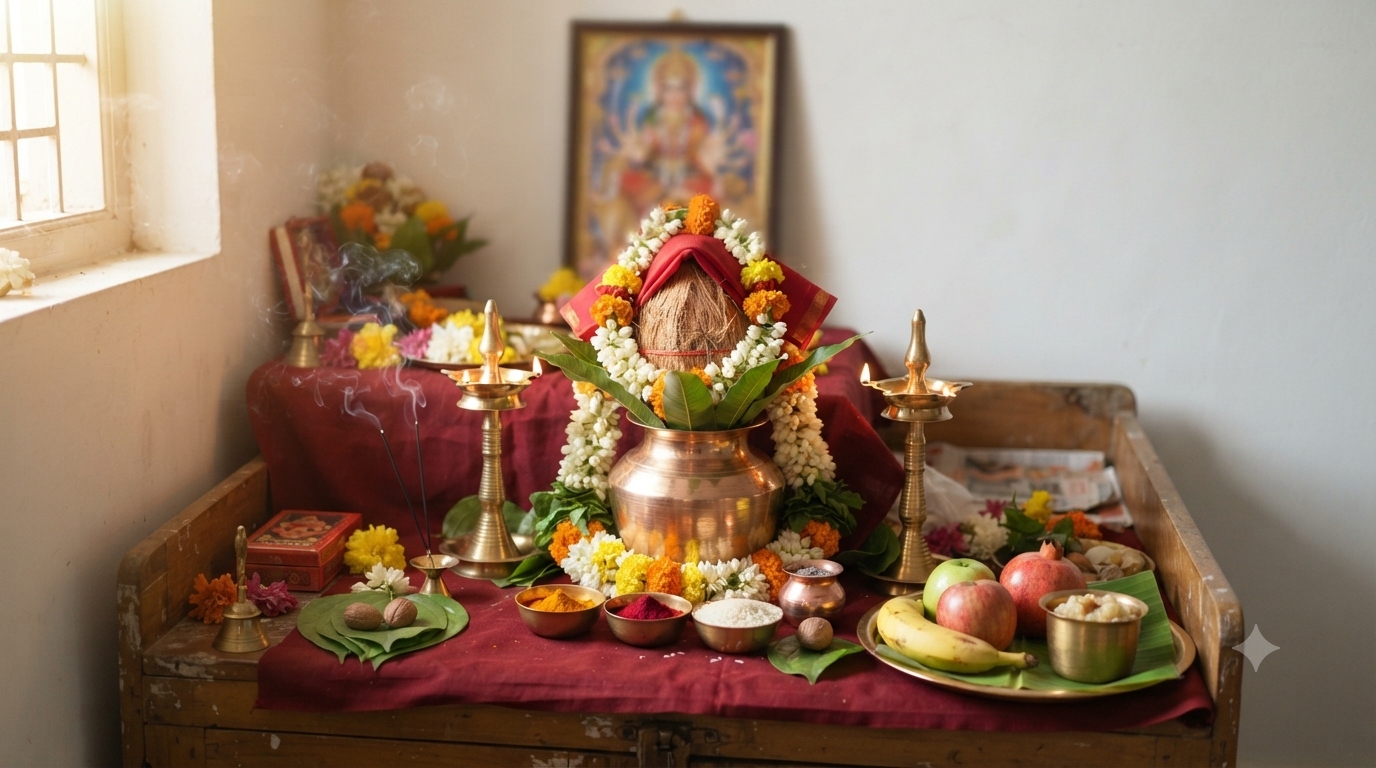
For most homes, the practical order is simple. Clean the puja space, then light the lamp safely and remember Lord Ganesha. Make a sankalpa and establish the kalasham if your family follows that custom.
Next, worship Devi with turmeric, kumkum and flowers. Recite the prayers you know, offer naivedyam, and finish with harati. You can repeat this pattern each day while changing the alankaram, stotram, or offering according to your tradition.
- Sharad Navaratri begins on Ashwayuja Shukla Pratipada, while Chaitra Navaratri follows a similar nine-night pattern in spring.
- In 2026, Sharannavaratri begins on 11 October. Sri Sringeri Sharada Peetham and Andhra Pradesh panchang calculations agree on the start date.
- Home worship does not require every advanced tantric or Vedic ritual. Therefore, do not copy complex nyasa, homa, or Sri Chakra procedures from random websites.
- If your family has a priest, guru, or inherited paddhati, follow that method because regional and sampradaya differences are normal.
- For offline reading, use your browser’s Print option and choose Save as PDF instead of trusting mislabeled third-party download links.
The 2026 Sharad Navaratri cycle starts on Sunday, 11 October. Sri Sringeri Sharada Peetham lists Ashwayuja Shukla Pratipat on that date. Drik Panchang also places the first Navaratri day on 11 October for Andhra Pradesh locations.
Local observance details can differ because panchang calculations use tithi, sunrise, location, and temple tradition. Therefore, check your local Telugu panchangam or family priest before fixing a special muhurtham. The date note here supports planning, but the Navaratri Pooja Vidhanam in Telugu below remains useful every year.
Navaratri means nine nights dedicated to the Divine Mother in her many forms. Devotees worship Durga, Lakshmi, Saraswati, Lalita, Rajarajeshwari, Navadurga, or a family form of Devi depending on local custom. The spiritual focus remains devotion, self-discipline, prayer, charity, and remembrance of Shakti.
The Sri Kanchi Kamakoti Peetham’s Devi Bhagavata summary describes preparation, kalasha, archana, recitation, offerings, and elaborate rites. However, a household need not imitate the full ceremonial format without guidance. A simpler daily puja done with care can fit ordinary family practice.
Keep the samagri practical, because a missing specialty item should not stop sincere worship. The exact list changes by family, but the following items cover a common Telugu home setup.
| Item. | Use. | Simple alternative. |
|---|---|---|
| Devi photo or vigraham. | Main focus of worship. | A clean framed picture. |
| Deepam and oil or ghee. | Lighting the puja lamp. | One stable lamp is enough. |
| Pasupu and kumkum. | Traditional offerings. | Use what your family normally uses. |
| Flowers. | Archana and decoration. | Fresh local flowers. |
| Kalasham. | Ghatasthapana in homes that follow it. | Skip if your tradition does not require it. |
| Mango leaves and coconut. | Common kalasha setup. | Follow local availability and custom. |
| Akshata. | Ritual offering. | Rice prepared in your family method. |
| Fruits or cooked naivedyam. | Food offering. | One clean vegetarian offering. |
| Camphor or harati lamp. | Final harati. | Use a lamp if camphor is unsuitable. |
For a longer preparation checklist, see Prayanamam’s Navratri puja samagri list. Buy only what you will actually use, since devotion does not depend on an expensive or oversized setup.
Before You Start the Puja
Clean the puja area before you arrange the image, lamp, and offerings. Bathe and wear clean clothes if your health and routine allow it, then keep the atmosphere calm. If you light an oil lamp, use a stable and heat-safe surface. Also keep children, pets, curtains, and loose cloth away.
Some families maintain an akhanda deepam for many hours or throughout Navaratri. Do that only when an adult can supervise it safely. Never leave an open flame unattended, because fire safety matters more than maintaining a ritual continuously.
- Prepare the altar. Place the Devi image or vigraham on a clean cloth. Then arrange the lamp, flowers, kumkum, turmeric, water, and naivedyam nearby.
- Light the deepam safely. Begin with a calm mind, while keeping the flame clear of cloth and decorations.
- Remember Ganesha. Offer a short prayer to Lord Ganesha before the main Devi worship, since many Hindu household traditions begin this way.
- Make your sankalpa. State your intention to worship Devi during Navaratri. You may pray for devotion, inner discipline, family welfare, and spiritual progress.
- Perform kalasha sthapana if customary. Prepare the kalasham according to your family practice. Then place the coconut and leaves as your elders or priest taught.
Complete the Daily Devi Worship
- Offer basic upacharas. Apply or offer turmeric and kumkum. Then offer flowers, akshata, incense if used, and a lamp.
- Recite familiar prayers. Read Durga Ashtottaram, Lalita Sahasranamam, or familiar Devi stotras. You can also use another prayer from your tradition.
- Offer naivedyam. Keep the food clean and vegetarian according to your household observance. Then offer water and the prepared dish or fruit.
- Perform harati. Complete the worship with harati, namaskaram, and a short prayer of gratitude.
- Distribute prasadam. Share the offering respectfully after the puja, while keeping the space clean for the next day’s worship.
This Navaratri Pooja Vidhanam in Telugu gives a household framework rather than a substitute for a priest-led paddhati. Advanced rites include Chandi Homa, Sri Chakra Navavarana Puja, mantra diksha procedures, and detailed nyasa. These need qualified guidance because their rules vary by lineage.
తెలుగులో సులభ దేవీ నవరాత్రి పూజా విధానం
ఇంట్లో సులభంగా పూజ చేయాలనుకుంటే ముందుగా పూజా స్థలాన్ని శుభ్రం చేసుకోండి. తరువాత అమ్మవారి ఫోటో లేదా విగ్రహాన్ని శుభ్రమైన వస్త్రంపై ఉంచండి. దీపం వెలిగించి గణపతిని స్మరించండి. ఆపై కుటుంబ సంప్రదాయం ప్రకారం సంకల్పం చేసుకోవచ్చు.
తెలుగులో 8 సులభ పూజా దశలు
- స్నానం చేసి శుభ్రమైన వస్త్రాలు ధరించండి.
- పూజా స్థలాన్ని శుభ్రపరచి అమ్మవారి చిత్రాన్ని ఏర్పాటు చేయండి.
- దీపం వెలిగించి గణపతి ప్రార్థన చేయండి.
- మీ ఇంటి ఆచారం ఉంటే కలశ స్థాపన చేయండి.
- పసుపు, కుంకుమ, అక్షతలు, పూలతో అమ్మవారిని పూజించండి.
- తెలిసిన అష్టోత్తరం, స్తోత్రం లేదా లలితా సహస్రనామం చదవండి.
- పండ్లు లేదా సాత్విక నైవేద్యం సమర్పించండి.
- హారతి ఇచ్చి నమస్కారం చేసి ప్రసాదం పంచండి.
విస్తృత మంత్రాలు, హోమాలు, శ్రీచక్ర పూజ వంటి ప్రత్యేక విధానాలకు మార్గదర్శకత్వం తీసుకోండి. గురువు లేదా అర్హత కలిగిన పండితుని సూచనలు పాటించడం మంచిది. మీ ఇంటి పెద్దలు పాటించే పద్ధతి ఉంటే, దానికి ప్రాధాన్యం ఇవ్వండి.
What Should You Do on Each of the Nine Days?
You can keep the same basic puja sequence each day. Meanwhile, change the flower, naivedyam, prayer, or Devi form according to your tradition. Many families follow the Navadurga sequence of Shailaputri, Brahmacharini, Chandraghanta, Kushmanda, Skandamata, Katyayani, Kalaratri, Mahagauri, and Siddhidatri.
Telugu temple practice can differ from that pan-Indian sequence. For example, Sri Durga Malleswara Swamy Varla Devasthanam in Vijayawada follows its own annual Dasara alankaram schedule. Therefore, do not copy a Vijayawada alankaram list and present it as the compulsory household Navadurga order.
If you want the temple-focused sequence, use Prayanamam’s Kanaka Durga Navratri avatar guide. Also confirm the current year’s temple announcement before planning a visit.
Fasting Rules and Health Safety
Fasting is a devotional choice, not a test of endurance. Some devotees take one simple meal, while others avoid selected foods. Many do not fast because of health, age, pregnancy, medication, or work demands. Follow your family tradition only when it is safe for you.
If you have a medical condition, speak with a qualified clinician before a strict fast. This includes diabetes, kidney disease, ulcers, pregnancy, or an eating disorder history. Do not stop medicines or reduce fluids for ritual reasons without medical advice. You can still observe Navaratri through prayer, reading, charity, and a simple sattvic diet.
The old page labeled an external Google Play link as a PDF download. However, that link did not directly open a PDF. This refresh removes the mismatch, so you can create a clean personal copy without visiting an unknown download site.
- Open the browser menu on your phone or computer.
- Choose Print or the device’s print/share option.
- Select Save as PDF as the destination.
- Save the file with a clear name such as devi-navaratri-pooja-vidhanam-telugu.pdf.
This method preserves the latest Navaratri Pooja Vidhanam in Telugu whenever the article receives a factual update. If you want a formal puja book, use a trusted religious institution or a priest-recommended text. Avoid anonymous scans because their source or completeness may be unclear.
- Treating every regional list as universal: Navadurga worship and temple-specific alankarams can follow different traditions.
- Forcing an elaborate kalasha setup: use the method your family knows, because ritual details differ across sampradayas.
- Copying advanced mantras without guidance: keep home worship simple unless you have learned the formal procedure.
- Leaving an akhanda deepam unattended: continuous flame practice must never override household fire safety.
- Assuming strict fasting is compulsory: health conditions can make fasting unsafe, so choose a suitable devotional observance.
- Trusting every ‘free PDF’ button: check what the link actually opens before you download anything or share personal information.
What If You Cannot Perform the Full Puja?
A complete ceremonial setup is not required in every household. You may lack a kalasham, flowers, a priest, enough time, or the ability to fast. In that case, keep the Navaratri Pooja Vidhanam in Telugu simple instead of abandoning it.
Light a safe lamp, offer a flower or namaskaram, recite a familiar Devi prayer, and offer fruit or simple food. If you miss a morning session, continue later according to your family practice rather than inventing a replacement ritual. For doubts about a vow, mantra, or formal homa, ask a trusted priest or guru who knows your sampradaya.
The best household method stays faithful to your family tradition and keeps safety and devotion at the centre. Use this Navaratri Pooja Vidhanam in Telugu as a practical checklist. Meanwhile, treat complex Vedic or tantric procedures as specialist practices.
For Chaitra observance, Prayanamam also has a Chaitra Navratri puja and fasting guide. Before each year’s festival, confirm dates with a current panchang or your local temple because tithi-based observances can shift.
Frequently Asked Questions
Yes, many families perform a simple Devi puja at home without a priest when they follow an established household method. Keep the worship to prayers, flowers, lamp, naivedyam, and harati that you understand. Seek guidance for advanced mantra, homa, or Sri Chakra procedures.
Is kalasha sthapana compulsory for everyone?
No single household format applies to every family because customs differ by region and sampradaya. If your family performs kalasha sthapana, follow that method. Otherwise, a simple Devi puja can still be meaningful.
Worship the form of Devi followed by your family or chosen tradition. Some homes follow Navadurga. Others focus on Durga, Lalita, Rajarajeshwari, Lakshmi, Saraswati, or a family deity during the nine nights.
Many Devi devotees include Lalita Sahasranamam in their regular Navaratri worship when it is part of their practice. If you are new to the text, use a reliable edition and learn pronunciation gradually instead of rushing through it.
No, fasting practices differ widely and should never override health needs. You can observe Navaratri through prayer, simple vegetarian food, or charity. Stotra recitation and reduced indulgence also work when a strict fast is unsuitable.
What naivedyam can I offer?
Offer clean vegetarian food that your family considers appropriate. For example, use fruit, cooked rice dishes, payasam, or a simple sweet. Daily naivedyam lists differ by tradition, so avoid treating one regional menu as compulsory for all devotees.
No. Vijayawada’s Sri Durga Malleswara Swamy Varla Devasthanam follows a temple-specific Dasara alankaram schedule. The classical Navadurga list instead names nine forms beginning with Shailaputri. Check the temple’s current announcement when you need the Vijayawada sequence.
You can save this refreshed guide through your browser’s Print menu and Save as PDF option. For a formal mantra book, choose a trusted religious publisher or institution. Anonymous PDF scans may be incomplete, mislabeled, or unclear about their source.