📖 5 min read · 919 words
Masik Shivratri 2022 Date And Timings Month List Pooja Benefits
Masik Shivratri 2022 Date refers to the specific dates throughout the year 2022 when the monthly Shiva night observance (Masik Shivratri) occurred according to the Hindu lunar calendar. Masik Shivratri is observed every month on the Krishna Paksha Chaturdashi (14th lunar day) and holds spiritual significance for devotees of Lord Shiva. This article provides a detailed list of 2022 dates, timings, puja instructions, benefits, and tips to observe the vrat correctly.
What Is Masik Shivratri?
Masik Shivratri is the monthly observance of Shivratri — literally Shiva’s Night. In every lunar month of the Hindu calendar, the 14th night of the dark fortnight (Krishna Paksha Chaturdashi) is dedicated to Lord Shiva. Devotees observe a vrata (fast) and perform puja to seek Lord Shiva’s blessings for peace, prosperity, and spiritual growth. Unlike Mahashivratri, which is an annual festival with major celebrations, Masik Shivratri is smaller but spiritually significant.
Masik Shivratri 2022 Date And Month List
The dates below are based on the Hindu calendar for New Delhi, India. Masik Shivratri occurs on the Krishna Paksha Chaturdashi of each lunar month.
| Month (2022) | Date |
|---|---|
| January (Pausha) | Saturday, 01 January 2022 |
| January (Magha) | Sunday, 30 January 2022 |
| March | Tuesday, 01 March 2022 |
| March | Wednesday, 30 March 2022 |
| April | Friday, 29 April 2022 |
| May | Saturday, 28 May 2022 |
| June | Monday, 27 June 2022 |
| July (Sawan) | Tuesday, 26 July 2022 |
| August | Thursday, 25 August 2022 |
| September | Saturday, 24 September 2022 |
| October | Sunday, 23 October 2022 |
| November | Tuesday, 22 November 2022 |
These dates follow the traditional Panchang observance where each Masik Shivratri begins on the evening of the Chaturdashi tithi and extends into the next day.
General Timings For Masik Shivratri Puja
Although specific puja timings can vary by location, Masik Shivratri generally follows similar rituals to Mahashivratri:
- Pradosh Time – Begins at sunset of Masik Shivratri day.
- Night Puja – Traditionally, puja during the nighttime hours of Chaturdashi tithi is considered most auspicious.
- Chaturdashi Tithi End – Ends next day afternoon around the time the Chaturdashi tithi concludes.
Devotees consult their local Panchang or temple timings for exact muhurat times. Some temples and astrology calendars provide midnight (Nishita Kala) timings for deep spiritual benefits.
Step-by-Step Masik Shivratri Puja Instructions
1. Preparations Before Puja
Start the day with a pure body and mind. Take an early morning bath and wear clean, preferably white clothes symbolizing purity. Arrange a clean prayer space with an idol or symbolic Shiva Lingam.
2. Essential Puja Items
- Shivling or Picture of Lord Shiva
- Bilva (Bel) Leaves
- Water, Milk, and Ganga Jal
- Flowers and Fruits (especially seasonal)
- Incense and Diyas
- Rose Petals and Panchamrit (milk, curd, ghee, honey, sugar)
3. Perform Abhishek (Holy Bath)
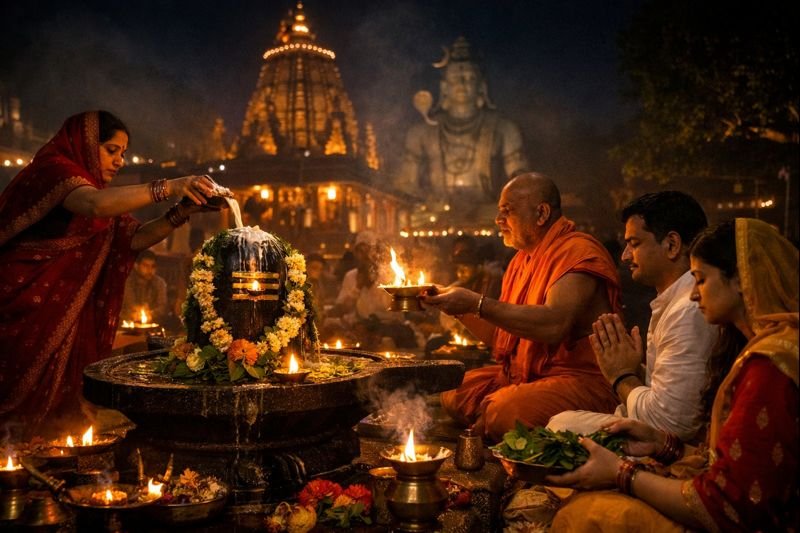
Pour Ganga Jal or milk over the Shiva Lingam while chanting “Om Namah Shivaya”. Apply Bilva leaves at intervals throughout the puja. Offer fresh flowers and fruits. A ringing bell during the ceremony helps invoke divine presence.
4. Chant Mantras and Offerings
Recite the Maha Mrityunjaya Mantra, Panchakshari Mantra, or other Shiva stotras. Offer incense, diyas, and prasad. This deepens devotion and aligns spiritual intent with puja vibrations.
5. Night Vigil (Jagran)
If possible, devotees stay awake through the night chanting, meditating, and performing aarti. Staying awake during Masik Shivratri night symbolizes alertness of mind and devotion to Shiva’s cosmic energy.
6. Breaking Fast
If observing a fast, it can be broken the next morning after completing the puja and sunrise rituals. Many devotees also observe a partial fast, eating fruits or vrat-special food.
Benefits Of Observing Masik Shivratri
Here are key benefits that devotees commonly associate with observing Masik Shivratri:
- Spiritual Growth: Deepens devotion and inner awareness towards Lord Shiva.
- Purification: The vrat promotes self-discipline and mental clarity.
- Peace And Harmony: Helps reduce stress and fosters calmness in personal life.
- Blessings For Well-Being: Many devotees believe observing this vrat brings blessings for family’s health and prosperity.
- Overcoming Obstacles: Shiva’s grace is believed to remove life obstacles and fears.
Common Mistakes To Avoid
Here are pitfalls devotees should avoid during Masik Shivratri:
- Skipping Preparations: Rushing into puja without pure intentions can weaken spiritual impact.
- Ignoring Muhurat: Puja at wrong tithi or without proper timing often yields less auspicious results.
- Improper Fast Breaking: Breaking a vrat with heavy or unclean food diminishes spiritual benefits.
Masik Shivratri Vs Mahashivratri
Mahashivratri is the annual, grand festival celebrated on Phalguna Krishna Chaturdashi, which in 2022 was observed on 1 March 2022 with special midnight puja times and extended rituals.
Masik Shivratri occurs every month and focuses on monthly devotion rather than a grand festival. Both are observed with deep reverence but Mahashivratri holds greater ritual intensity due to its mythological significance.
FAQ About Masik Shivratri 2022
Q: What is the exact Masik Shivratri 2022 date for January?
A: In 2022, Masik Shivratri for January was observed on Saturday, 01 January 2022 and also on Sunday, 30 January 2022 based on different moon cycles.
Q: Is fasting mandatory on Masik Shivratri?
A: Fasting is a common practice but not mandatory. Many devotees observe partial fasting or consume only fruits and fasting-friendly foods.
Q: Can I perform Masik Shivratri puja at home?
A: Yes, performing puja at home with devotion and correct timing is acceptable. Visiting a temple with proper muhurat is ideal but not required.
Q: What if I miss observing the exact timing?
A: If you miss the exact muhurat, perform the puja on the same tithi before it ends or consult your local Panchang for alternate auspicious times.
Q: Do I need to chant mantras?
A: Chanting Shiva mantras like “Om Namah Shivaya” enhances puja energy but devotion and sincerity matter most.
Useful External Resources
For accurate Panchang and muhurat details, refer to the official �Drik Panchang Website where you can check local timings based on your city.