📖 12 min read · 2,217 words
Maha Bharani 2026 falls on Tuesday, 29 September 2026, during Pitru Paksha. Bharani Nakshatra begins at about 9:03 AM on 29 September and continues until about 7:36 AM on 30 September in Indian panchang calculations. The exact Kutup, Rohina and Aparahna timings change by city, so use a location-based panchang before fixing the ritual time.
Prayanamam is an independent informational guide. It is not affiliated with any temple, trust, priestly organisation or booking service. We do not accept ritual bookings, donations or payments; use your family priest, recognised temple, or trusted local institution for any formal Shraddha arrangement.
Maha Bharani 2026 at a Glance
- Date: Tuesday, 29 September 2026.
- Observance: Maha Bharani Shraddha during Pitru Paksha.
- Bharani Nakshatra: about 9:03 AM on 29 September to 7:36 AM on 30 September.
- 2026 tithi context: Krishna Tritiya continues through much of 29 September before Chaturthi begins later in the day.
- Best ritual period: Kutup and Rohina Muhurat, followed by Aparahna Kaal, calculated for the city where the rite is performed.
- Important: Maha Bharani follows Bharani Nakshatra during the prescribed Shraddha afternoon period, not one permanently fixed tithi.
Drik Panchang and Prokerala independently place the 2026 observance on 29 September. That agreement is important because old festival pages often carry a previous year’s date forward. In 2026, the Hindu calendar also includes an Adhika Masa, so many later festivals land substantially later than they did in 2025.
What Is Maha Bharani Shraddha?
Maha Bharani Shraddha is an ancestral rite observed during Pitru Paksha when Bharani Nakshatra prevails during the relevant afternoon period. Bharani is traditionally associated with Yama. Therefore, many Hindu families regard the day as especially significant for Shraddha, Tarpan, Pind Daan and remembrance of departed ancestors.
The observance is also called Bharani Shraddha. Names such as Chauth Bharani or Bharani Panchami appear when Bharani coincides with Chaturthi or Panchami. However, those names are descriptive rather than fixed rules. In some years, including the 2026 cycle across much of India, Bharani can prevail while Krishna Tritiya is still running.
Traditional texts and family customs differ on how often Bharani Shraddha should be performed. Some families observe it once after a death, while others repeat it annually. If your household follows a specific sampradaya, mutt, priestly lineage or regional panchang, that established practice should take priority over a generic internet checklist.
Maha Bharani 2026 Date, Tithi and Nakshatra
The verified Maha Bharani 2026 date is Tuesday, 29 September. Drik Panchang lists Maha Bharani on that date because Bharani Nakshatra holds the required afternoon period. Prokerala independently gives the same civil date for Bharani Shraddha 2026.
| Calendar detail | 2026 information | Planning note |
|---|---|---|
| Maha Bharani date | 29 September 2026, Tuesday | Confirmed by multiple panchang sources |
| Bharani begins | About 9:03 AM, 29 September | Indian panchang reference |
| Bharani ends | About 7:36 AM, 30 September | Continues past sunrise the next day |
| Krishna Tritiya | Until about 5:10 PM, 29 September | Then Krishna Chaturthi begins |
| Pitru Paksha | Main Shraddha sequence runs late September to 10 October | Local calendar conventions can differ slightly |
The key point is that Maha Bharani is not chosen simply because a calendar says “Tritiya,” “Chaturthi,” or “Panchami.” The deciding factor is Bharani Nakshatra during the correct Shraddha period. That is why copying the 2022 Panchami label into a 2026 article would be wrong.
Maha Bharani 2026 Muhurat Timings
There is no single exact clock time for Maha Bharani 2026 that applies to every city. Kutup, Rohina and Aparahna are based on local daytime divisions. Therefore, a timing published for Ujjain, Delhi, Hyderabad or Bengaluru should not be presented as a universal India muhurat.
For an Ujjain reference, Prokerala lists Kutup Muhurat from 11:53 AM to 12:40 PM, Rohina Muhurat from 12:40 PM to 1:28 PM, and Aparahna Kaal from 1:28 PM to 3:50 PM on 29 September 2026. Drik Panchang shows slightly different windows for other Indian cities, which confirms why location matters.
| Period | Ujjain reference | How to use it |
|---|---|---|
| Kutup Muhurat | 11:53 AM-12:40 PM | Preferred opening period for Shraddha rites |
| Rohina Muhurat | 12:40 PM-1:28 PM | Continues the preferred ritual window |
| Aparahna Kaal | 1:28 PM-3:50 PM | Afternoon period used for completion |
These times are a reference, not a nationwide schedule. Before the ceremony, select the actual city where the rite will happen in a trusted panchang. If your priest follows a particular regional calendar, use that system consistently instead of mixing times from different websites.
Why Is Maha Bharani Later in 2026?
The 2026 date looks unusually late because the Hindu lunisolar calendar includes an extra month, called Adhika Masa. Drik Panchang’s 2026 calendar shows an Adhika lunar month running from mid-May to mid-June. Festivals that come later in the lunar cycle therefore shift forward on the Gregorian calendar.
This explains why Bharani Shraddha fell on 11 September in 2025 but lands on 29 September in 2026. The 18-day jump is not a typo. It is exactly the sort of calendar shift that makes old year-stamped articles unsafe to reuse without recalculating each event.
For the same reason, never estimate next year’s Maha Bharani by adding or subtracting a fixed number of days. The nakshatra, tithi and Pitru Paksha context must be checked independently for that year.
Why Bharani Nakshatra Matters During Pitru Paksha
Bharani is the second of the 27 nakshatras and is traditionally associated with Yama, the deity linked with death and dharma. That symbolism gives Bharani special importance in ancestral observances. Families may perform Tarpan, Pind Daan, food offerings, charity and remembrance according to their inherited custom.
Some religious traditions compare the merit of Bharani Shraddha with performing Shraddha at Gaya. Such statements belong to faith and scripture, not measurable guarantees. It is more accurate to describe them as traditional beliefs rather than promises of wealth, health or automatic removal of life problems.
Readers exploring related ancestral rites can also see Prayanamam’s Pitru Dosha Nivaran temples in Andhra Pradesh. Treat astrological benefit claims there as matters of belief, while practical temple rules should always be checked with the current official source.
Step-by-Step Maha Bharani 2026 Shraddha Procedure
The exact Maha Bharani 2026 procedure varies by family, region and priestly tradition. A safe general sequence starts with confirming your local muhurat and household custom. Then prepare only the ritual materials used in that tradition.
1. Confirm the family tradition
Ask elders or the family priest whether Bharani Shraddha is observed in your lineage. Confirm the names, gotra details and ritual form required. This matters because Shraddha procedures are not identical across all communities.
2. Check the city-specific muhurat
Set the location where the ceremony will occur in Drik Panchang, Prokerala or the panchang followed by your priest. Note Kutup, Rohina and Aparahna. Do this before arranging travel, meals or a priest’s visit.
3. Prepare the ritual space and materials
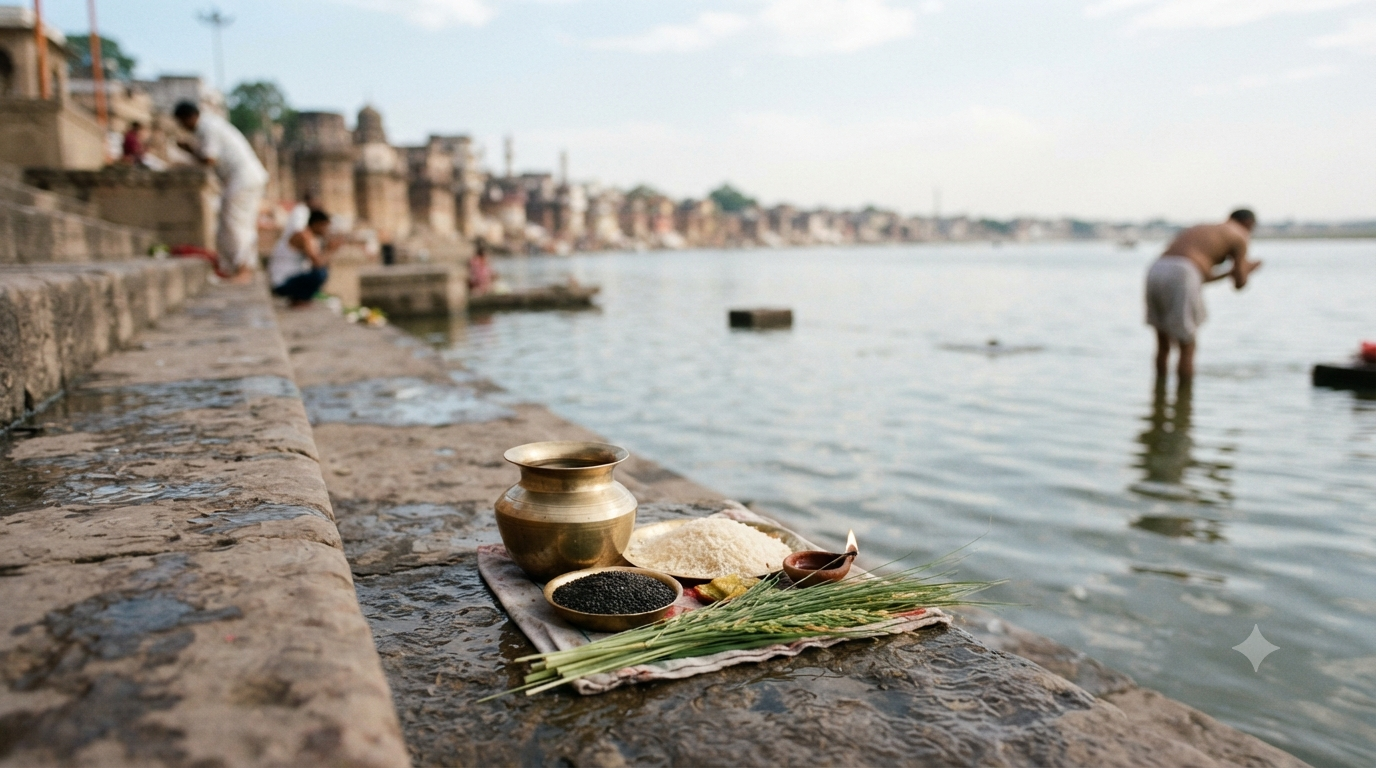
Families commonly use water, black sesame, darbha or kusa grass, cooked rice, lamps and simple sattvic food. However, the exact samagri varies by tradition. Avoid buying a fixed “Maha Bharani kit” unless your priest confirms that its contents match your ritual.
4. Perform Sankalpa, Tarpan and Pind Daan as prescribed
The formal rite can include sankalpa, ancestral invocation, water offerings and pind offerings. Mantras and sequence differ by lineage, so first-time participants should use priestly guidance. Do not copy a Sanskrit formula from an unrelated regional tradition merely because it appears online.
5. Complete food offering and charity
Many families offer a sattvic meal and make charity in memory of ancestors. Some traditions include feeding Brahmins, guests, cows, crows or people in need. Follow local rules and avoid leaving food or plastic waste in public places.
6. Close the rite respectfully
Complete the final prayers and Tarpan as directed. Clean the ritual area and dispose of natural offerings responsibly. If a river or temple tank is involved, follow the rules of that site rather than assuming ritual materials may be left in the water.
Can Maha Bharani Shraddha Be Performed at Home?
Yes, many families perform Bharani Shraddha at home when their tradition permits it. Others prefer a temple, river ghat, pilgrimage centre or priest’s designated ritual space. There is no single location rule that applies to every Hindu household.
If you perform the rite at home, organise the materials before the city-specific muhurat begins. Keep the procedure aligned with your family custom. If you need a formal Shraddha with Vedic mantras, use a priest or institution you already trust rather than an unknown online agent asking for payment or sensitive family details.
What Maha Bharani 2026 Corrects From Old Calendars
The first correction is the date. A 2022 article cannot be treated as current because the lunar calendar does not repeat on the same Gregorian day. In 2026, Maha Bharani is 29 September, not 14 September.
The second correction is the tithi. The old 2022 page could make readers think Maha Bharani always belongs to Panchami. It does not. In 2026, Bharani prevails while Krishna Tritiya continues through much of the day, followed by Chaturthi.
The third correction is timing. “Late morning” or one copied India-wide time is not enough. Kutup, Rohina and Aparahna vary by location, so a current guide must show the city basis for any exact minutes.
How to Check the Right Maha Bharani 2026 Time for Your City
Start with the Drik Panchang Bharani Shraddha page and change the city to your actual location. Then compare the civil date with Prokerala’s Bharani Shraddha calendar. Both sources currently agree on 29 September 2026.
If the two sources differ by a few minutes, do not average them. Panchang systems can use slightly different location settings or calculation conventions. Choose one trusted system for the complete ritual and follow the priest or temple conducting it.
Avoid using a screenshot saved from another year. Also avoid a social-media graphic that gives a single “India muhurat” without naming a city. Current, location-aware panchang data is more reliable.
Maha Bharani 2026 and the Wider Pitru Paksha Calendar
Maha Bharani 2026 falls near the start of the main Pitru Paksha Shraddha sequence. Widely used 2026 calendars place Pratipada Shraddha on 27 September and Sarva Pitru Amavasya on 10 October. Bharani Shraddha arrives on 29 September between those dates.
Families normally prioritise the death tithi of the ancestor for the regular annual Shraddha. Maha Bharani is a nakshatra-based observance and should not automatically replace that tithi rite. If you are unsure whether both apply in your tradition, ask your family priest before scheduling either ceremony.
The distinction is useful because search results often collapse every Pitru Paksha rite into one generic “ancestor puja.” In practice, tithi Shraddha, Bharani Shraddha, Magha Shraddha and Sarva Pitru Amavasya follow different calendrical rules.
Practical Mistakes to Avoid This Year
- Do not reuse the 14 September 2022 date for the 2026 observance.
- Do not assume Maha Bharani must always be Panchami or Chaturthi.
- Do not use Ujjain, Delhi or Bengaluru muhurat minutes as if they apply everywhere.
- Do not mix one panchang’s date with another panchang’s local timing method.
- Do not treat faith-based benefit claims as guaranteed outcomes.
- Do not pay unknown agents who claim a “special” Maha Bharani booking or guaranteed result.
- Do not leave plastic, food packets or ritual waste at riverbanks, ghats or temple tanks.
For other 2026 lunar-calendar examples, Prayanamam’s Karthika Pournami 2026 guide explains how Adhika Masa shifted later festivals. The same calendar principle is relevant here.
Key Points Before Maha Bharani 2026
The current date to use is Tuesday, 29 September 2026. Bharani begins around 9:03 AM and remains through the day’s Aparahna, which is why that Tuesday carries the observance. Exact Shraddha windows still depend on location.
Keep the ritual simple if your family custom is simple. More importantly, follow the correct date, local panchang and inherited procedure. That is safer than copying an old year-stamped article or a generic social-media muhurat.
Frequently Asked Questions
What is the Maha Bharani 2026 date?
Maha Bharani 2026 falls on Tuesday, 29 September 2026. Drik Panchang and Prokerala independently agree on that date for Bharani Shraddha during Pitru Paksha.
What time does Bharani Nakshatra start in 2026?
Bharani Nakshatra begins at about 9:03 AM on 29 September 2026 in Indian panchang calculations. It continues until about 7:36 AM on 30 September. The civil observance remains 29 September because Bharani prevails during the relevant afternoon period.
Is Maha Bharani 2026 on Tritiya or Chaturthi?
Across much of India, Krishna Tritiya continues until about 5:10 PM on 29 September, then Chaturthi begins. Maha Bharani still falls on 29 September because the observance follows Bharani Nakshatra during Aparahna, not a permanently fixed tithi.
What are the Maha Bharani 2026 muhurat timings?
The timings depend on city. For Ujjain, Prokerala lists Kutup from 11:53 AM to 12:40 PM, Rohina from 12:40 PM to 1:28 PM, and Aparahna from 1:28 PM to 3:50 PM. Change the location before using these minutes elsewhere.
Why is Maha Bharani so late in 2026?
The 2026 Hindu calendar includes an Adhika Masa, or extra lunar month, in the middle of the year. That correction shifts later lunar observances forward on the Gregorian calendar. Therefore, the 2026 date lands 18 days later than the 2025 observance.
Can Maha Bharani Shraddha be performed at home?
Yes, many families perform it at home when their tradition allows. Others use a temple, ghat or priestly ritual space. Follow your household custom and use a trusted priest if you need formal Vedic mantras or a full Shraddha sequence.
Is Maha Bharani the same as Bharani Shraddha?
Yes, the names commonly refer to the same nakshatra-based Pitru Paksha observance. Chauth Bharani and Bharani Panchami are additional names used in years when Bharani coincides with those tithis.
Does Maha Bharani replace the ancestor’s normal death-tithi Shraddha?
Not automatically. The annual death-tithi Shraddha and Bharani Shraddha follow different calendrical rules. Family practice varies, so ask your priest whether your tradition observes both or gives priority to one.