📖 10 min read · 1,962 words
Ghatasthapana 2026 muhurat for Shardiya Navratri falls on Sunday, 11 October 2026, but the exact clock time changes by city. For Vijayawada, Andhra Pradesh, the main window is 5:59 AM to 9:56 AM, with Abhijit Muhurat from 11:30 AM to 12:18 PM. This guide covers Shardiya Navratri Ghatasthapana, not the separate Chaitra Navratri observance.
The most useful rule is simple: use a city-based panchang because sunrise and local midday affect the calculation. A timing copied from another city can be several minutes different, so check your location before starting the puja.
Ghatasthapana 2026 Muhurat at a Glance
- Shardiya Ghatasthapana date: Sunday, 11 October 2026.
- Vijayawada primary muhurat: 5:59 AM to 9:56 AM.
- Vijayawada Abhijit Muhurat: 11:30 AM to 12:18 PM.
- Pratipada begins: 9:19 PM on 10 October 2026.
- Pratipada ends: 9:30 PM on 11 October 2026.
- Key caution: timings vary by city, so do not treat one city’s muhurat as universal.
Drik Panchang lists these Vijayawada timings and states that Ghatasthapana should take place while Pratipada prevails and before Hindu midday. Its calculation also uses local sunrise and other panchang factors. You can check the Vijayawada Ghatasthapana page before the festival.
Ghatasthapana 2026 Muhurat, Date and Vijayawada Timing
The Ghatasthapana 2026 muhurat for Vijayawada starts at sunrise, 5:59 AM, and runs until 9:56 AM. If that window is not practical, Drik Panchang lists an Abhijit Muhurat from 11:30 AM to 12:18 PM. Both windows fall before the end of Pratipada on the same day.
| Event | Vijayawada timing | What it means |
|---|---|---|
| Ghatasthapana date | 11 October 2026 | Shardiya Navratri Day 1 |
| Main Ghatasthapana window | 5:59 AM–9:56 AM | Primary morning period |
| Abhijit Muhurat | 11:30 AM–12:18 PM | Alternative window when needed |
| Pratipada starts | 10 October, 9:19 PM | Tithi begins the previous night |
| Pratipada ends | 11 October, 9:30 PM | Tithi continues through the day |
An independent Andhra Pradesh panchang also gives Vijayawada sunrise at 5:59 AM, Pratipada until about 9:30 PM, and Abhijit from 11:30 AM to 12:18 PM. That cross-check supports the local panchang inputs used for the day.
Why Ghatasthapana Timing Changes by City
Ghatasthapana is not based on one fixed Indian Standard Time window for every place. Local sunrise matters because the preferred period begins after sunrise while Pratipada is active. Hindu midday and local ascendant calculations can also change the recommended span.
For example, Prokerala lists the same 11 October date for Ujjain but gives a 6:26 AM to 10:17 AM Ghatasthapana window. Vijayawada starts earlier because sunrise occurs earlier there. Therefore, a devotee in Delhi, Mumbai, Chennai or Kolkata should not automatically use Vijayawada timings.
Use a city selector on a reliable panchang website before the puja. If your family follows a particular sampradaya or priest, follow that tradition when it differs on ritual detail.
What Is Ghatasthapana?
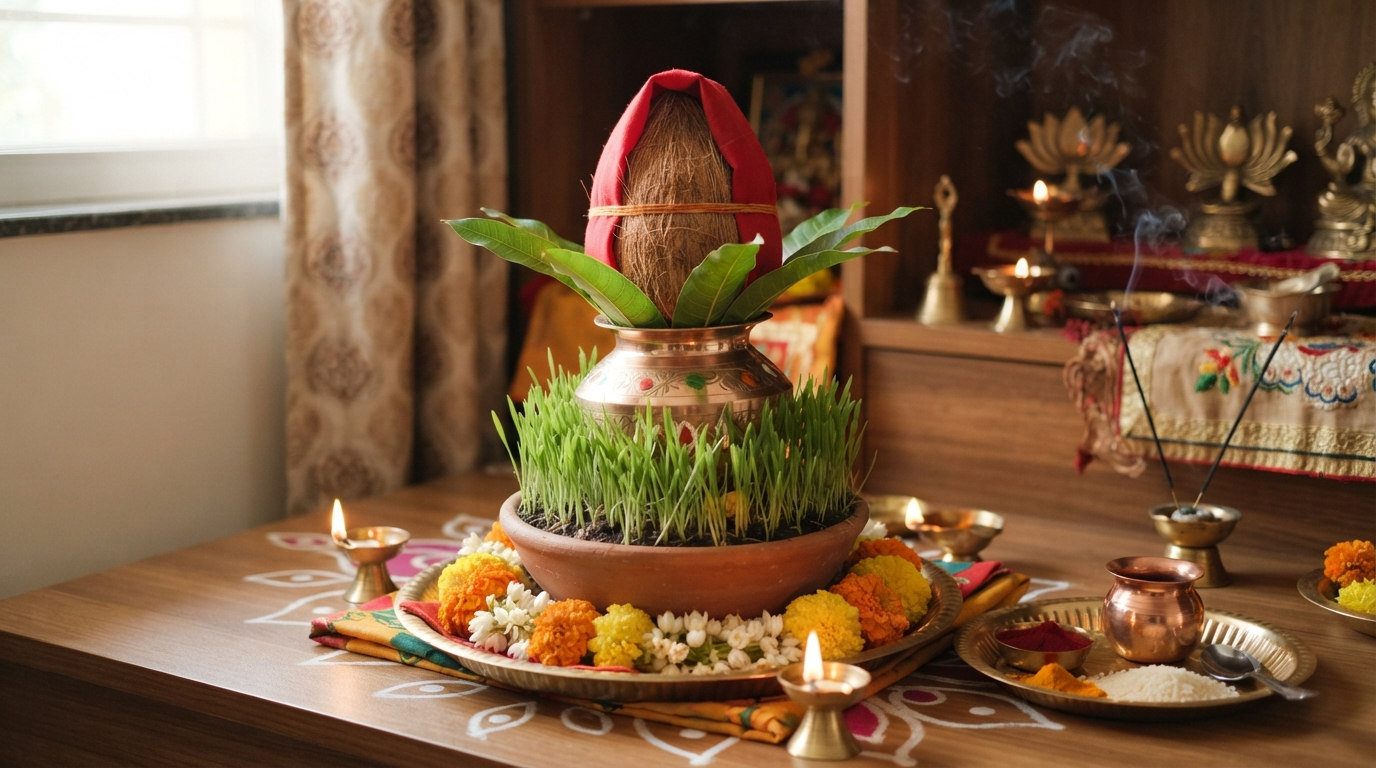
Ghatasthapana, also called Kalash Sthapana, is the ritual installation of a sacred pot at the start of Navratri. It marks the formal beginning of the household worship period. Devotees traditionally invoke Goddess Durga or Shakti in the kalash and continue daily worship through Navratri.
The ritual is especially associated with Shardiya Navratri in Ashwin, although a similar Ghatasthapana is also performed during Chaitra Navratri. In 2026, Chaitra Ghatasthapana fell on 19 March, while this page covers the Shardiya observance on 11 October.
The kalash, coconut, leaves, grains and lamp are symbolic ritual elements. Their exact use can vary by region and family custom, so local tradition should take priority over a generic internet checklist.
Ghatasthapana 2026 Muhurat Rules to Know
The Ghatasthapana 2026 muhurat should be chosen while Shukla Pratipada is prevailing after sunrise. Drik Panchang advises using the first part of the day and completing the ritual before Hindu midday. It also lists Abhijit Muhurat as an alternative when the main morning period cannot be used.
Chitra Nakshatra and Vaidhriti Yoga overlap much of the morning in 2026. Drik Panchang notes that devotees generally try to avoid them when possible, but they do not cancel the day itself. Pratipada and the before-midday rule remain central to the calculation.
Another common mistake is choosing Choghadiya as the main basis for Ghatasthapana. Drik Panchang specifically says its Ghatasthapana calculation follows the ritual’s own muhurat rules rather than relying on Choghadiya alone. When sources disagree, use a specialist panchang set to your city.
Puja Samagri for Ghatasthapana at Home
Prepare the items before the muhurat begins so the ritual does not become rushed. A traditional list includes a wide clay pot, clean soil, grains for sowing, a small kalash, sacred water, thread, betel nut, coins, leaves, rice, coconut, red cloth, flowers and durva grass.
- A wide clay pot or tray for soil and grains
- Clean soil and seeds or Sapta Dhanya
- A clay, copper or brass kalash
- Clean water or Ganga jal, if your tradition uses it
- Moli or sacred thread
- Supari, akshat and coins
- Mango or Ashoka leaves, where traditionally used
- An unpeeled coconut and red cloth
- Flowers, lamp, incense, fruit and sweets for offering
For a broader household checklist, see Prayanamam’s Navratri puja samagri list. Families may use fewer items for a simple home puja, so do not assume every regional list is mandatory.
How to Perform Ghatasthapana Step by Step
A simple home method follows the same broad sequence used in traditional guides. However, mantra wording and detailed ritual order differ between families. If your household has a priest, family text or inherited method, keep that as the primary reference.
- Clean and prepare the puja space. Bathe, wear clean clothes, and arrange the altar before the muhurat begins. Keep the space calm because you will continue worship there during Navratri.
- Prepare the grain pot. Spread clean soil in a wide pot, sow the chosen grains, and add another light layer of soil. Moisten it gently rather than flooding the pot.
- Prepare the kalash. Tie sacred thread around the neck, then fill the vessel with clean or sacred water. Add the items your family tradition uses, such as supari, coins and akshat.
- Place the leaves and lid. Arrange mango or Ashoka leaves if they are part of your custom. Cover the kalash and place rice or akshat on the lid.
- Prepare the coconut. Wrap an unpeeled coconut in red cloth and secure it with thread. Place it carefully above the kalash.
- Install the kalash. Place the prepared kalash in the centre of the grain pot. Then make your sankalpa, or devotional resolve, according to family practice.
- Invoke and worship Goddess Durga. Offer a lamp, incense, flowers, fragrance and naivedya. Continue with the prayers, aarti or recitation followed in your home.
Drik Panchang’s Ghatasthapana Puja Vidhi gives a detailed traditional sequence for preparing the grain pot and kalash. Prayanamam also has a Devi Navaratri puja guide in Telugu for readers who prefer regional-language ritual guidance.
What If You Miss the Ghatasthapana 2026 Muhurat?
If you miss the primary Ghatasthapana 2026 muhurat, do not copy a random later time from social media. Drik Panchang lists Abhijit Muhurat as the alternative when the preferred morning period cannot be used. For Vijayawada, that alternative is 11:30 AM to 12:18 PM.
If both windows are missed, the safest approach is to check a city-specific panchang or ask the priest who guides your family practice. Do not assume that evening or night is an equivalent fallback. Traditional Ghatasthapana rules place the ritual in the daytime and before the prescribed limit.
The outcome is not a guaranteed spiritual result tied to a clock minute. Muhurat observance is a matter of Hindu religious tradition, so devotion and family practice also shape how households perform the puja.
Common Ghatasthapana Mistakes and Corrections
Mistake 1: treating one city’s timing as valid across India. This is the biggest practical error. Sunrise differs by location, so always switch the panchang to your city.
Mistake 2: assuming every online time refers to Shardiya Navratri. Ghatasthapana also occurs during Chaitra Navratri. Check the month and festival name before using a date.
Mistake 3: believing fasting is compulsory for everyone. Fasting customs vary, and health should come first. A person can observe Navratri devotion without taking medical risks.
Mistake 4: presenting one puja list as universally mandatory. Regional and family customs differ, especially for grains, leaves, mantras and daily worship. Use your household tradition when it is known.
Mistake 5: equating Navratri Day 1 with the start of every Durga Puja custom. Bengali Durga Puja observances develop later in the Navratri period, while Ghatasthapana marks the opening of Navratri in many other traditions.
Navratri fasting is a devotional practice, not a medical requirement. Some people take fruit and milk, some eat one satvik meal, and others do not fast. Traditions also differ by region and household.
If you are pregnant, elderly, diabetic, taking regular medicine, or managing another health condition, do not stop food or medication without medical advice. Children should also avoid strict fasting unless a qualified health professional says it is safe. You can still take part through prayer, aarti, reading and simple offerings.
How to Check Your Own City Before Puja
Start with the confirmed date, 11 October 2026, then set your exact city on a panchang service. Check sunrise, Pratipada, the listed Ghatasthapana span and any Abhijit alternative. This approach is more reliable than searching for a generic “India time.”
For a second reference, Prokerala’s Navratri 2026 calendar confirms the 11 October date and publishes location-based timing data. The different Ujjain and Vijayawada windows are not a contradiction; they are a reminder that local solar timing matters.
Do the check again a day or two before Navratri because location settings can be wrong on saved browser pages. Also confirm whether your family follows a regional panchang that applies a specific convention.
Ghatasthapana 2026 Muhurat: Final Takeaway
The Ghatasthapana 2026 muhurat for Shardiya Navratri falls on Sunday, 11 October. Vijayawada devotees can use 5:59 AM to 9:56 AM as the primary window, while 11:30 AM to 12:18 PM is the listed Abhijit alternative.
The date is consistent across major 2026 Navratri calendars, but the clock time is location-sensitive. Therefore, confirm your city before beginning. Prepare the samagri in advance, follow your family tradition, and keep health considerations in mind if you plan to fast.
Frequently Asked Questions
Shardiya Ghatasthapana falls on Sunday, 11 October 2026. This is the first day of Shardiya Navratri. It is separate from Chaitra Ghatasthapana, which occurred earlier in the year on 19 March 2026.
What is the Ghatasthapana 2026 muhurat in Vijayawada?
The Ghatasthapana 2026 muhurat in Vijayawada is 5:59 AM to 9:56 AM. Drik Panchang also lists Abhijit Muhurat from 11:30 AM to 12:18 PM. Check your city if you live elsewhere because the timing changes with location.
Is the Ghatasthapana time the same across India?
No. Ghatasthapana timing changes by city because sunrise, local midday and panchang factors differ. For example, Ujjain has a later morning window than Vijayawada on the same date.
Can I perform Ghatasthapana without a priest?
Many families perform a simple home Ghatasthapana without a priest. However, detailed mantras and ritual order vary. If your family has an established priest or sampradaya, follow that guidance for the finer points.
What if I cannot perform Ghatasthapana in the morning?
Check the Abhijit Muhurat for your city because traditional panchang guidance may provide it as an alternative. Do not assume an evening slot is acceptable. If you miss both periods, ask a knowledgeable priest or consult a city-specific panchang.
Is fasting compulsory on Ghatasthapana day?
No universal rule makes strict fasting compulsory for every devotee. Fasting practice varies by family, region and health. Choose a safe observance, and seek medical advice if fasting could affect a health condition or medication.
Which vessel should I use for the kalash?
Traditional guides commonly mention clay, brass or copper vessels. Use a clean vessel that fits your family custom. The ritual meaning matters more than buying an expensive new item.
Should the kalash stay in place for all nine days?
Many households keep the installed kalash and altar undisturbed through Navratri, with daily worship. However, visarjan and daily-care practices vary. Follow your regional or family tradition for the closing ritual.